



Audio By Vocalize
Infrastructure is a critical enabler of long-term global economic growth, supporting prosperous societies, elevated standards of living, and every modern industry.
But the ongoing expansion and evolution of what infrastructure comprises has transformed its definition, demanding a fundamental mindset shift among governments, investors, and industry operators about how to fund, build, use, and maintain it.
Even as infrastructure verticals are evolving individually, their new intersections form another aspect of evolution.
Global population growth, economic development, and technological advances are creating massive demand for infrastructure across the world, not only for more of the familiar elements but also for new kinds altogether.
The very definition of infrastructure is expanding and evolving, shaped both by changes within individual infrastructure verticals and by the new and exciting ways they intersect. Traditionally, infrastructure has referred to the physical assets that have underpinned societies throughout history, from the fundamentals like roads, ports, and bridges to later developments such as power grids. Those assets remain important, and they require significant investment to support every sector of the global economy while continuing to improve living standards
However, infrastructure now includes elements that enable newer assets, services, and technologies such as artificial intelligence, renewables, and electric vehicles. In many cases, these new elements of infrastructure integrate with established ones.
For example, fibre-optic networks, electric-vehicle charging stations, and AI- and Internet of Things (IoT)–powered predictive maintenance systems now operate in conjunction with traditional concrete and steel structures.
The construction sector in Kenya has been a major contributor to the country’s GDP, driven by investments in infrastructure development and projects.
Other growth factors have been an emphasis on green practices, public-private partnerships (PPPs), and the adoption of digital tools for project management.
However, Kenya continues to face challenges in the construction sector, including limited material-testing capacity, fragmented regulatory oversight, and instances of unqualified personnel engaging in building activities.
In light of these challenges, the China Road and Bridge Corporation (CRBC) recognises ongoing efforts to strengthen Kenya’s construction sector and believes that further improvements can be achieved through capacity building, regulatory coordination, and adoption of best practices.
Enhancing material testing and certification capacity is essential to ensure consistent compliance with technical standards. Expanding accredited laboratories and standardising testing procedures would improve quality assurance across the industry.
Improving coordination among regulatory and supervisory bodies would enhance efficiency, reduce overlaps, and strengthen enforcement. Clear roles and unified standards are key to effective oversight.
In addition, reinforcing professional qualification and training systems is critical. Strengthening licensing requirements and promoting continuous professional development will help ensure that construction activities are carried out by competent personnel.
The adoption of digital quality management tools can further enhance transparency, traceability, and real-time monitoring.
As infrastructure demand continues to grow, engineering capability and workforce skills will play an increasingly critical role in determining project outcomes.
At the same time, advancing digital construction methods, engineering innovation, and skills development will be essential to improving productivity, quality, and resilience across the sector. In this process, contractors can play an active role in supporting government efforts by contributing to local capacity building and skills development.
Through project-based training programmes, technical workshops, and on-site practical guidance, CRBC supports the development of a more skilled local workforce, facilitating knowledge transfer and long-term capability enhancement.
By fostering collaboration among government, industry, and educational institutions, and by strengthening workforce development initiatives, the construction sector will be better equipped to support Kenya’s long-term infrastructure and socio-economic growth.
At a broader level, as global trade expands and logistics efficiency improves, reduced transport time has become a key driver of economic growth, lowering transaction costs and improving resource allocation across regions.
At the national level, integrated infrastructure, including roads, ports, and railways, has strengthened connectivity between ports, inland regions, and key economic nodes.
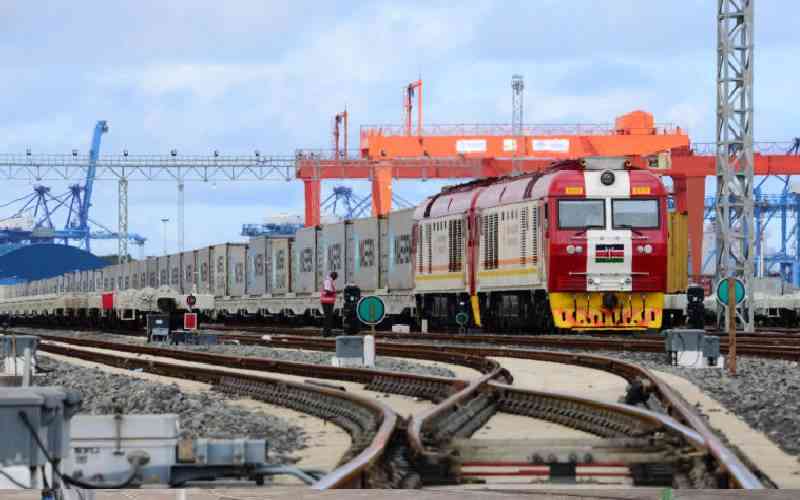
Improvements at the Port of Mombasa have increased cargo throughput and supported trade expansion, while the Mombasa–Nairobi Standard Gauge Railway (SGR) has significantly reduced transit time and enhanced logistics efficiency.
At the urban level, projects such as the Nairobi Expressway have effectively reduced congestion and travel time, improving urban mobility and logistics efficiency.
These developments have contributed to lower transportation costs, increased trade flows, and more efficient movement of goods and people. In addition, infrastructure projects have supported job creation, skills transfer, and industrial growth, while attracting both domestic and foreign investment.
The author is a media practitioner and a PhD candidate
Support Independent Journalism
Stand With Bold Journalism.
Stand With The Standard.
Continue
→
Pay via
Secure Payment
Kenya’s most trusted newsroom since 1902
Follow The Standard
channel on WhatsApp
Infrastructure is a critical enabler of long-term global economic growth, supporting prosperous societies, elevated standards of living, and every modern industry.
But the ongoing expansion and evolution of what infrastructure comprises has transformed its definition, demanding a fundamental mindset shift among governments, investors, and industry operators about how to fund, build, use, and maintain it.
Even as infrastructure verticals are evolving individually, their new intersections form another aspect of evolution.
Global population growth, economic development, and technological advances are creating massive demand for infrastructure across the world, not only for more of the familiar elements but also for new kinds altogether.
The very definition of infrastructure is expanding and evolving, shaped both by changes within individual infrastructure verticals and by the new and exciting ways they intersect. Traditionally, infrastructure has referred to the physical assets that have underpinned societies throughout history, from the fundamentals like roads, ports, and bridges to later developments such as power grids. Those assets remain important, and they require significant investment to support every sector of the global economy while continuing to improve living standards
However, infrastructure now includes elements that enable newer assets, services, and technologies such as artificial intelligence, renewables, and electric vehicles. In many cases, these new elements of infrastructure integrate with established ones.
For example, fibre-optic networks, electric-vehicle charging stations, and AI- and Internet of Things (IoT)–powered predictive maintenance systems now operate in conjunction with traditional concrete and steel structures.
The construction sector in Kenya has been a major contributor to the country’s GDP, driven by investments in infrastructure development and projects.
Other growth factors have been an emphasis on green practices, public-private partnerships (PPPs), and the adoption of digital tools for project management.
However, Kenya continues to face challenges in the construction sector, including limited material-testing capacity, fragmented regulatory oversight, and instances of unqualified personnel engaging in building activities.
In light of these challenges, the China Road and Bridge Corporation (CRBC) recognises ongoing efforts to strengthen Kenya’s construction sector and believes that further improvements can be achieved through capacity building, regulatory coordination, and adoption of best practices.
Enhancing material testing and certification capacity is essential to ensure consistent compliance with technical standards. Expanding accredited laboratories and standardising testing procedures would improve quality assurance across the industry.
Improving coordination among regulatory and supervisory bodies would enhance efficiency, reduce overlaps, and strengthen enforcement. Clear roles and unified standards are key to effective oversight.
In addition, reinforcing professional qualification and training systems is critical. Strengthening licensing requirements and promoting continuous professional development will help ensure that construction activities are carried out by competent personnel.
The adoption of digital quality management tools can further enhance transparency, traceability, and real-time monitoring.
Stay informed. Subscribe to our newsletter
As infrastructure demand continues to grow, engineering capability and workforce skills will play an increasingly critical role in determining project outcomes.
At the same time, advancing digital construction methods, engineering innovation, and skills development will be essential to improving productivity, quality, and resilience across the sector. In this process, contractors can play an active role in supporting government efforts by contributing to local capacity building and skills development.
Through project-based training programmes, technical workshops, and on-site practical guidance, CRBC supports the development of a more skilled local workforce, facilitating knowledge transfer and long-term capability enhancement.
By fostering collaboration among government, industry, and educational institutions, and by strengthening workforce development initiatives, the construction sector will be better equipped to support Kenya’s long-term infrastructure and socio-economic growth.
At a broader level, as global trade expands and logistics efficiency improves, reduced transport time has become a key driver of economic growth, lowering transaction costs and improving resource allocation across regions.
At the national level, integrated infrastructure, including roads, ports, and railways, has strengthened connectivity between ports, inland regions, and key economic nodes.
Improvements at the Port of Mombasa have increased cargo throughput and supported trade expansion, while the Mombasa–Nairobi Standard Gauge Railway (SGR) has significantly reduced transit time and enhanced logistics efficiency.
At the urban level, projects such as the Nairobi Expressway have effectively reduced congestion and travel time, improving urban mobility and logistics efficiency.
These developments have contributed to lower transportation costs, increased trade flows, and more efficient movement of goods and people. In addition, infrastructure projects have supported job creation, skills transfer, and industrial growth, while attracting both domestic and foreign investment.
The author is a media practitioner and a PhD candidate
Follow The Standard
channel on WhatsApp
By Wayua Mumo