

Audio By Vocalize
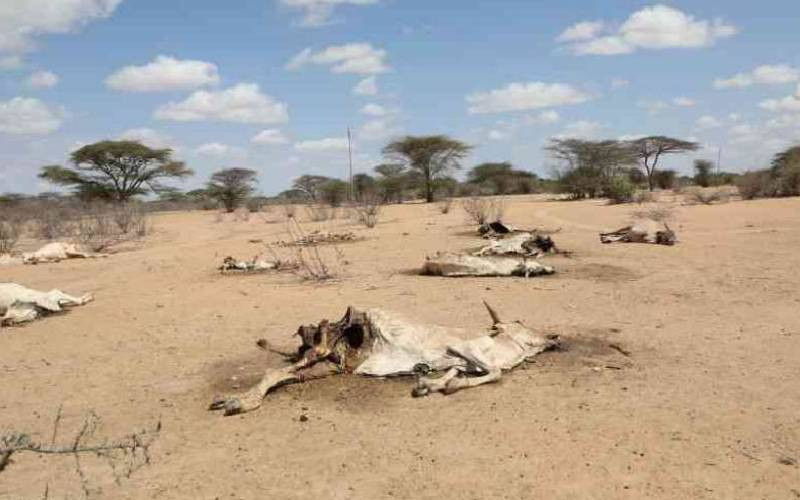
As drought conditions persist across Kenya’s north-eastern borderlands, launching climate adaptation efforts feels like an uphill battle, further complicated by the shadow of violent extremist threats.
The ongoing drought in north-eastern border areas highlights the risk of worsening clan and resource conflicts, as well as violent extremism recruitment efforts that exploit these climate-related vulnerabilities. The increased demand among counties for climate-adaptive strategies and peacebuilding initiatives underscores the need at both the national and county government levels.
Since early this year, the region has witnessed attacks targeting security actors and community members. Porous borders with Somalia, particularly in the north-eastern counties, allow non-state armed groups and violent extremist networks to infiltrate. Economic and political grievances in these communities, exacerbated by slow climate adaptation responses, have created fertile ground for extremist narratives.
As communities perceive government inaction on climate adaptation, extremist networks exploit by promoting anger and mistrust towards the state. A new report, “Climate change and violent extremism in north-eastern Kenya: towards an integrated response”, by scholars from the Technical University of Mombasa and Coventry University, outlines this nexus: climate-driven hardship and marginalisation contribute to the appeal and strategic communication of violent extremist networks.
The study highlights mechanisms of the climate–violent extremism nexus. Recurring droughts in border areas undermine the livelihoods of pastoralists and farmers, resulting in economic hardship. Climate stresses, such as drought and resource scarcity, also drive increased migration.
As people move, they face exposure to recruitment networks and weakened social protection systems, increasing susceptibility to extremist influence. Repeated climate shocks erode community structures, social roles, and traditional safety nets that have historically supported resilience. This erosion of support systems leads to insecurity and diminishes the State’s capacity to provide welfare in affected localities, further intensifying governance challenges.
Extremist groups often capitalise on these governance gaps by reinforcing marginalisation narratives. The resulting insecurity undermines communities’ ability to adapt to climate change, perpetuating a cycle of fragility in which vulnerabilities provide fertile ground for extremist recruitment.
The research report underscores that Preventing and Countering Violent Extremism (PCVE) and climate adaptation initiatives require more than isolated efforts. It is only by weaving together the expertise of climate, peacebuilding, and security actors in these hard-to-reach localities that progress can be achieved.
With Kenya’s National Strategy for Preventing and Countering Violent Extremism (NSCVE) recognising climate change as a key driver of vulnerability, there is an urgency to implement proactive communication strategies to address terrorism risks.
Community-based resilience strategies are essential to preventing violent extremism, especially where climate change creates additional risks.
Dr. Badurdeen, an ethnographer, is a senior lecturer in the social sciences at the Technical University of Mombasa
Support Independent Journalism
Stand With Bold Journalism.
Stand With The Standard.
Continue
→
Pay via
Secure Payment
Kenya’s most trusted newsroom since 1902
Follow The Standard
channel on WhatsApp
As drought conditions persist across Kenya’s north-eastern borderlands, launching climate adaptation efforts feels like an uphill battle, further complicated by the shadow of violent extremist threats.
The ongoing drought in north-eastern border areas highlights the risk of worsening clan and resource conflicts, as well as violent extremism recruitment efforts that exploit these climate-related vulnerabilities. The increased demand among counties for climate-adaptive strategies and peacebuilding initiatives underscores the need at both the national and county government levels.
Since early this year, the region has witnessed attacks targeting security actors and community members. Porous borders with Somalia, particularly in the north-eastern counties, allow non-state armed groups and violent extremist networks to infiltrate. Economic and political grievances in these communities, exacerbated by slow climate adaptation responses, have created fertile ground for extremist narratives.
As communities perceive government inaction on climate adaptation, extremist networks exploit by promoting anger and mistrust towards the state. A new report, “Climate change and violent extremism in north-eastern Kenya: towards an integrated response”, by scholars from the Technical University of Mombasa and Coventry University, outlines this nexus: climate-driven hardship and marginalisation contribute to the appeal and strategic communication of violent extremist networks.
The study highlights mechanisms of the climate–violent extremism nexus. Recurring droughts in border areas undermine the livelihoods of pastoralists and farmers, resulting in economic hardship. Climate stresses, such as drought and resource scarcity, also drive increased migration.
As people move, they face exposure to recruitment networks and weakened social protection systems, increasing susceptibility to extremist influence. Repeated climate shocks erode community structures, social roles, and traditional safety nets that have historically supported resilience. This erosion of support systems leads to insecurity and diminishes the State’s capacity to provide welfare in affected localities, further intensifying governance challenges.
Extremist groups often capitalise on these governance gaps by reinforcing marginalisation narratives. The resulting insecurity undermines communities’ ability to adapt to climate change, perpetuating a cycle of fragility in which vulnerabilities provide fertile ground for extremist recruitment.
The research report underscores that Preventing and Countering Violent Extremism (PCVE) and climate adaptation initiatives require more than isolated efforts. It is only by weaving together the expertise of climate, peacebuilding, and security actors in these hard-to-reach localities that progress can be achieved.
With Kenya’s National Strategy for Preventing and Countering Violent Extremism (NSCVE) recognising climate change as a key driver of vulnerability, there is an urgency to implement proactive communication strategies to address terrorism risks.
Community-based resilience strategies are essential to preventing violent extremism, especially where climate change creates additional risks.
Dr. Badurdeen, an ethnographer, is a senior lecturer in the social sciences at the Technical University of Mombasa
Follow The Standard
channel on WhatsApp
By Fathima Azmiya Badurdeen