



Audio By Vocalize
Agricultural enterprises are increasingly shifting from traditional marketplaces to digital platforms, prompting renewed efforts to equip young farmers with both production skills and online marketing strategies to remain competitive in a changing economy.
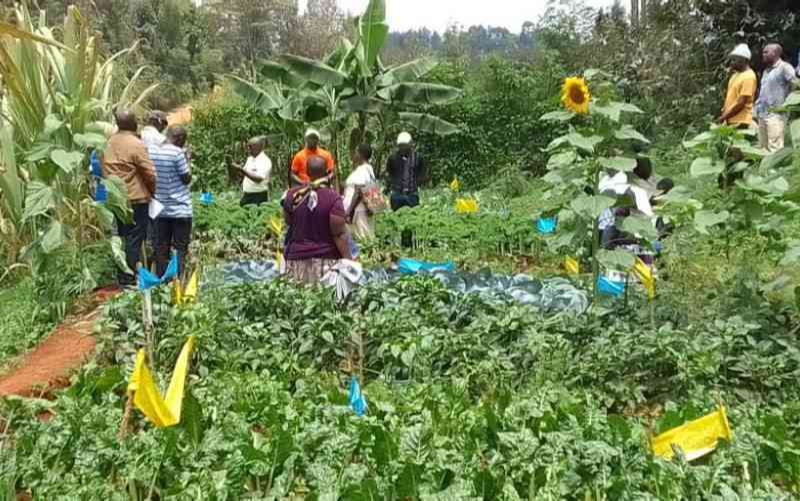
Against this backdrop, forty young agripreneurs drawn from all 47 counties have been trained in agroecology value chain skills and social media marketing during a three-day program organised by the Participatory Ecological Land Use Management (PELUM).
The training, hosted at Baraka Agricultural College in Nakuru County, aimed to position them to tap into expanding digital markets as consumer preferences continue to move online.
Participants said the training had come at a critical moment as more consumers shift toward online purchasing and digital engagement in agribusiness.
“In this era, most people are embracing digital platforms, and our coming here has helped us explore how we can package our messages to attract customers,” said Collins Otieno, an agripreneur from Kajiado County who produces organic peanut butter using locally available materials.
He added that digital tools would significantly expand the visibility of rural agribusinesses beyond local markets.
“When you use social media for products and businesses, it would be visible not only in the regions but in the entire country,” he said.
Otieno urged young people to move beyond job-seeking and instead embrace entrepreneurship through agribusiness, noting that the sector offers opportunities across production, processing, and marketing.
“I urge the youth to take advantage of the skills and knowledge gained from such training to start sustainable ventures along the agricultural value chain. I also call upon the government to create a conducive environment for youths and support them financially,” he said.
He added that agroecology provides a safer and more sustainable farming model, arguing that reduced reliance on synthetic chemicals would improve both human health and environmental outcomes.
“Most of the diseases we experience today are linked to the excessive use of chemicals in crop production. By embracing agroecological practices, we can significantly reduce these health risks and ensure that what reaches our tables is safe, nutritious and wholesome,” Otieno said.
Nyambura Simiyu, an agripreneur with Spring Agric, which also served as a trainer, said young people had strong potential but often lacked mentorship and financial support to scale their enterprises.
“It gives me hope to see youths taking agribusiness seriously. My job here was to impact their skills to be able to grow their agri-enterprises,” she said.
She urged development partners and government agencies to improve funding structures for youth-led agribusinesses, noting that many entrepreneurs are constrained by limited and slow disbursement cycles.
“Many youths are stranded because of funding. If the government and other funders chip in, they can do better than this,” she said, adding that shorter funding cycles would enhance efficiency and impact.
From the implementing organisation, Moraa Ratemo, a programs officer at PELUM in charge of market development, said the initiative is part of a wider agroecology program operating in 14 countries aimed at strengthening sustainable agriculture systems.
She said agroecology promotes farming practices that protect the environment while supporting food systems rooted in indigenous and locally adapted crops.
“As consumers, you should also create a demand. You need to consume the youths’ agribusiness products so that they can keep on producing more. Without markets, the youths will not sustain their businesses,” she said.
Ratemo noted that the organisation had supported the establishment of organic markets countrywide to link producers with consumers seeking chemical-free produce.
She added that several counties, including Murang’a, Busia, Makueni, Nakuru and Vihiga, have already adopted agroecology policies, while others are still in the process of implementation.
Pamela Nasimiyu, principal of Baraka Agricultural College, said the institution remains committed to equipping young people with practical agricultural skills to promote rural development and entrepreneurship.
She said training programs at the institution focus on key areas such as crop production, animal husbandry, poultry, piggery and tree nursery management, aimed at enabling youth to diversify income sources while adopting sustainable farming practices.
“We provide skills in critical areas such as animal production, crop production, tree nursery management, poultry and piggery. The training is tailored to ensure farmers and youth can diversify their income streams while adopting environmentally friendly farming methods,” she said.
Nasimiyu added that making agriculture more attractive to young people remains central to addressing unemployment and strengthening food systems in rural communities
Support Independent Journalism
Stand With Bold Journalism.
Stand With The Standard.
Continue
→
Pay via
Secure Payment
Kenya’s most trusted newsroom since 1902
Follow The Standard
channel on WhatsApp
Agricultural enterprises are increasingly shifting from traditional marketplaces to digital platforms, prompting renewed efforts to equip young farmers with both production skills and online marketing strategies to remain competitive in a changing economy.
Against this backdrop, forty young agripreneurs drawn from all 47 counties have been trained in agroecology value chain skills and social media marketing during a three-day program organised by the Participatory Ecological Land Use Management (PELUM).
The training, hosted at
Baraka Agricultural College
in Nakuru County, aimed to position them to tap into expanding digital markets as consumer preferences continue to move online.
Participants said the training had come at a critical moment as more consumers shift toward online purchasing and
digital engagement in agribusiness
.
“In this era, most people are embracing digital platforms, and our coming here has helped us explore how we can package our messages to attract customers,” said Collins Otieno, an agripreneur from Kajiado County who produces organic peanut butter using locally available materials.
He added that digital tools would significantly expand the visibility of rural agribusinesses beyond local markets.
“When you use social media for products and businesses, it would be visible not only in the regions but in the entire country,” he said.
Otieno urged young people to move beyond job-seeking and instead embrace entrepreneurship
through agribusiness
, noting that the sector offers opportunities across production, processing, and marketing.
“I urge the youth to take advantage of the skills and knowledge gained from such training to start sustainable ventures along the agricultural value chain. I also call upon the government to create a conducive environment for youths and support them financially,” he said.
He added that agroecology provides a safer and more sustainable farming model, arguing that reduced reliance on synthetic chemicals would improve both human health and environmental outcomes.
“Most of the diseases we experience today are linked to the excessive use of chemicals in crop production. By embracing agroecological practices, we can significantly reduce these health risks and ensure that what reaches our tables is safe, nutritious and wholesome,” Otieno said.
Nyambura Simiyu, an agripreneur with Spring Agric, which also served as a trainer, said young people had strong potential but often lacked mentorship and financial support to scale their enterprises.
“It gives me hope to see youths taking agribusiness seriously. My job here was to impact their skills to be able to grow their agri-enterprises,” she said.
She urged development partners and government agencies to improve funding structures for youth-led agribusinesses, noting that many entrepreneurs are constrained by limited and slow disbursement cycles.
“Many youths are stranded because of funding. If the government and other funders chip in, they can do better than this,” she said, adding that shorter funding cycles would enhance efficiency and impact.
Stay informed. Subscribe to our newsletter
From the implementing organisation, Moraa Ratemo, a programs officer at PELUM in charge of market development, said the initiative is part of a wider agroecology program operating in 14 countries aimed at strengthening sustainable agriculture systems.
She said agroecology promotes farming practices that protect the environment while supporting food systems rooted in indigenous and locally adapted crops.
“As consumers, you should also create a demand. You need to consume the youths’ agribusiness products so that they can keep on producing more. Without markets, the youths will not sustain their businesses,” she said.
Ratemo noted that the organisation had supported the establishment of organic markets countrywide to link producers with consumers seeking chemical-free produce.
She added that several counties, including Murang’a, Busia, Makueni, Nakuru and Vihiga, have already adopted agroecology policies, while others are still in the process of implementation.
Pamela Nasimiyu, principal of
Baraka Agricultural College,
said the institution remains committed to equipping young people with practical agricultural skills to promote rural development and entrepreneurship.
She said training programs at the institution focus on key areas such as crop production, animal husbandry, poultry, piggery and tree nursery management, aimed at enabling youth to diversify income sources while adopting sustainable farming practices.
“We provide skills in critical areas such as animal production, crop production, tree nursery management, poultry and piggery. The training is tailored to ensure farmers and youth can diversify their income streams while adopting environmentally friendly farming methods,” she said.
Nasimiyu added that making agriculture more attractive to young people remains central to addressing unemployment and strengthening food systems in rural communities
Follow The Standard
channel on WhatsApp
By Juliet Omelo