



Audio By Vocalize
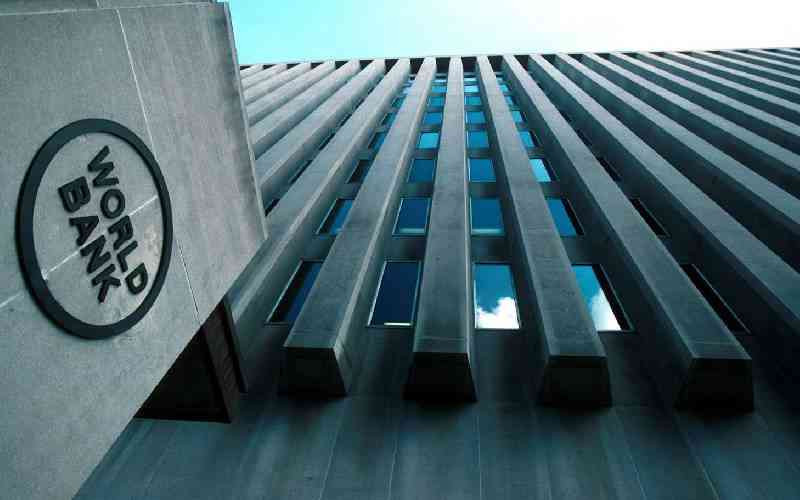
More than 30 civil society organisations are mounting pressure on the World Bank Group to halt billions of shillings channelled into financing industrial livestock production, warning that the funding is accelerating environmental damage and undermining Africa’s food systems.
The call comes amid coordinated protests across 25 countries during the Spring Meetings of the World Bank and its private lending arm, the International Finance Corporation (IFC).
Activists argue that continued investment in large-scale livestock operations, commonly known as factory farming, is worsening the climate change situation, causing biodiversity loss and creating risks to public health, yet it fails to address the food insecurity issue in the region.
Sally Kahiu, external affairs lead at the World Animal Protection, said the funding is being used to erode long-standing African food systems and is causing harm to both people and the environment.
She added that Africa’s food security only needs strengthening small-scale farmers and investing in locally driven food systems solutions, rather than expanding industrial systems such as factory farming.
“Africa’s food future depends on investments that strengthen smallholder farmers, protect ecosystems, and ensure long-term food security. Public funds should not be used to expand factory farming systems that threaten communities, animals, and the environment. We call on the World Bank Group to champion sustainable, locally driven food systems that genuinely support Africa’s development and resilience,” Kahiu said.
Recent figures from the World Bank show that the scale of financing for industrial livestock production has been picking up pace since 2023.
Between 2023 and 2024, the World Bank invested around Sh182 billion ($1.4 billion) in industrial livestock production, while the IFC approved 38 industrial livestock investments worth nearly Sh 260 ($2 billion) between 2020 and 2025.
Sub-Saharan Africa has emerged as a key beneficiary of this funding, receiving 22 of 62 animal agriculture projects across developing regions, accounting for nearly 42 per cent of development financing.
However, civil society groups argue that these funding models do not align with the continent’s realities. Too often, factory farming systems concentrate wealth among a few large players while displacing smallholder farmers who produce the bulk of Africa’s food. They also cite increased pollution, disease risks, and environmental degradation linked to intensive livestock production.
Opeyemi Elujulo, the executive director of Youth in Agroecology and Restoration Network (YARN), said that public finance should be a force for equitable development, not a tool that drives environmental degradation and social exclusion.
“The issue is not just about what is being funded but also what is being neglected. Agroecological and community-led food systems, widely recognised for their potential to enhance biodiversity, strengthen local economies, and build climate resilience, remain chronically underfunded,” he quipped.
“Redirecting financial flows towards these approaches is both a moral imperative and a strategic necessity to eliminate dependency and inequality.”
These concerns arise at a critical time, as the World Bank plans to scale up its agribusiness financing to Sh1.1 trillion ($9 billion) annually by 2030. At the same time, the IFC is reviewing its environmental and social standards, a process advocates say presents a rare opportunity to shift funding priorities towards climate-friendly and community-based agriculture.
Campaigners under the Stop Financing Factory Farming initiative are now urging international lenders to phase out support for industrial livestock and redirect investments towards agroecological approaches.
Support Independent Journalism
Stand With Bold Journalism.
Stand With The Standard.
Continue
→
Pay via
Secure Payment
Kenya’s most trusted newsroom since 1902
Follow The Standard
channel on WhatsApp
More than 30 civil society organisations are mounting pressure on the World Bank Group to halt billions of shillings channelled into financing industrial livestock production, warning that the funding is accelerating environmental damage and undermining Africa’s food systems.
The call comes amid
coordinated protests
across 25 countries during the Spring Meetings of the World Bank and its private lending arm, the International Finance Corporation (IFC).
Activists argue that continued investment in large-scale livestock operations, commonly known as factory farming, is worsening the climate change situation, causing biodiversity loss and creating risks to public health, yet it fails to address the food insecurity issue in the region.
Sally Kahiu, external affairs lead at the World Animal Protection, said the funding is being used to erode long-standing African food systems and is causing harm to both people and the environment.
She added that Africa’s food security only needs strengthening small-scale farmers and investing in locally driven food systems solutions, rather than expanding industrial systems such as factory farming.
“Africa’s food future depends on investments that strengthen smallholder farmers, protect ecosystems, and ensure long-term food security. Public funds should not be used to expand factory farming systems
that threaten communities
, animals, and the environment. We call on the World Bank Group to champion sustainable, locally driven food systems that genuinely support Africa’s development and resilience,” Kahiu said.
Recent figures from the World Bank show that the scale of financing for industrial livestock production has been picking up pace since 2023.
Between 2023 and 2024, the
World Bank invested
around Sh182 billion ($1.4 billion) in industrial livestock production, while the IFC approved 38 industrial livestock investments worth nearly Sh 260 ($2 billion) between 2020 and 2025.
Sub-Saharan Africa has emerged as a key beneficiary of this funding, receiving 22 of 62 animal agriculture projects across developing regions, accounting for nearly 42 per cent of development financing.
However, civil society groups argue that these funding models do not align with the continent’s realities. Too often, factory farming systems concentrate wealth among a few large players while displacing smallholder farmers who produce the bulk of Africa’s food. They also cite increased pollution, disease risks, and environmental degradation linked to intensive livestock production.
Opeyemi Elujulo, the executive director of Youth in Agroecology and Restoration Network (YARN), said that public finance should be a force for equitable development, not a tool that drives environmental degradation and social exclusion.
“The issue is not just about what is being funded but also what is being neglected. Agroecological and community-led food systems, widely recognised for their potential to enhance biodiversity, strengthen local economies, and build climate resilience, remain chronically underfunded,” he quipped.
“Redirecting financial flows towards these approaches is both a moral imperative and a strategic necessity to eliminate dependency and inequality.”
These concerns arise at a critical time, as the World Bank plans to scale up its agribusiness financing to Sh1.1 trillion ($9 billion) annually by 2030. At the same time, the IFC is reviewing its environmental and social standards, a process advocates say presents a rare opportunity to shift funding priorities towards climate-friendly and community-based agriculture.
Stay informed. Subscribe to our newsletter
Campaigners under the Stop Financing Factory Farming initiative are now urging international lenders to phase out support for industrial livestock and redirect investments towards agroecological approaches.
Follow The Standard
channel on WhatsApp
By Mary Mkongo