



Audio By Vocalize
The veteran politician, who inspired populist movements, alienated his nation from the European Union and turned Ukraine’s Volodymyr Zelenskyy into a punching bag, lost to greenhorn Péter Magyar.
Mr Orbán was pretty much a puppet of Russia’s Vladimir Putin and US President Donald Trump. He deployed every trick in the book to extend his 16-year rule but failed to quell public discontent.
What drove the last nail into the prime minister’s coffin was his veto on an EU proposal to grant Ukraine a €90 billion loan. He joins the list of leaders who prioritised narrow or external interests over the wider good of their own people. Angry Hungarians are truly unforgiving!
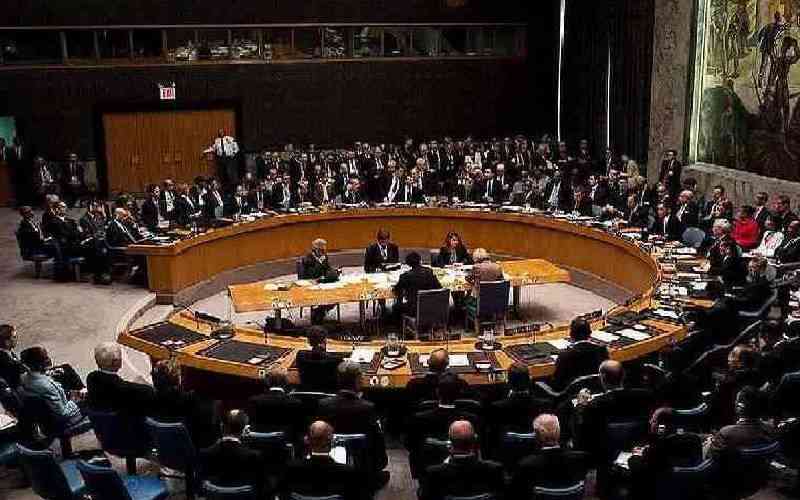
Even in Africa, leaders who act at the behest of selfish or foreign interests will eventually face the music. Meanwhile, away from Hungary, the United Nations and Rwanda have this month paused normal activities to mark the 32nd anniversary of the 1994 Genocide against the Tutsi.
I had the honour of attending a special memorial convened at the UN offices in Gigiri, Nairobi, where diplomats, government officials, and guests from all walks of life gathered to reflect on one of the gravest atrocities in human history. The pain is still palpable.
Among those I bumped into was journalist Charles Onyango-Obbo. We waited for a long time under the scorching sun to collect our identification cards at the Gigiri complex before joining a solemn remembrance walk from the UN offices to the Rwandan High Commission.
But it wasn’t the inconvenience of the security processes that lingered. It’s the message. Speaker after speaker echoed the ‘never again’ pledge. Officially marked as the International Day of Reflection on the Genocide Against the Tutsis in Rwanda, it was also a moment to reflect on ongoing crises in Africa, like the situation in eastern Democratic Republic of Congo.
There were concerns that international silence breeds impunity. Rwandans, led by President Paul Kagame, rightly say that the world failed them at their hour of need. Mr Serge Rwigamba, a survivor who lost 15 family members, said everyone looked the other way. “There was an eerie silence everywhere in the 100 days of the genocide,” he said during the ‘Kwibuka’ memorial.
Indeed, the UN has consistently owned up to this unprecedented failure of humanity. Secretary-General António Guterres urged renewed commitment to prevention. Rwanda’s ambassador to Kenya, Ernest Rwamucyo, spoke of a country striving for unity. Remembrance, he said, is central to ensuring such horrors are never repeated. Bereft of words, participants lit candles and laid flowers in tribute.
Beyond formal courts, Rwanda uses Gacaca, a community-based justice system, to confront the past and foster reconciliation. And it got me thinking. While Rwanda confronts its darkest chapter with purpose, what have we in Kenya done with our history?
Do we ever pause to remember the Wagalla deaths? The 1992 ethnic clashes? The 2007 post-election violence that left more than 1,000 dead? Do we recall the Kiambaa church fire, where families seeking refuge were burned alive? The Nyayo era torture or the June 25, 2024, killings of ‘Gen Z’ protesters?
The fact that Article 9 of our Constitution spells out national days like Madaraka, Mashujaa, and Jamhuri as avenues of identity and nationhood isn’t enough. Too often, we are in a hurry to forget and to move on without reflection, without accountability, and without learning. That’s a dangerous amnesia.
History isn’t a burden to be buried. It’s a lesson to be studied. As Martin Luther King Jr said, we aren’t makers of history. We are made by it. Black pride proponent Marcus Garvey also warned that a people without knowledge of their past are like a tree without roots.
Elections keep dividing us. Can we institutionalise remembrance by setting aside a day, a week, or even a month to reflect on our darkest moments, honour victims, and confront the uncomfortable truths? A country that forgets its past risks repeating its mistakes. In 2027, we can use our past to ensure smooth elections.
The writer is a communications practitioner
Support Independent Journalism
Stand With Bold Journalism.
Stand With The Standard.
Continue
→
Pay via
Secure Payment
Kenya’s most trusted newsroom since 1902
Follow The Standard
channel on WhatsApp
The veteran politician, who inspired populist movements, alienated his nation from the European Union and turned Ukraine’s Volodymyr Zelenskyy into a punching bag, lost to greenhorn Péter Magyar.
Mr Orbán was pretty much a puppet of Russia’s Vladimir Putin and US President Donald Trump. He deployed every trick in the book to extend his 16-year rule but failed to quell public discontent.
What drove the last nail into the prime minister’s coffin was his veto on an EU proposal to grant Ukraine a €90 billion loan. He joins the list of leaders who prioritised narrow or external interests over the wider good of their own people. Angry Hungarians are truly unforgiving!
Even in Africa, leaders who act at the behest of selfish or foreign interests will eventually face the music. Meanwhile, away from Hungary, the United Nations and Rwanda have this month paused normal activities to mark the 32nd anniversary of the 1994 Genocide against the Tutsi.
I had the honour of attending a special memorial convened at the UN offices in Gigiri, Nairobi, where diplomats, government officials, and guests from all walks of life gathered to reflect on one of the gravest atrocities in human history. The pain is still palpable.
Among those I bumped into was journalist Charles Onyango-Obbo. We waited for a long time under the scorching sun to collect our identification cards at the Gigiri complex before joining a solemn remembrance walk from the UN offices to the Rwandan High Commission.
But it wasn’t the inconvenience of the security processes that lingered. It’s the message. Speaker after speaker echoed the ‘never again’ pledge. Officially marked as the International Day of Reflection on the Genocide Against the Tutsis in Rwanda, it was also a moment to reflect on ongoing crises in Africa, like the situation in eastern Democratic Republic of Congo.
There were concerns that international silence breeds impunity. Rwandans, led by President Paul Kagame, rightly say that the world failed them at their hour of need. Mr Serge Rwigamba, a survivor who lost 15 family members, said everyone looked the other way. “There was an eerie silence everywhere in the 100 days of the genocide,” he said during the ‘Kwibuka’ memorial.
Indeed, the UN has consistently owned up to this unprecedented failure of humanity. Secretary-General António Guterres urged renewed commitment to prevention. Rwanda’s ambassador to Kenya, Ernest Rwamucyo, spoke of a country striving for unity. Remembrance, he said, is central to ensuring such horrors are never repeated. Bereft of words, participants lit candles and laid flowers in tribute.
Beyond formal courts, Rwanda uses Gacaca, a community-based justice system, to confront the past and foster reconciliation. And it got me thinking. While Rwanda confronts its darkest chapter with purpose, what have we in Kenya done with our history?
Do we ever pause to remember the Wagalla deaths? The 1992 ethnic clashes? The 2007 post-election violence that left more than 1,000 dead? Do we recall the Kiambaa church fire, where families seeking refuge were burned alive? The Nyayo era torture or the June 25, 2024, killings of ‘Gen Z’ protesters?
The fact that Article 9 of our Constitution spells out national days like Madaraka, Mashujaa, and Jamhuri as avenues of identity and nationhood isn’t enough. Too often, we are in a hurry to forget and to move on without reflection, without accountability, and without learning. That’s a dangerous amnesia.
History isn’t a burden to be buried. It’s a lesson to be studied. As Martin Luther King Jr said, we aren’t makers of history. We are made by it. Black pride proponent Marcus Garvey also warned that a people without knowledge of their past are like a tree without roots.
Elections keep dividing us. Can we institutionalise remembrance by setting aside a day, a week, or even a month to reflect on our darkest moments, honour victims, and confront the uncomfortable truths? A country that forgets its past risks repeating its mistakes. In 2027, we can use our past to ensure smooth elections.
The writer is a communications practitioner
Stay informed. Subscribe to our newsletter
Follow The Standard
channel on WhatsApp
By Mark Oloo