



Audio By Vocalize
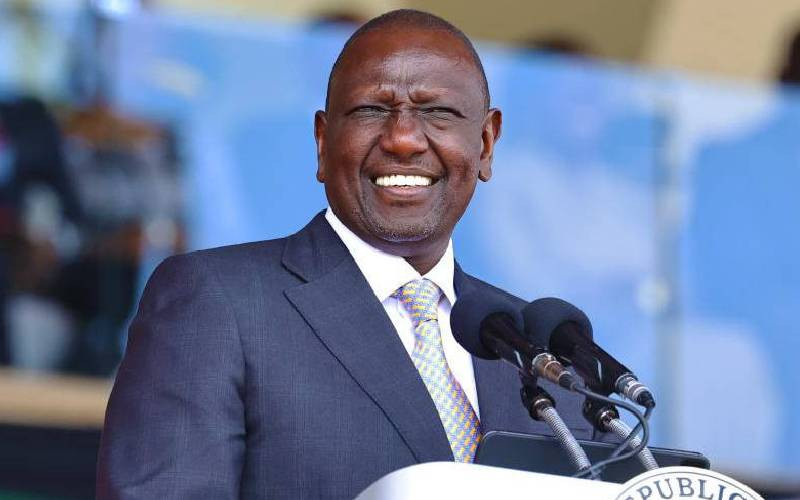
President William Ruto’s visit to Northern Kenya this week provides an important opportunity to better understand the region’s unique socio-economic challenges.
First, there is the devastating impact of the recent drought, persistent gaps in service delivery, and the slow, uneven gains of devolution on people’s welfare. The region has just emerged from one of the worst droughts in recent history.
According to humanitarian agencies, more than 4.3 million Kenyans were left in need of assistance, with northern counties bearing the brunt. Millions of livestock were lost, dealing a severe blow to pastoral livelihoods.
Failures by county governments to meet their obligations are widespread. Yet this visit may not give the president sufficient time to fully grasp the scale of suffering across the region.
Unfortunately, as with past tours, many local leaders are likely to focus more on proximity to power than on presenting the lived realities of their constituents. Public gatherings risk becoming stages for praise rather than platforms for truth.
Several priorities demand urgent attention. The Isiolo–Mandera road, for instance, is critical to the local economy. Successive administrations have failed to complete it. While ongoing efforts are commendable, residents expect the project to be delivered within its original timelines.
Access to safe drinking water remains a crisis. Over 70 per cent of settlements in Northern Kenya lack reliable water sources. During drought seasons, both people and livestock perish in large numbers. Even now, as torrential rains fall, there is no comprehensive strategy to harvest and store water for future use. County resources are too often lost to corruption instead of being invested in sustainable solutions such as solar-powered boreholes and water dams. This must change.
The president’s visit also raises a fundamental question. Where has the more than Sh150 billion allocated to counties over the years gone? Most northern counties, except Garissa County, remain poorly connected to the national electricity grid. Towns such as Mandera and Elwak, among the largest urban centres in the region, still lack reliable power. This visit should mark a turning point in resolving the electricity deficit.
Mandera’s strategic location, bordering Somalia and Ethiopia, presents both opportunity and risk. It has the potential to grow into a thriving dry port and commercial hub, but it also faces serious security challenges. Tarmacking feeder roads between sub-counties is therefore not just an economic priority, but a national security imperative.
More than six decades after independence, it is unacceptable that children are still learning in poor conditions. Education remains a national government function, and Northern Kenya must be prioritized to ensure dignified learning environments. Meanwhile, mental health is almost entirely neglected. There is not a single comprehensive mental health facility serving the vast region.
According to the WHO, Kenya’s maternal mortality ratio remains high, at approximately 342 deaths per 100,000 live births. In northeastern counties, the situation is even worse, sometimes double the national average.
Healthcare facilities across the region are in deplorable condition. They often lack medicines, equipment, and even basic sanitation. These are real issues affecting real people, and they demand solutions, not political rhetoric.
The writer is a resident of Mandera County
Support Independent Journalism
Stand With Bold Journalism.
Stand With The Standard.
Continue
→
Pay via
Secure Payment
Kenya’s most trusted newsroom since 1902
Follow The Standard
channel on WhatsApp
President William Ruto’s visit to Northern Kenya this week provides an important opportunity to better understand the region’s unique socio-economic challenges.
First, there is the devastating impact of the recent drought, persistent gaps in service delivery, and the slow, uneven gains of devolution on people’s welfare. The region has just emerged from one of the worst droughts in recent history.
According to humanitarian agencies, more than 4.3 million Kenyans were left in need of assistance, with northern counties bearing the brunt. Millions of livestock were lost, dealing a severe blow to pastoral livelihoods.
Failures by county governments to meet their obligations are widespread. Yet this visit may not give the president sufficient time to fully grasp the scale of suffering across the region.
Unfortunately, as with past tours, many local leaders are likely to focus more on proximity to power than on presenting the lived realities of their constituents. Public gatherings risk becoming stages for praise rather than platforms for truth.
Several priorities demand urgent attention. The Isiolo–Mandera road, for instance, is critical to the local economy. Successive administrations have failed to complete it. While ongoing efforts are commendable, residents expect the project to be delivered within its original timelines.
Access to safe drinking water remains a crisis. Over 70 per cent of settlements in Northern Kenya lack reliable water sources. During drought seasons, both people and livestock perish in large numbers. Even now, as torrential rains fall, there is no comprehensive strategy to harvest and store water for future use. County resources are too often lost to corruption instead of being invested in sustainable solutions such as solar-powered boreholes and water dams. This must change.
The president’s visit also raises a fundamental question. Where has the more than Sh150 billion allocated to counties over the years gone? Most northern counties, except Garissa County, remain poorly connected to the national electricity grid. Towns such as Mandera and Elwak, among the largest urban centres in the region, still lack reliable power. This visit should mark a turning point in resolving the electricity deficit.
Mandera’s strategic location, bordering Somalia and Ethiopia, presents both opportunity and risk. It has the potential to grow into a thriving dry port and commercial hub, but it also faces serious security challenges. Tarmacking feeder roads between sub-counties is therefore not just an economic priority, but a national security imperative.
More than six decades after independence, it is unacceptable that children are still learning in poor conditions. Education remains a national government function, and Northern Kenya must be prioritized to ensure dignified learning environments. Meanwhile, mental health is almost entirely neglected. There is not a single comprehensive mental health facility serving the vast region.
According to the WHO, Kenya’s maternal mortality ratio remains high, at approximately 342 deaths per 100,000 live births. In northeastern counties, the situation is even worse, sometimes double the national average.
Healthcare facilities across the region are in deplorable condition. They often lack medicines, equipment, and even basic sanitation. These are real issues affecting real people, and they demand solutions, not political rhetoric.
The writer is a resident of Mandera County
Follow The Standard
channel on WhatsApp
By Abukar Abdirahman