



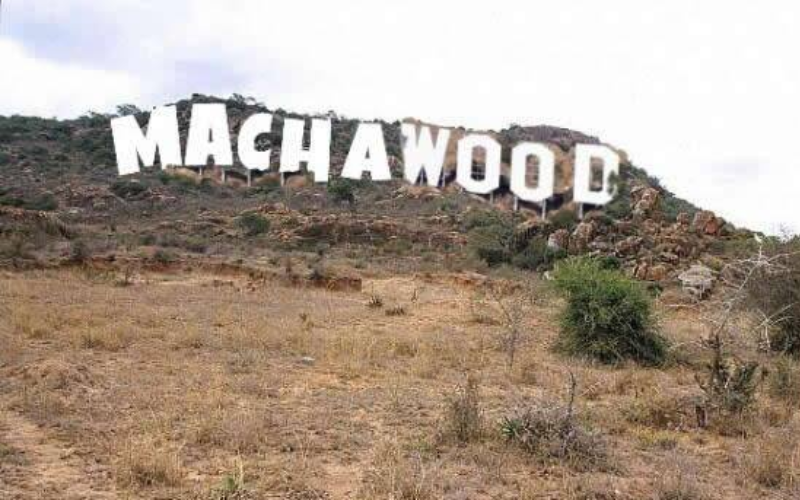
For decades, the Kenyan film industry has spoken with a distinct Nairobi accent. Cameras, funding, and red carpets have largely been confined to the capital, creating a narrative monopoly that rarely strayed beyond the city limits. But a quiet revolution is underway as the era of Cinema Mashinani takes root, turning villages into production powerhouses.
At the Machawood Creatives and Arts Association in Machakos, Alfred Munyua is building from home turf. His initiative attempts to bridge the gap between raw talent and industry access through training and direct pathways to work. Despite the progress, the journey has been difficult.
“Budget remains the biggest challenge,” Munyua says. He points to a persistent undervaluing of the arts where creative work often loses out to priorities that institutions consider more serious.
Licensing remains another hurdle, though collaboration with the county has allowed filmmakers to shoot more freely. Local productions like Ngone Mwaitu have already earned Kalasha nominations. Munyua describes this as visible progress for county-based cinema.
Further east, Nicholas Masibo, chairman of Kilifi Creative Home, has built an ecosystem from the ground up. The group has trained more than 100 young people and hosted masterclasses with Hollywood actors.
“Our festival has since showcased more than 100 locally produced films and built bridges with international festivals, an effort that is steadily putting Kilifi on the creative map,” Masibo says.
However, the fundamentals remain fragile. Funding is limited and filmmakers often face shortages of equipment and skilled crew. This forces teams to share resources and outsource technical work back to Nairobi.
In Murang’a, Stephen Mwangi Kariuki of the Murang’a Cultural Creatives Association is working to ensure local heritage reaches the screen. He notes that stories like Wangu wa Makeri are already resonating beyond the county. After returning home during the pandemic, Kariuki began questioning why the industry could not be built locally.
“Through partnerships with institutions like the Kenya Film Commission and the Kenya Film Classification Board, as well as connections built at platforms like Kalasha, we are working to professionalise the industry’s base,” Kariuki says. He explains that training actors and technicians allows them to compete at a global level.
In Trans Nzoia, Peter Bwire founded Kitale Film Week to address a creative void. He recalls a 2021 screening that drew an unexpected crowd of 200 creatives, proving the local appetite for film was real.
“I saw a community that was desperate to make something work,” Bwire says. He adds that when teenagers contribute their own pocket money every week to make a film, it proves they have stories and are serious about them.
Production in the region remains an uphill climb. Bwire likens the situation to a farmer trying to start from scratch without land or seeds. To survive, he focuses on community-led models and partnerships with local businesses.
“People over programmes. Alignment over funding,” Bwire says, describing a philosophy that prioritises relationships as the foundation for growth.
Operating outside the capital offers access to audiences that have long been culturally underserved. By bringing films directly to these rural spaces, these pioneers are proving that the industry can thrive anywhere there is a story to tell.
“We are removing these cultural deserts,” Bwire says. He insists they are proving an industry can be built wherever there is demand.