



Just weeks after giving birth at a public hospital in Nairobi, 22-year-old Miriam Atieno thought her biggest challenge would be adjusting to life as a first-time mother.
But inside her tiny one-room house in Dandora Phase 4, another fear now keeps her awake at night: getting pregnant again before her body has fully healed.
Atieno says nurses advised her to begin a family planning method after delivery to allow her time to recover and properly care for her newborn baby boy.
She returned to the nearby public health facility, hopeful she would receive the service. Instead, she was told the clinic had run out of contraceptives.
“I was shocked because they told me family planning was important after giving birth,” she says while rocking her baby to sleep.
“The nurse asked me to come back later because there were no injections and no pills.”
Without a stable income, Atieno says seeking the services at a private clinic is beyond her reach.
Her husband works casual jobs in Nairobi’s industrial area and sometimes returns home empty-handed. On good days, the family survives on less than Sh500.
“Private chemists are expensive for us. Right now, we are struggling even to buy diapers and food,” she says.
The young mother says she fears another unplanned pregnancy could make her situation worse.
“I had a difficult pregnancy and delivery. I don’t think my body is ready again,” she says.
Atieno’s story mirrors the growing anxiety among many women in low-income estates who rely on public hospitals for reproductive healthcare services.
Health workers say shortages of family planning commodities in public facilities are leaving thousands of women with limited options.
Some women are being forced to delay contraception, while others are turning to costly private pharmacies they can barely afford.
In Dandora, several mothers are bearing with the frustration after repeatedly visiting clinics only to be told supplies had not been restocked.
For Atieno, every passing week without access to contraception increases uncertainty about her future.
Senators are now warning that the country is staring at a major reproductive health crisis following severe shortages of family planning commodities.
The debate comes at a time when Kenya is working toward Universal Health
Coverage and seeking to reduce maternal mortality, unintended pregnancies, and
unmet need for family planning services.
The alarm was raised in the Senate by Tabitha Mutinda on behalf of the Kenya Young Parliamentarians Association (KYPA), amid concerns over the delayed release of funds allocated for the procurement of contraceptives and related supplies.
According to a statement tabled before the House, Kenya currently has zero national stock of several key commodities, including oral contraceptive pills, emergency contraceptive pills and three-month injectables.
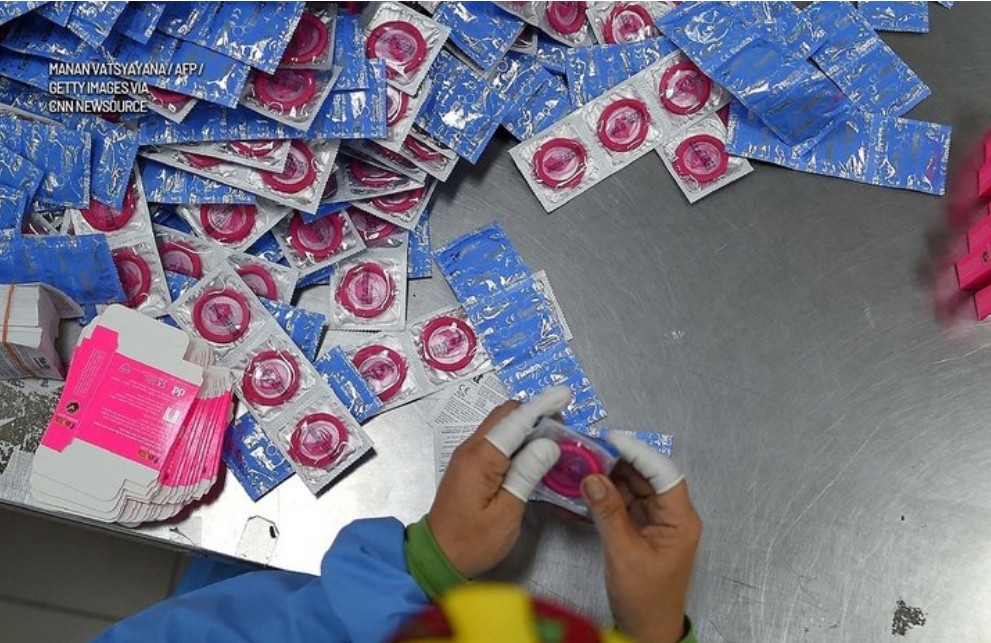
Other supplies such as implants, male condoms and intrauterine contraceptive devices remain critically low.
The Senate heard that although Sh520 million had been allocated in the Supplementary Budget for family planning commodities in the 2025/2026 financial year, the funds had not been disbursed.
An Authority to Incur Expenditure worth Sh250 million was issued to the Kenya Medical Supplies Authority (KEMSA), but senators said no cash had been released to facilitate procurement.
Lawmakers warned that failure to release the money before the close of the financial year in June could lead to the collapse of the country’s contraceptive supply pipeline.
“Family Planning is not merely a health matter, it is a governance issue, a development imperative, and a constitutional obligation. Every day of inaction results in unintended pregnancies, unsafe abortions, and preventable maternal deaths,” Mutinda told the House.
“If cash disbursement is not effected against the issued AIE before the end of the financial year, the Sh520 million allocation will lapse back to Treasury, the procurement window will be lost entirely, and Kenya will enter FY 2026/2027 with zero stock and zero pipeline.”
The statement painted a grim picture of the consequences of continued shortages, projecting 1.2 million unintended pregnancies, 290,000 unsafe abortions and more than 4,000 maternal deaths if the crisis persists.
The shortages could also lead to an additional Sh11.2 billion in healthcare costs.
Senators were told that procurement delays have worsened over the years despite repeated government commitments and partnerships with development agencies.
The statement noted that the procurement lead time for family planning commodities is 13 months from the date funds are received, meaning every delay directly translates into longer stockout periods at health facilities.
The House also heard that Kenya risks losing future support from the United Nations Population Fund after failing to meet funding obligations under a joint financing arrangement.
The statement noted that Kenya had previously met its obligations during the 2021/2022 and 2022/2023 financial years, but now risks losing future matching contributions because of non-disbursement.
“Kenya is currently lagging behind comparable countries, including Uganda, Rwanda, and Zimbabwe,” the statement said.
Mutinda said the crisis was already affecting vulnerable women and girls who rely on public health facilities for reproductive healthcare services.
According to the Economic Survey 2026 report, use of injectable contraceptives among new clients dropped by 10.9 per cent, while uptake of combined oral contraceptive pills fell by 29.9 per cent among new users and 22.7 per cent among revisiting users.
Use of implants dropped by three per cent among new clients, while uptake of progestin-only pills declined by 15 per cent.
Sterilisation procedures also recorded a 13.9 per cent decline among new clients.
“These declines are not isolated statistical fluctuations; they represent the lived reality of millions of women and girls who presented at public health facilities and were turned away, referred elsewhere at prohibitive cost, or forced to abandon their family planning intentions entirely because the commodities simply were not there,” the statement read.
Lawmakers described the trend as evidence of deepening gaps in access to reproductive healthcare services.
The Senate discussions also exposed what lawmakers termed a longstanding pattern of disbursement failures and underfunding of family planning programmes over several financial years.
“The gap between allocation and disbursement is not a technical matter; it is a governance failure of the highest order,” the statement said.
KYPA is now calling on the National Treasury to urgently release the funds, while parliamentary committees investigate persistent delays in the disbursement of family planning allocations.
The lawmakers also want KEMSA to submit updated national stock reports for all family planning commodities to support parliamentary oversight and intervention.
The lawmakers have been working in collaboration with key reproductive health and development partners.
They include the Kenya Women Parliamentarians Association (KEWOPA), the Ministry of Health RMNCAH Department, National Council for Population and Development (NCPD), United Nations Population Fund (UNFPA) and the Health NGOs Network (HENNET).
Others are Population Services Kenya (PSKenya), Jhpiego, Plan International, Reproductive Health Network Kenya (RHNK), Marie Stopes SRHR Alliance, and Wanahabari to advance family planning advocacy, financing, accountability, and commodity security in Kenya.