



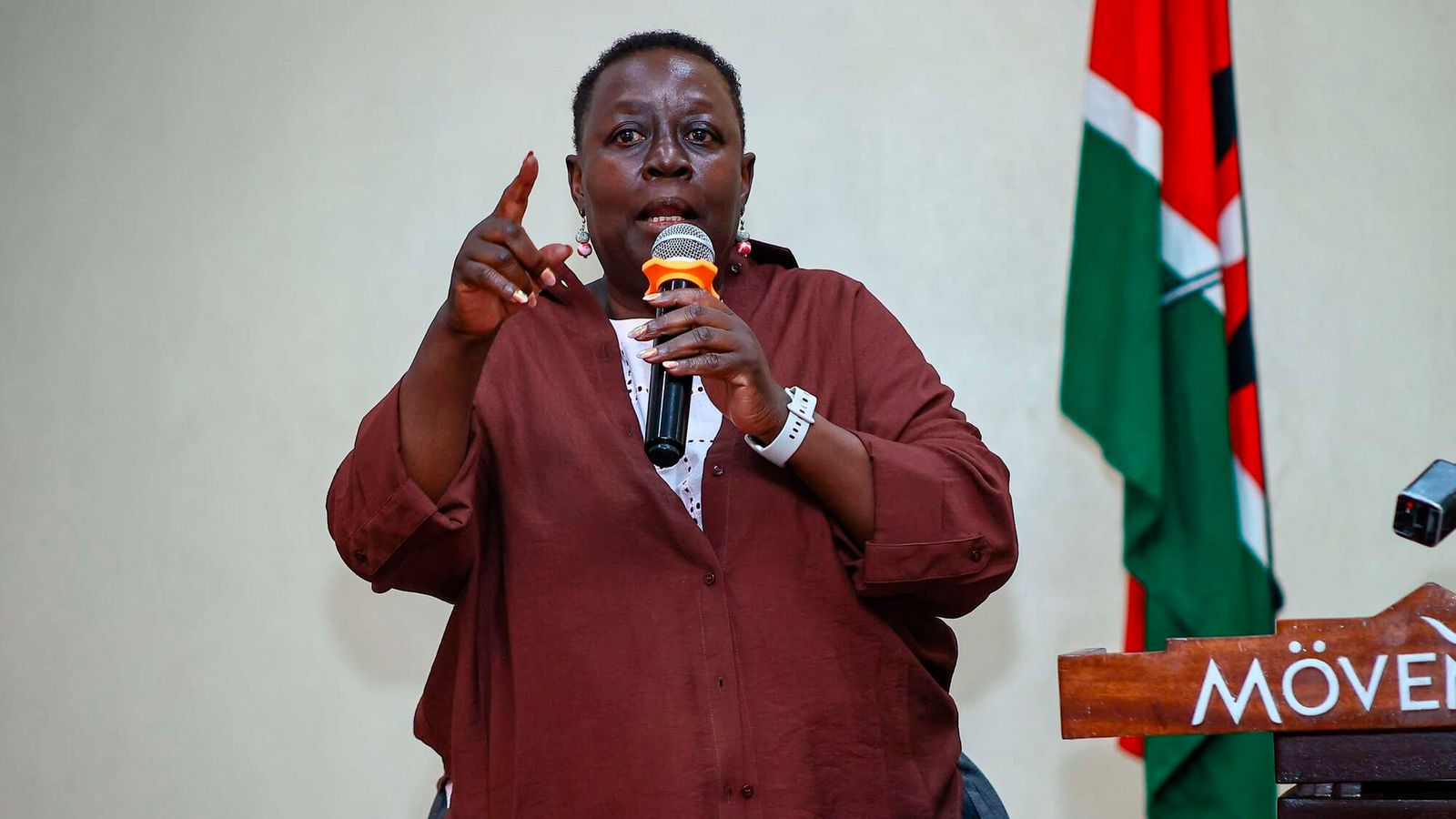


On January 21, 2013, Ruth Odinga appeared on national television to announce her withdrawal from the Kisumu gubernatorial race. Her words were calm, but the decision was heavy.
“I’ve been vying for governor of Kisumu County, and on this breath I would like to say that I have stepped down and come out of the race,” she said.
“My main reason is that I would like peace in my country. I would like to state clearly that for the sake of the Prime Minister (Raila Odinga, my brother), who’s vying and coming from the same area, I would like to step down so that there is peace and that everybody gets the right to stand in these elections.”
Also read: Ruth Odinga: Let me vie to save Raila of nepotism claims
She emphasised that her campaign had been her own, not an extension of the Odinga family name. “I’d also like to state that I have been vying by myself as Ruth Adhiambo Odinga and not as a member of the Odinga family. But then I’ve gone out of my way, I’ve done my campaigns on the ground, I’ve convinced my electorate, but since it has now reached a point where there’s no peace, I would rather have peace.”
She thanked her supporters and promised to return. “I’d like to thank the electorate, the people who have supported me, all my supporters, and ask them to be peaceful, and that I would like peace to reign. And it’s only another five years. I’m still young. I will come back.”
The weight of a name
Thirteen years later, Ruth reflected on that moment as “humiliating”. The withdrawal tormented her, not only because of the political setback but because it symbolised the burden of her lineage. “As an Odinga, you carry both a blessing and a stigma,” she said during a National Gender and Equality Commission meeting in Nairobi on October 2, 2026.
“For a long time, and even up to now, I still fight the stigma, or rather, maybe it’s not a stigma, it’s a blessing, of being an Odinga, of being an Odinga’s daughter, and of being Raila’s sister. That makes me climb big hurdles.”
She pointed out that women in politics are often defined by their relationships to men. “You are either somebody’s sister, somebody’s wife, somebody’s daughter, and never yourself,” she said.
Entering the race
Her decision to contest the Kisumu governorship was grounded in her professional experience, she said. She had served as Managing Director of Petro Plus Africa (2002–05) and later as Chief Executive Officer of Spectre International Limited (2011–13).
“I’ve already been a CEO of two international companies. So I had that experience of being a CEO. I said, let me get in. I want to be. I’m going to be a CEO, as the first woman governor in Kisumu County. And I went for it,” she said.
Also read: Ruth Odinga warns ODM against rushing into pre-election pact with Ruto
But her ambition was met with resistance, even within her family. “I was told everything. I was abused. I was told, ‘Don’t spoil [the general election] for your brother. Your brother is going to be president and needs a new guy.’”
The current Kisumu woman representative questioned why her ambition was treated differently because she was a woman. “If it was a man, it would not have been a problem. He would have been told, ‘If your brother is going, you are the next one who should follow.’ But because I was a woman, I was told, ‘You cannot lead. Leave it for the men,’” she noted.
Family pressure
The pressure extended to family meetings. Ruth said, “We were all called into a meeting and told that all of you, you can’t all vie.”
But Ruth refused to give up: “I said, why should I leave it for the men? I’m vying. Whether Raila wants to stay or Oburu, [whomever] one of you choose, but I’m going.”
Her determination paid off. She says she won the Kisumu Orange Democratic Movement nomination. Yet soon after, she was asked to step aside. “I was told to step down for the governor and I had to come out on national TV, humiliated enough, so that I said, I don’t want to. I mean, I’m leaving, I’m stepping down.”
Deputy governor role
After her withdrawal, she said, it took the intervention of Zipporah Kittony and the late Phoebe Asiyo for her to be handed the deputy governor position. She said they found her in the corridors of Serena Hotel crying after stepping down. They then went to Raila to plead her case.
“They went to my brother and told him, ‘This lady worked hard. If you want her to become anything, then let’s give her the deputy.’ So I was given the deputy governor position,” she said.
And so she deputised Jack Nyanungo Ranguma until 2017.
Beyond 2013
Her political journey did not end with the deputy governorship. From 2017 to 2022, she served as senior adviser to the Kisumu governor and director, special programmes and disaster management. “When I was a deputy governor, I was a very good one. I fought for my government for nine years to ensure that Kisumu was changing.”
Now, Ruth is once again pursuing the same ambition that led her into the 2013 race. “Now I’m going for governor. And I’m sure I will make that happen,” she said.