



Audio By Vocalize
President William Ruto has blamed slow development in some parts of the country on political disagreements among leaders, accusing his critics of undermining his administration’s efforts to distribute development projects equitably.
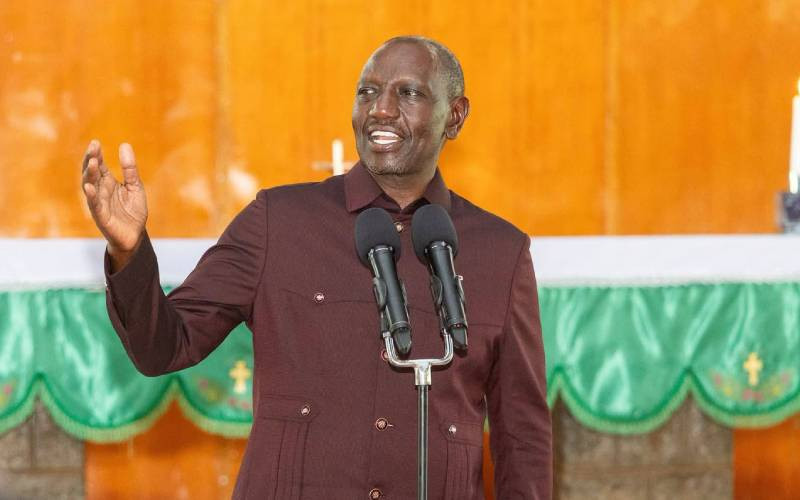
Speaking at St Mark’s Catholic Church in Matunda, Likuyani, the President said political rivalries and disagreements over development priorities were delaying progress, insisting that cooperation between national and local leaders was necessary to accelerate economic growth and improve livelihoods.
“There are people who are mad at me because I have said money and development should get to all parts of the country. I wonder why they are angry, yet we are all equal before the Constitution,” Ruto said.
The President maintained that every region deserved a fair share of public investments, regardless of political or ethnic affiliation, arguing that access to infrastructure and economic opportunities was essential to reducing poverty and improving living standards.
He cited affordable housing, road construction and industrial aggregation parks as among the projects that should be extended to communities across the country, saying no area should be excluded from development programmes.
“Affordable housing should also come here, roads too, industrial aggregation parks,” he said, accusing unnamed political opponents of resisting efforts to address what he described as historical inequalities in resource allocation.
Ruto said he had engaged Likuyani MP Fernandes Barasa, other elected leaders and local representatives to improve cooperation and revive stalled development initiatives, particularly in the agricultural sector.
In his remarks, the President said leaders needed to put aside political differences and work together to ensure communities benefited from government programmes.
“Na ndio sababu hiyo mbali na mambo yaliyokuwa yamekwama Mungu ametusaidia tumejaribu kukwamua hasa sehemu iliyokuwa imekwama ya kilimo,” he said, noting that his administration had sought to revive projects that had stalled, especially those linked to agriculture.
He added that the government’s broader objective was to create opportunities for citizens to earn incomes and escape poverty.
“Nia yetu ni kuhakikisha kila mtu anapata nafasi ya kupata pesa, kupunguza umaskini,” Ruto said, arguing that poverty reduction should remain a central priority for any government.
The President’s remarks come amid continued debate over equitable development, regional disparities and the role of political cooperation in implementing public projects. Questions surrounding the distribution of infrastructure, public resources and economic opportunities remain important to communities seeking improved access to essential services and employment.
Ruto said his administration was committed to ensuring that development reached all parts of the country, arguing that national unity would be strengthened when citizens felt equally considered in government decisions.
He also accused unnamed political figures of sponsoring individuals to criticise his administration because they were uncomfortable with development projects reaching areas they had allegedly neglected.
“They are seeing development happening in all other parts, and that is why they sponsor people to undermine me,” he said.
The President warned those he accused of frustrating his government that he would confront their political activities, insisting that they had little new to offer Kenyans.
“I want to tell the sponsor and his people, I will deal with them. They have nothing new they are telling us. We know them, their capacity, what they can do, what they can achieve,” Ruto said.
He further criticised what he described as politics driven by tribalism, hatred and marginalisation, saying such divisions undermined national cohesion and distracted leaders from addressing citizens’ economic needs.
Ruto said he intended to rally Kenyans across communities around national unity rather than ethnic and regional divisions.
“And in 2027, we will bring all Kenyans together and send that politics of hatred, tribalism and marginalisation away. We will be stronger together as a nation,” he said.
Support Independent Journalism
Stand With Bold Journalism.
Stand With The Standard.
Continue
→
Pay via
Secure Payment
Kenya’s most trusted newsroom since 1902
President William Ruto has blamed slow development in
some parts
of the country on political disagreements among leaders, accusing his critics of undermining his administration’s efforts to distribute development projects equitably.
Speaking at St Mark’s Catholic Church in Matunda, Likuyani, the President said political rivalries and disagreements over development priorities were delaying progress, insisting that cooperation between national and local leaders was necessary to accelerate economic growth and improve livelihoods.
“There are people who are mad at me because I have said money and development should get to all parts of the country. I wonder why they are angry, yet we are all equal before the Constitution,” Ruto said.
The President maintained that every region deserved a fair share of public investments, regardless of political or ethnic affiliation, arguing that access to infrastructure and economic opportunities was essential to reducing poverty and improving living standards.
He cited affordable housing, road construction and industrial
aggregation parks
as among the projects that should be extended to communities across the country, saying no area should be excluded from development programmes.
“Affordable housing should also come here, roads too, industrial aggregation parks,” he said, accusing unnamed political opponents of resisting efforts to address what he described as historical inequalities in resource allocation.
Ruto said he had engaged Likuyani MP Fernandes Barasa, other elected leaders and local representatives to improve cooperation and revive stalled development initiatives, particularly in the agricultural sector.
In his remarks, the President said leaders needed to put aside political differences and work together to ensure communities benefited from government programmes.
“Na ndio sababu hiyo mbali na mambo yaliyokuwa yamekwama Mungu ametusaidia tumejaribu kukwamua hasa sehemu iliyokuwa imekwama ya kilimo,” he said, noting that his administration had sought to revive projects that had stalled, especially those linked to agriculture.
He added that the government’s broader objective was to create opportunities for citizens to earn incomes and escape poverty.
“Nia yetu ni kuhakikisha kila mtu anapata nafasi ya kupata pesa, kupunguza umaskini,” Ruto said, arguing that poverty reduction should remain a central priority for any government.
The President’s remarks come amid continued debate over equitable development, regional disparities and the role of political cooperation in implementing public projects. Questions surrounding the distribution of infrastructure, public resources and economic opportunities remain important to communities seeking improved access to essential services and employment.
Ruto said his administration was committed to ensuring that development reached all parts of the country, arguing that national unity would be strengthened when citizens felt equally considered in government decisions.
He also accused unnamed political figures of sponsoring individuals to criticise his administration because they were uncomfortable with development projects reaching areas they had allegedly neglected.
“They are seeing development happening in all other parts, and that is why they sponsor people to undermine me,” he said.
Stay informed. Subscribe to our newsletter
The President warned those he accused of frustrating his government that he would confront their political activities, insisting that they had little new to offer Kenyans.
“I want to tell the sponsor and his people, I will deal with them. They have nothing new they are telling us. We know them, their capacity, what they can do, what they can achieve,” Ruto said.
He further criticised what he described as politics driven by tribalism, hatred and marginalisation, saying such divisions undermined national cohesion and distracted leaders from addressing citizens’ economic needs.
Ruto said he intended to rally Kenyans across communities around national unity rather than ethnic and regional divisions.
“And in 2027, we will bring all Kenyans together and send that politics of hatred, tribalism and marginalisation away. We will be stronger together as a nation,” he said.
By Mike Kihaki