



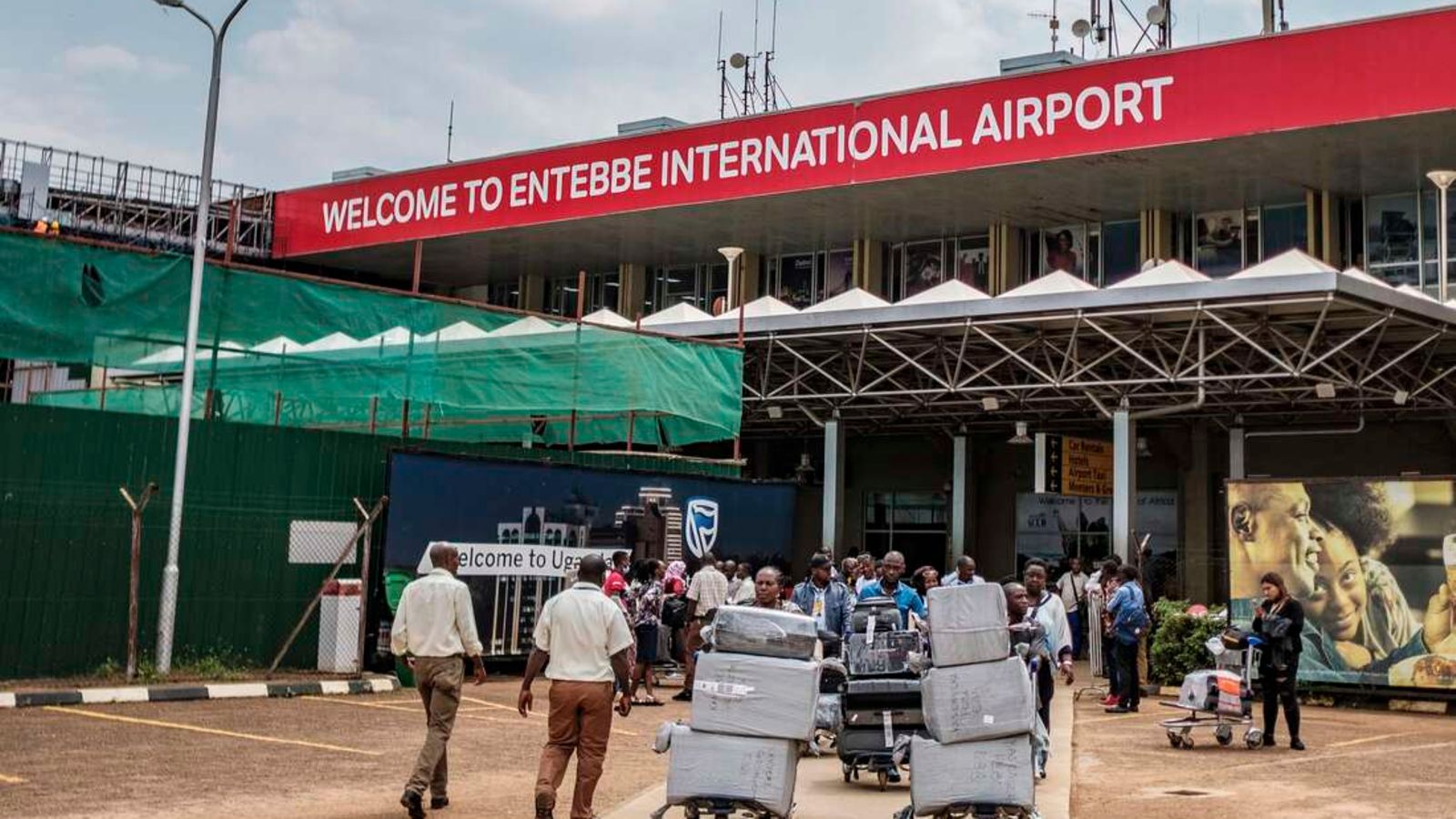


The United States government has issued a new order extending its suspension of travellers from Uganda, the Democratic Republic of Congo (DRC), and South Sudan from entering the country, citing evolving dynamics of the regional Ebola outbreak.
In an October 11 notice, the Centers for Disease Control and Prevention (CDC)—operating under the US Department of Health and Human Services (HHS)—stated that the updated directive “will be in effect for 30 days”.
While acknowledging Uganda’s successful containment efforts, Washington pointed to lingering regional vulnerabilities that it argues pose ongoing risks to public health.
The new notice specifically targets DRC, Uganda, and South Sudan, notably omitting Kenya, where an Ebola case was confirmed last week.
Explaining the rationale behind including Uganda despite its clear status, the CDC cited the high risk of cross-border transmission from neighbouring DRC.
“Although the country [Uganda] has achieved successful containment of the outbreak, continued overland travel from DRC poses an ongoing risk of cross-border transmission, particularly among healthcare workers and in western Ugandan districts that serve as points of entry for travellers seeking medical care,” the CDC noted.
The US health agency cited a recent incident involving transit through Kampala as an illustration of the potential risks.
“For example, on October 6, 2026, the Kenya Ministry of Health announced the country’s first BVD [Bundibugyo Virus Disease] case and death in an individual who had travelled from DRC to Uganda, flown from Kampala to Nairobi on October 2, and was hospitalised before dying on October 5, 2026,” the CDC stated.
Detailing why travellers from the DRC are viewed as a heightened risk, the CDC highlighted that response efforts in eastern DRC remain stretched.
“As recently as October 5, 2026, the ongoing Bundibugyo Ebola virus outbreak in DRC continues to spread despite response efforts,” the notice reads, adding that this geographic expansion is concerning given that containment measures are “still not at the scale” required.
“Contact tracing is currently at 80 percent, a decrease from 87 percent in September and well below the operational threshold of 95 percent needed to successfully slow the spread of this outbreak,” the agency added.
Officials from Uganda’s Ministry of Health were not immediately available to comment on the latest US extension. However, Director General of Health Services Prof Charles Olaro recently maintained that the country remains safe and free of Ebola.
“The Ministry of Health reassures the people of Uganda and the international community that Uganda remains free of Ebola and continues to maintain strong surveillance and preparedness measures to protect public health,” Prof Olaro stated on October 6.
Uganda officially declared an end to its domestic Ebola outbreak on July 28 following effective containment measures. The outbreak had recorded 20 confirmed cases and two deaths, alongside one probable case and one probable death.
Prof Olaro noted that authorities have intensified cross-border surveillance in light of the case reported in Kenya.
“The Ministry of Health is working closely with relevant authorities and partners to intensify cross-border surveillance, enhance information sharing and ensure the timely detection and management of any potential public health threats,” he said, encouraging the public to remain calm, rely on official information, and observe health protocols.
“The Ministry appreciates the continued support and collaboration of health workers, development partners, security agencies, and other stakeholders in strengthening Uganda’s health security,” Prof Olaro added.
The extension of travel restrictions comes despite pushback from international health bodies, including Africa CDC and the World Health Organisation (WHO), which argue against blanket border restrictions.
Africa CDC Director-General Dr Jean Kaseya revealed in August that he had formally written to Washington requesting an end to travel bans on African nations.
“We believe that it’s not time for punishment when countries are being transparent. Why didn’t the US apply travel restrictions to France?” Dr Kaseya asked at the time, referencing an Ebola case previously reported in France.
“We don’t need double standards. And as an African leader, I clearly say no double standard. If there is no travel restriction to France, there is no travel restriction to Uganda,” he argued.
Similarly, WHO Regional Director for Africa Prof Mohamed Yakub Janabi emphasised that travel restrictions violate the International Health Regulations (IHR).
“Travel restrictions and border closures have got no scientific backing that they are effective in controlling outbreaks,” Prof Janabi noted. “So, we continue to encourage all member states… to remind us that the International Health Regulation does not state anywhere that if you close the borders or put travel restrictions in place, it will help.”
Follow our WhatsApp channel for breaking news updates and more stories like this.