

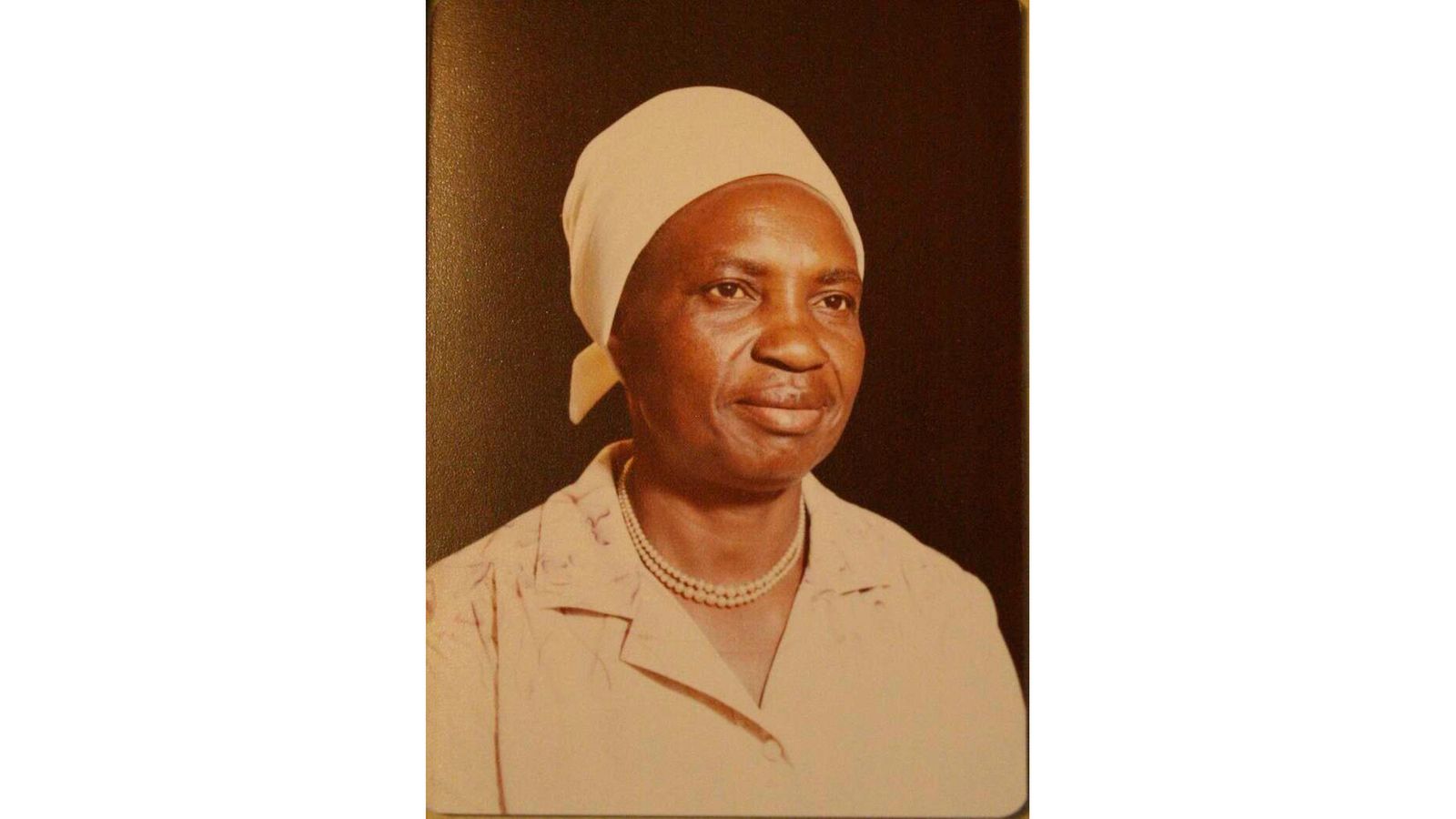

Priscilla Abwao was the first African woman nominated to the Legislative Council, Kenya’s legislature, in 1961. She also attended the Lancaster House constitutional talks on Kenya’s independence and presented a 10-point agenda for women. Records show that she entered the Legislative Council in April 1961.
Her name came up at the recent launch of the Gender Resource Centre (GRC), an online platform by Community Advocacy and Awareness Trust (Crawn Trust). It brings Kenya’s women’s rights organisations, women’s political data and advocacy tools together in one place, at grckenya.org.
The record on Abwao said she entered the Council in April 1961. But when the team behind the GRC checked Kenya Gazette Notice 2266, published on May 16, 1961, they found the date was May 9. It was a small correction, Daisy Amdany, Executive Director of Crawn Trust, told guests at the launch in a Nairobi hotel. But she said it matters because it shows that the information on the new platform shows the facts on the platform can be trusted, even by someone preparing a submission to Parliament.
Also read: Women’s political inclusion targeted in new party audit ahead of nominations
She said her team found similar problems when looking for election data on women. The information was scattered, and some of it was inconsistent. The GRC was supported by Civicus through its Digital Democracy Initiative project and by Global Affairs Canada through the Women’s Voice and Leadership (WVL) project.
Amdany said the idea of the platform came from a complaint she repeatedly heard from grassroots women’s organisations: they were invisible to donors. Funding went to large organisations in Nairobi, she said, while county partners doing much of the mobilisation work remained in the background. “You don’t see the work that those other people (grassroots) are doing,” she said.
Amdany said the answer came in 2019, when the WVL project started. Crawn Trust was in charge of the networking and alliance-building part, and the first thing the team did was find a way to get these small groups noticed. They listed 800 organisations by where they work, what they work on and how to reach them, and put them in a directory you can search by county.
When the plan was written, the hope was that 4,500 people would use the directory within four years. By the time the project ended, more than 100,000 had. The directory now lists more than 1,200 organisations across all 47 counties. They include women-led groups as well as organisations led by men that work to advance women’s rights.
What is inside
Besides the directory, the GRC contains more than 700 records on women in the National Assembly, Senate, county assemblies, the Executive and the Judiciary. Every record is linked to a source.
The data also reveals some surprising trends. In the 2022 General Election, women did not win a single ward seat in six counties. Every woman serving in those county assemblies got there through the two-thirds gender principle. “It is a number on a public platform that anyone in this room can go and check,” Amdany said.
The centre also offers two tools. A memorandum generator which helps women and organisations prepare submissions for public participation from anywhere in the country. A petition builder helps users draft petitions based on constitutional requirements.
Counting down to 2027
The centre also includes a section called Kenya Women Election Watch, which counts down to the 2027 General Election. Its Leadership Data section tracks six decades of women’s political representation, including key milestones and historical firsts.
Amdany said party primaries are the most important stage of the election process because, by the time voters reach the ballot, the choices have largely been made. She said political parties declined to make their nomination rules public during the last election cycle. The centre plans to publish those rules and explain what they mean for women candidates.
Also read: Women in Meru, Nyamira and Kisii demand winnable party seats
The election data on the platform comes from the Independent Electoral and Boundaries Commission (IEBC), which Crawn Trust hopes to partner with. So far, the data shows that women accounted for no more than 49 per cent of registered voters up to 2022.
The team is also searching for data on women’s voting patterns. Election Watch will remain accessible before, during and after the election, before being archived until 2032.
Who it is for
Simply put, the centre is designed for grassroots organisations that want donors to find them. It is also for women and organisations that want to prepare submissions or petitions, as well as anyone seeking information on women in leadership, including journalists.
Linda Kagota, speaking on behalf of Global Affairs Canada, described the centre as “a shared resource and a shared responsibility”. She urged women’s rights organisations, researchers, policymakers, development partners, advocates and citizens to use it and contribute to it, saying collaboration would strengthen the wider movement.
For Amdany, the message is straightforward: “We must make sure we have the information. We must make sure we act on the information.”