



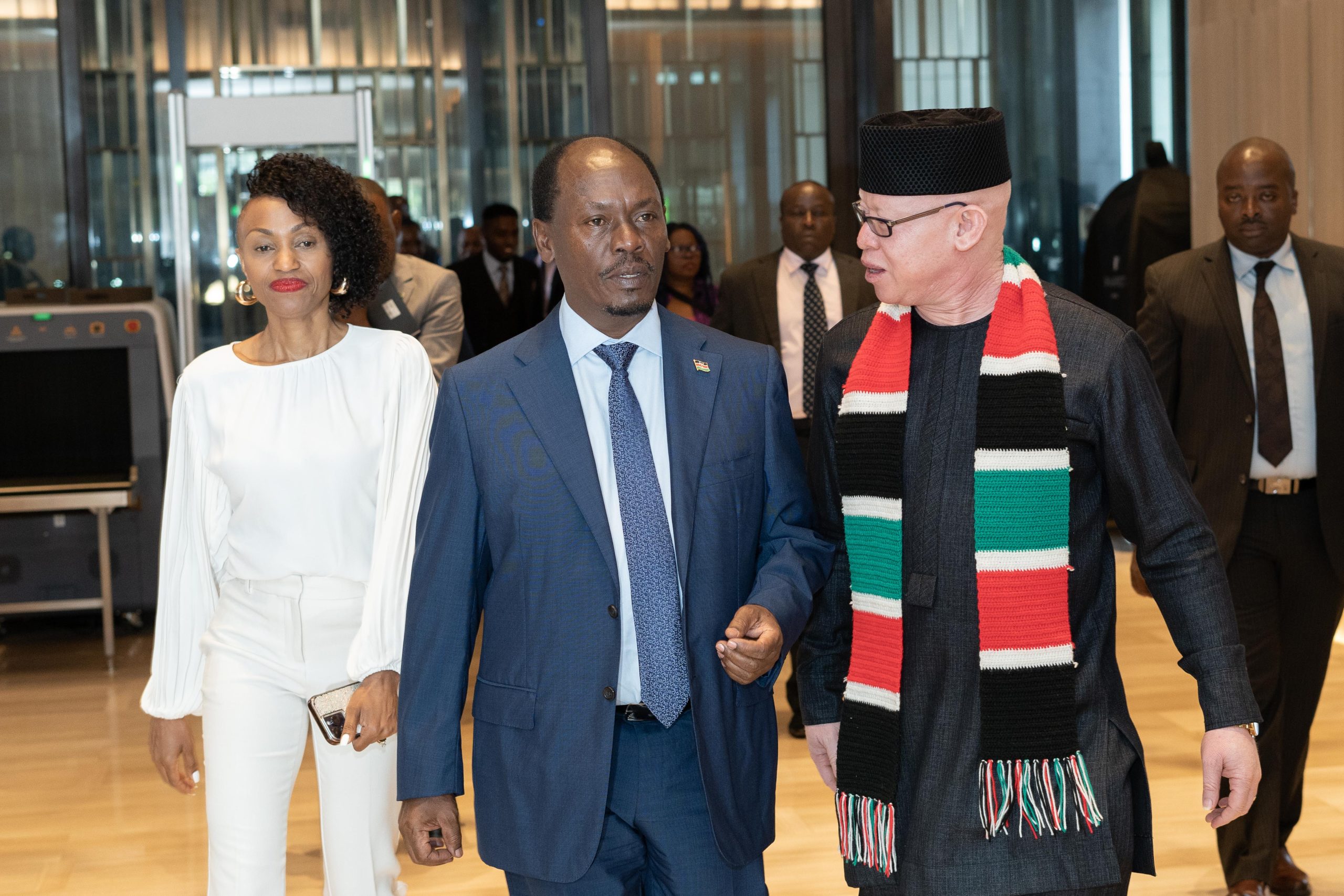
ICT and Digital Economy CS Cabinet Secretary William Kabogo/Handout
An advocacy group for people with disabilities has called on the
government and other stakeholders to make digital tools easy to access for Persons with Disabilities (PWDs).
The call was made during the 6th Inclusive Africa Conference to accelerate
digital accessibility for persons with disabilities in Africa, held in Nairobi on Tuesday.
The organisation, inABLE
advocacy association, implored the government and other stakeholders in the
digital space to design digital tools in a way that will make it easier for
PWDs to access and process information seamlessly.
Speaking during the conference, Irine Mbari, the founder
and executive director, inABLE, reiterated that technology is an equaliser when
it is accessible through digital tools.
“We are already experiencing the transformative power of
digital tools. A dynamic movement is shaping political landscapes, driving
demands for accountability and increasing governance across the continent.
“When
digital products and services are not designed with accessibility in mind, they
create invisible walls that deny users the opportunity to access them, or
engage communities in activities across all areas of life,” she said.
She said this renders digital accessibility a priority and a fundamental
human right, and a necessary economic consideration.
She said digital accessibility is
not a one-time thing but a continuous, evolving process that must be
embedded to restart and grow the development of life.
“Accessibility is not an
item but a core design principle. This requires intentional policies, inclusive
design standards, cross-sector collaboration and sustainable investment,” she
added.
ICT and Digital Economy CS William Kabogo reaffirmed the government’s commitment to making
the more than 33,000 government services that are already digitised on Ecitizen
fully accessible online for persons with disabilities.
“The
Ministry will partner with innovators, leading global technology companies, and
organisations representing Persons with Disabilities to drive forward Kenya’s digital accessibility agenda,” he said.
“Central to this
effort is the implementation of the Accessibility Standard for Digital
Products, which is already transforming how organisations design and deliver
digital services,” the CS said.
Dina Randrianasolo, Director of Strategic Partnerships and Innovation at the Mastercard Foundation, emphasised that digital accessibility
is fundamental to education, employment and the
full participation of young people across Africa.
“More than 135 million
people on the continent require assistive technologies ranging from screen readers and mobility aids to hearing devices
and accessible software,” Randrianasolo said.
Randrianasolo said only three per cent currently have access, hence showing the urgent need to accelerate digital
inclusion efforts to all without discrimination.