



African cinema is collecting international praise and winning awards across festivals abroad, yet young audiences across the continent still struggle to access the very films that tell their stories.
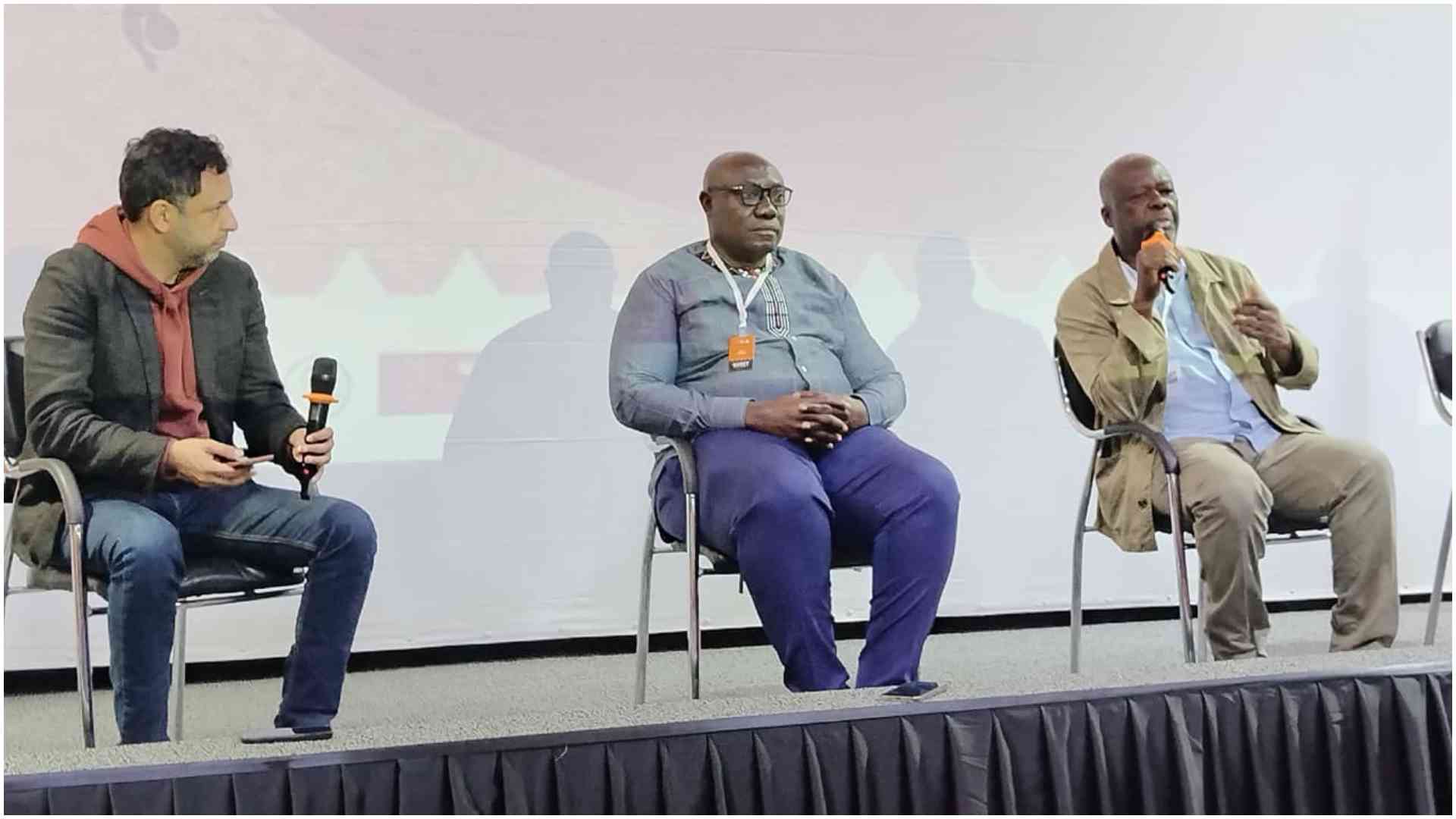
This tension between global celebration and local invisibility defined conversations at the Timimoun International Short Film Festival, held deep in the Algerian Sahara, where filmmakers and producers gathered to interrogate why African films flourish everywhere except at home.
Across panel discussions and screenings, one issue surfaced repeatedly, cutting through the excitement of a growing industry: money, access, and politics are shaping what African audiences get to see.
Democratic Republic of Congo filmmaker and director Balufu Bakuba did not mince his words. He argued that Africa’s increasing dependence on Western funding is influencing the continent’s storytelling.
“Whoever puts money into a film definitely has an impact, but it also depends on the African director. He or she has the ability to define the narrative,” he said.
Bakuba said the priority is clear. Filmmakers need stronger training so they can root their stories in lived African realities without bending to foreign expectations. “When they lack training, they may be influenced to make films for Western audiences.”
For others, the solution is even more radical. Hamburg-based director Ilies Terki believes the only way to preserve authenticity is to avoid outside funding altogether.
He self-finances his work, including Sunny Side Up, which screened at the festival. “I think funding is a trap. Many filmmakers feel they have to shape a story a certain way to get support,” he said. “Some people are bold and tell the stories they want, but at the risk of not being funded. I prefer self-funding.”
Not every country faces the same constraints. In Senegal, the government plays a more active role in nurturing local talent. Germain Coly, the country’s Director of Cinematography, said his office supports productions from development through to final cut, easing bureaucratic hurdles that often slow down filmmaking in other regions.
Young Senegalese directors, he noted, benefit from both financial backing and help navigating documentation and authorisations.
Yet for most African creatives, the biggest question is why their films reach European screens long before African cinemas. Bakuba believes the answer lies in infrastructure. Europe’s long-established distribution networks make it easier for films to premiere and attract audiences.
“African films have premiered more often in Europe because Europe has unlocked the most complex cinema distribution system, while many African countries are still fighting to build structures for cinema,” he said.
Still, he maintains that African storytelling stands taller in one aspect: “Hollywood produces commercial films, but we produce narratives. The quality of humanity in African stories is top-notch.”
Terki, whose films are regularly screened in Europe, agrees. “There’s no reason why films should go there first, maybe because of larger audiences,” he said. “It should be the other way round. There’s raw feedback here. I felt it was important to start in Africa.”
The discussions were not limited to funding and distribution. Political pressure and censorship also cast long shadows across the industry. Bakuba argued that African audiences must be educated about freedom of speech, noting that censorship is a global issue, not a continental one.
“Look at Europe…the war in Ukraine and Russia comes with censorship too. This is not just an African problem; it’s everywhere,” he said.
The reminder felt particularly close to home for Kenyan attendees. In May 2025, authorities in Nairobi arrested four filmmakers linked to the BBC documentary Blood Parliament, which investigated the police shootings of anti-tax protesters outside Parliament in June 2024.
The case reignited debates about creative freedom and the safety of filmmakers challenging political narratives.
Despite the challenges, the energy in Timimoun was hopeful. At least 23 African films were screened during the inaugural edition of the festival, a sign of growing commitment to celebrating local voices.
As policy debates continue, filmmakers across the continent are pushing for a future where African films reach African audiences first, without compromise, restriction, or delay.