



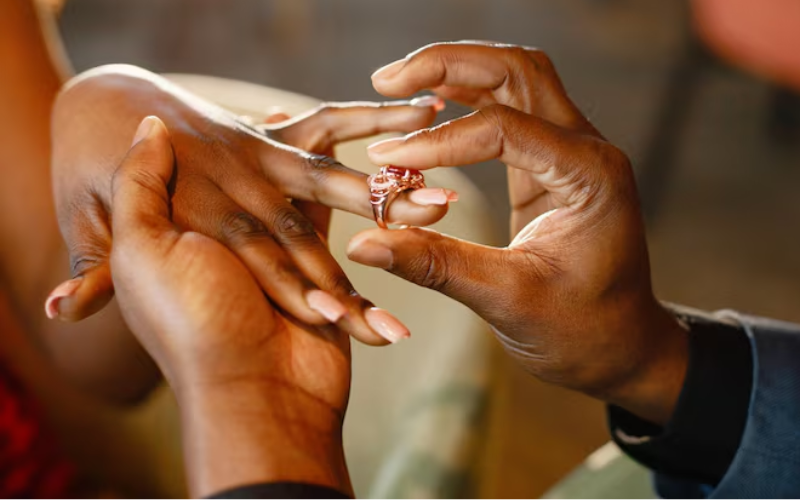
A major marriage competition in South Sudan intensified, drawing widespread online attention as two prominent families presented extraordinary bids for the hand of Ms Atong Aguto Pach.
A Facebook video shared by GD Maniir Media showed what would be a traditional courtship process evolving into a high-stakes cultural spectacle rooted in customs that date back generations.
The Awulian community was the first to table its impressive offer for suitor Mabior Abit Biar.
Their package included 158 cows, Sh3.2m (25,000 USD), 161 goats, 75 sheep, a town bungalow, seven plots of land in Juba, and two vehicles.
These offers are not random displays of wealth; they reflect the belief that a groom must prove his ability to support, honour, and uphold the dignity of the bride’s family.
However, the Abang community quickly countered with an even more substantial bid for their suitor, Thon Chol Riak.
Their revised offer, now standing at 297 cows and Sh9.9m (77,000 USD), expanded on an already generous list with livestock, cash, land, and even Ivy League sponsorship for two in-laws.

This escalation shifted the negotiations from a cultural exchange to a public contest, fueling media buzz and national debate.
Marriage competitions in the South Sudanese tradition are a long-standing cultural practice where families of interested suitors publicly present their dowry offers, each hoping to demonstrate their worthiness and commitment to the bride’s family, according to.
These events are often highly ceremonial, drawing entire communities who gather to witness the exchange of livestock, land, cash, and other forms of wealth.
At their core, they are seen as a sign of honour, a way for a groom’s family to showcase responsibility, stability, and the ability to provide a dignified future for the bride. Cattle, especially, hold deep cultural significance, symbolising continuity, strength, and generational wealth.
Because marriage is viewed not just as a union between two individuals but as a binding alliance between families and clans, these competitions naturally become communal matters.
When more than one suitor expresses interest, the negotiations can intensify, transforming into a highly anticipated event where each side tries to outdo the other in generosity and prestige.
The goal is not merely to “win,” but to express respect for the bride and her family, and to secure a marriage that reflects positively on the entire community.
Over time, however, these traditions have evolved in scale, with modern elements such as cash, vehicles, and property now joining livestock, creating a blend of cultural heritage and contemporary display.
While many admire the grandeur and cultural pride of these traditions, others have expressed concern.
Women’s rights groups have previously warned that such extravagant bidding risks reducing young women to symbols of clan wealth rather than individuals with agency, aspirations, and personal choice. They argue that when dowry traditions become overly transactional, the meaning of marriage can drift away from partnership and mutual respect.
“The radical feminist argues that these expensive marriage contests mirror, almost too neatly, the political and economic logic of commercialisation and objectification of young girls under patriarchy. First, women become the symbolic commodities through which men compete to project wealth, status, and clan honour. Second, the process centres male desire, male rivalry, and male negotiation, reducing women to the prize at the end of a masculine theatre of cultural prestige,” writes Pan Luelmel, who runs a news and commentary platform that covers news, history, culture, literature, and socio-political affairs of South Sudan and the world.
Still, for the families and communities involved, the competition reflects customs that have shaped marriage for generations.