



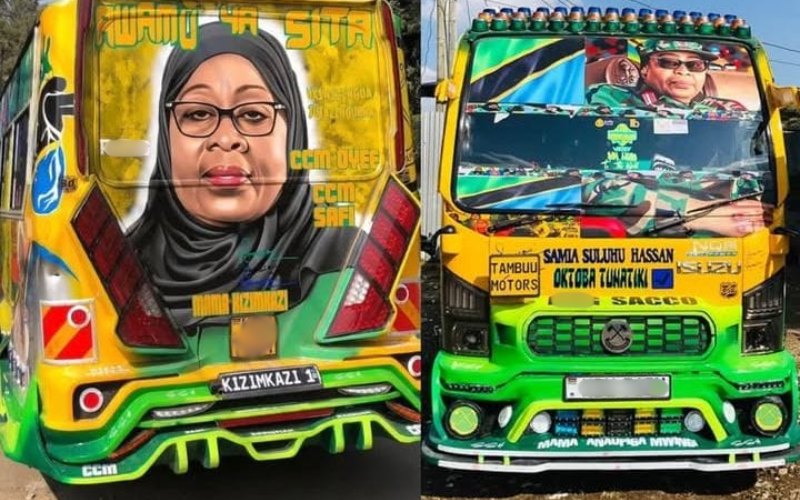
Kenyans have taken to social media to organise boycotts against the popular R.O.G. Matatu service after one of its vehicles featured graffiti of Tanzanian President Samia Suluhu Hassan.
The controversy erupted when a brightly colored “nganya” matatu, known for its flamboyant graffiti art, was spotted cruising Nairobi streets with a mural of President Samia. The artwork included a large portrait of the Tanzanian leader alongside a message praising her leadership.
Online, netizens did not spare the matatu.
Many saw the portrayal of a foreign leader on a Kenyan matatu as disrespectful, sparking a surge of nationalism and renewed pride in local leadership.
Critics used hashtags such as #BoycottROGMatatu and #KenyaFirst to voice their disapproval.
Kelvin Jah Messenger wrote, “Tutaisalimia”.
Lawrence Sabwa added, “This is the same Magufuli Nganya just rebranded. Economic saboteur. R.O.G Sacco, please advise the investor accordingly.”
The boycott gained momentum after local news outlets and online influencers amplified the story, highlighting concerns among Kenyans unsettled by recent events in Tanzania, where Samia Suluhu assumed the presidency with a 98% election win.
While matatu graffiti often celebrates Kenyan heroes or pop culture icons, some vehicles make broader political statements, including commentary on regional relations.
In this case, the artwork appeared to reflect ongoing political dynamics in Tanzania, angering many Kenyans.
R.O.G. Matatu management responded with a statement attempting to defuse tensions, saying the graffiti was meant to celebrate East African unity and political cooperation, not to diminish Kenyan leadership.
“We have learned of the recent boycott affecting one of our buses, causing losses. Due to public demand, we have rebranded the bus to Yanga,” the statement read.
Despite these assurances, the incident has sparked a broader conversation about the intersection of art, culture, and politics in Kenya, and the role of the matatu industry in reflecting, shaping, and at times challenging national identity.