



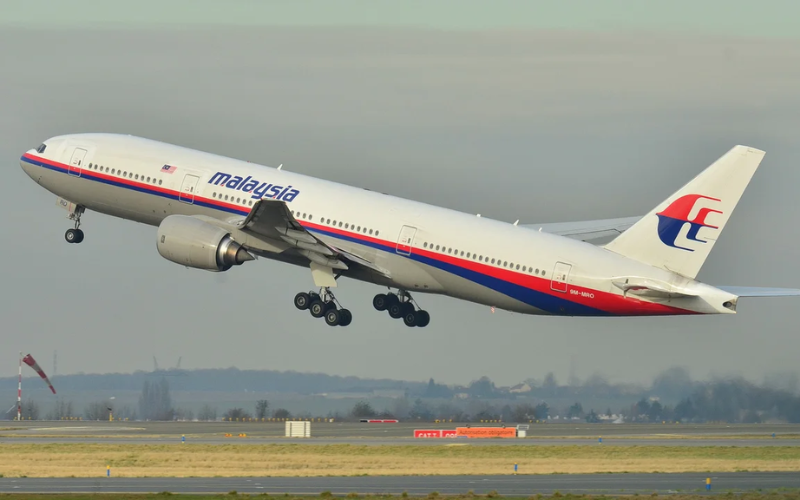
Malaysia will restart the search for missing Malaysia Airlines Flight MH370 later this month, the country’s Transport Ministry has announced, renewing efforts to solve one of the world’s most enduring aviation mysteries.
In a statement on Wednesday, the ministry said the operation will focus on targeted areas assessed to have the highest probability of locating the aircraft.
“Ocean Infinity has confirmed with the Government of Malaysia that it will recommence seabed search operations for a total of 55 days, to be conducted intermittently. The search will be carried out in the targeted area assessed to have the highest probability of locating the aircraft, in accordance with the service agreement entered into between the Government of Malaysia and Ocean Infinity on 25 March 2025.”
The 55-day search will be undertaken under a “no-find, no-fee” agreement with Ocean Infinity, a maritime exploration company based in the United Kingdom and the United States.
Harapan diteruskan.
Operasi pencarian MH370 akan dimulakan semula oleh Ocean Infinity pada 30 Disember 2025.
Kerajaan Malaysia kekal teguh dalam usaha mencari jawapan dan menzahirkan solidariti kepada semua keluarga yang terkesan.
Butiran selanjutnya: https://t.co/JQGnx4L8LS pic.twitter.com/CCbt9xg5wH
— Kementerian Pengangkutan Malaysia (@MOTMalaysia) December 3, 2025
Malaysia’s government approved the arrangement in March, with the company set to receive Sh91.8 million ($70 million) only if significant wreckage from the missing jet is found, according to the Associated Press.
The latest effort follows an earlier attempt by Ocean Infinity, which ended in April after several weeks of underwater reconnaissance were hampered by poor weather and yielded no results.
Flight MH370, a Boeing 777-200ER carrying 239 people, disappeared on 8 March 2014 while flying from Kuala Lumpur to Beijing.
Two-thirds of those on board were Chinese nationals, with others from Malaysia, Indonesia, Australia and several other countries.
Less than an hour after take-off, the aircraft vanished from civilian radar. At 1:19 a.m., the cockpit signed off from Malaysian air traffic control for a routine handover to Vietnamese controllers.
Minutes later, the plane’s transponder stopped transmitting, and the jet diverted sharply from its planned course. Military radar later showed it turning west across the Malay Peninsula before heading toward the southern Indian Ocean.
Investigators, in a 495-page report, said they could not determine why the aircraft diverted and did not rule out the possibility that someone other than the pilots had steered it off course. Satellite data indicated the plane likely flew south until it ran out of fuel and crashed into the remote Indian Ocean.
An Australia-led search between 2014 and 2017 covered 120,000 sq km of ocean but found no conclusive wreckage.
However, debris believed to be from the aircraft later washed ashore in parts of East Africa and the Indian Ocean, including Mozambique, Madagascar, and Réunion Island.
Families of the passengers and crew have long pushed for the search to resume and have sought compensation from Malaysia Airlines, Boeing, engine manufacturer Rolls-Royce and insurance firms including Allianz.