



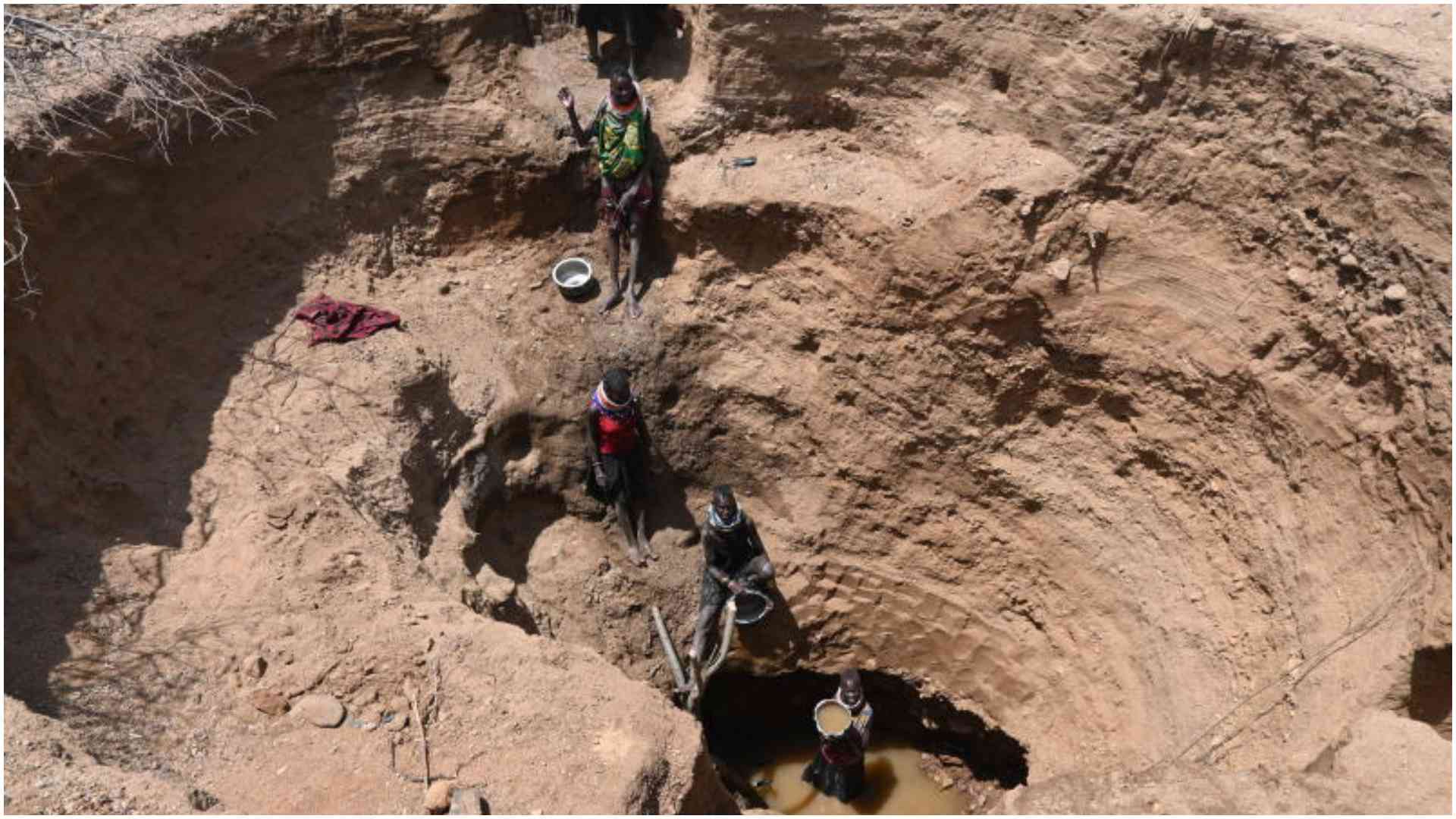
Before dawn breaks in many parts of Kenya, a familiar ritual begins. A girl in Kitui ties a 20-litre jerrycan onto her back and starts the slow descent to a seasonal riverbed.
In Mathare, a mother hurries out of her one-room house, hoping to beat the morning queue. In Turkana, a woman crouches beside a three-stone fire, coaxing flames to life as her children sleep, the weight of the day already pressing against her spine.
Although the scenarios are different, the story is the same, across the country, women and girls are carrying the heaviest burden of inequality; silently, relentlessly, and at great personal cost.
And data tells the devastating reality that Kenya’s inequality is not simply about class or geography. Women are placed at the sharpest end of exploitation by a system that sociologists call patriarchal capitalism, a model in which they are expected to shoulder the country’s most precarious and undervalued labour, while the benefits of that labour flow elsewhere.
It manifests in unpaid domestic work, low-paying informal jobs, lack of assets, and exposure to violence. It also thrives in the blindness of male-dominated decision-making spaces, where women’s needs are routinely downplayed.
According to the Kenya National Bureau of Statistics (KNBS), for every Sh100 earned by a man, a woman earns Sh65. Men dominate ownership of land and property, with male-headed households commanding nearly three times the assets of female-headed ones.
Labour extraction
While women make up the backbone of Kenya’s agricultural and informal sectors, only 13 per cent of them have legal ownership of the land they work on, a figure that falls to just four per cent among the poorest families.
Women are five times more likely than men to be engaged in unpaid labour. A woman in the poorest households faces a one-in-two chance of unemployment, while a man in the richest homes faces only a one-in-five chance.
These numbers, though widely quoted, barely convey the lived reality behind them.
Nairobi-based sociologist Dr Miriam Koskei is blunt: “What we call gender inequality is not accidental. It is extraction. The economy extracts women’s labour with their time, their energy, even their bodies, without compensating them or recognising their contribution. The country’s development is subsidised by women, yet they are treated as dependents.”
In many rural and urban poor households, the backbone of daily survival is unpaid care work. Women cook, clean, fetch water, farm small plots, sell vegetables by the roadside, care for children, nurse the elderly, and still find time to run makeshift micro-businesses that stretch their energy to breaking point.
According to KNBS data, nearly 68 per cent of water used in Kenyan households is fetched by women and girls. In the poorest families, that figure rises to a staggering 83 per cent. The wealthiest families, by contrast, record only 47 per cent.
This labour, invisible to most policymakers, traps women in a cycle of poverty. Every hour spent queuing at a water kiosk is an hour not spent studying, resting, earning, or healing.
Every kilometre walked to a river is a kilometre walked away from opportunity. Every moment spent doing unpaid domestic work pushes women out of the labour market and keeps them at the margins of economic life.
“Unpaid care work is the biggest barrier to women’s empowerment in Kenya,” Dr Koskei says. “It keeps women chained to exhaustion. If you spend twenty hours a week collecting water, that’s twenty hours stolen from your education, your income, your dignity.”
Water, often framed as a simple household necessity, becomes a lens through which the full weight of gender inequality comes into view.
The 2022 Demographic and Health Survey shows that while 91 per cent of urban residents have access to basic drinking water services, only 56 per cent of rural residents enjoy the same.
The county with the lowest coverage, Kitui, stands at just 21 per cent. Nine per cent of Kenyans do not have access to safe drinking water in their homes. Among the poorest communities, this number jumps dramatically.
For women and girls, the journey to collect water is laced with danger. They risk sexual harassment, physical assault, and constant fatigue. In many cases, girls miss school to fetch water; some drop out entirely.
A girl who collects water daily may lose up to 30 per cent of her school days annually — and in the poorest households, the losses are even greater.
Water crisis
Gender empowerment specialist Jacinta Ndanu, working with women in Arid and Semi-Arid Lands (ASAL) counties, says the water crisis is underestimated. “People imagine water collection as a simple domestic task, but for girls it can mean missing school, and for women it can mean risking their safety. Water scarcity is not gender-neutral; it shapes a woman’s destiny in the most intimate ways.”
Water costs in informal settlements compound the crisis. A 20-litre jerrycan in some Nairobi slums costs Sh20 to Sh50, consuming a disproportionate share of low-income households’ earnings. “Water cannot be treated like a luxury commodity,” Ndanu argues. “When water becomes privatised, the poorest women pay with their bodies, their safety, and their futures.”
Behind these structural inequalities lies another insidious form of oppression: economic violence. Experts say it occurs when women are denied access to financial resources, education, property, or income, stripping them of autonomy and trapping them in dependence.
Land is not just an asset; it is security—the basis for loans, farming, shelter, inheritance, and decision-making. Without it, women remain vulnerable. Only a third of Kenyan women own a house or land, and in the poorest quintile, ownership drops to 4 per cent.
“Economic violence is a silent epidemic. It is what keeps women walking on economic quicksand. When you deny a woman land, deny her control of her income, deny her access to formal employment, that is violence. Poverty becomes a trap she cannot climb out of,” Dr Koskei says.
In rural and ASAL counties, climate shocks, droughts, and limited infrastructure compound women’s disadvantages. Droughts force longer walks for water. Failed rains decimate farms. Weak healthcare systems increase maternal health risks. Schools are distant, transport is expensive, and traditional norms are entrenched.
Droughts force women to walk even longer distances in search of water. Failed rains decimate small farms. Weakened healthcare systems mean maternal health risks skyrocket. Schools are far, transport expensive, and traditional norms more entrenched. “A girl in rural Kenya walks a diffeent road from her urban counterpart. Her labour starts earlier, ends later, and carries greater risks. Geography becomes destiny unless interventions reach deep into communities,” Ndanu notes.
Yet women remain largely unheard in decision-making spaces. National and county planning committees are male-dominated. Budgeting rarely considers unpaid care work. Policies on water, land reforms, and social protection fail to integrate women’s lived experiences.
When only elite men are at the table, Dr Koskei says, they make decisions from their worldview — one where they have never had to fetch water at dawn, or choose between childcare and income.
Women contribution
But the story of gender inequality is not only about what women lack; it is also about what they provide. Their unpaid labour lubricates the economy. Their farming produces much of the country’s food. Their informal work feeds and educates families.
Their caregiving stabilises households. Their resilience keeps entire communities afloat. And yet, their contributions remain invisible in Gross Domestic Product (GDP) calculations.
If Kenya is to meaningfully address gender inequality, experts argue that the country must confront the structural roots of the problem. This includes formally recognising unpaid care work and redistributing it through investments in water infrastructure, childcare centres, and rural development.
Further, reforming land laws and ensuring that enforcement mechanisms protect women’s rights is critical, as well as strengthening social protection interventions and enhancing gender-based violence programmes.
“Women are not asking for favours. They are asking for fairness. Their labour already sustains this country. The least Kenya can do is stop punishing them for it,” says Ndanu.
As evening falls on Kitui, the young girl who walked to the river before dawn trudges back up the hill, her jerrycan full and her back aching.
She will do the same tomorrow, and the day after. In Mathare, the market woman counts her day’s earnings and wonders whether she will afford tomorrow’s water. In Turkana, the mother stares at the setting sun, calculating how far she must walk at first light.
Their stories rarely make headlines. Their labour rarely makes reports. But they are the ones holding up the sky. Until Kenya confronts the gendered foundations of its inequality, the unseen work, the unpaid labour, the economic violence, the water burden, and the exclusion from power, women will continue to carry a weight that is not theirs alone to bear.
It is time for the country to acknowledge their struggle, value their contribution, and build systems that finally, genuinely, support them. Only then will the invisible burden begin to lift.