



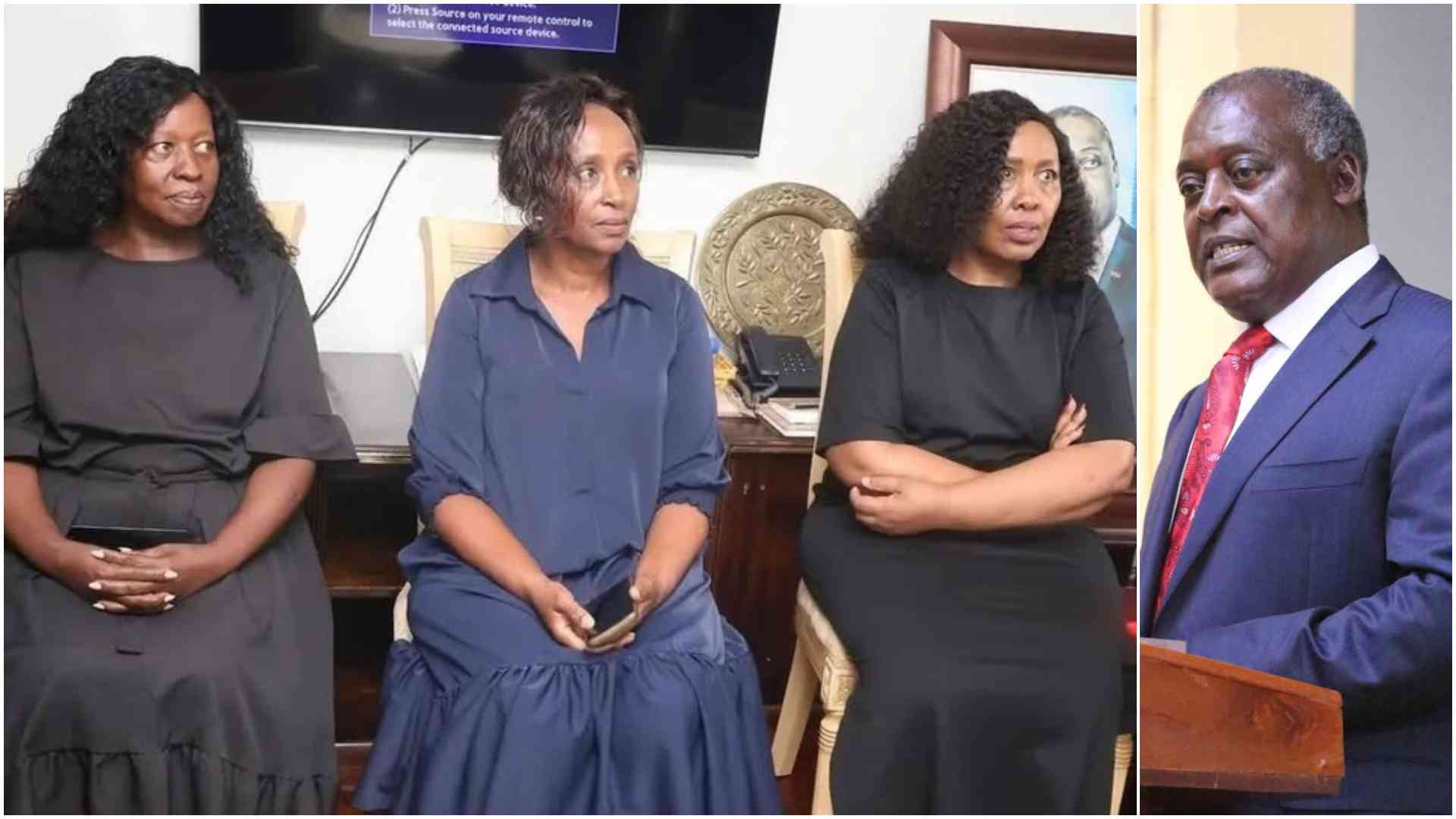
For more than three decades, the name Cyrus Shakhalaga Khwa Jirongo has carried indisputable weight in Kenya’s political and social circles.
To some, he was a daring political mobiliser who mastered the art of power at a remarkably young age. To others, he symbolised the excesses of the Nyayo era; a period when proximity to the State often translated to immense wealth, influence and impunity.
Yet beyond the politics, the crumbled business empire and courtroom battles, it was Jirongo’s unconventional private life that continued to grip public imagination long after his political star dimmed.
In a country where public figures fiercely guard their domestic affairs, Jirongo lived differently. His home life, his marriages, his children and his unapologetic indulgences were never hidden. Instead, they became extensions of his public identity, symbols of power, masculinity and defiance in a society balancing tradition and modernity.
Born on March 21, 1961, Jirongo’s life reads like a political biography of post-independence Kenya itself: from humble beginnings, meteoric rise, flamboyant excess and controversies, all rolled in one.
Even in death, the former Lugari MP and Cabinet minister still stokes up controversy. Many still do not understand how he got involved in an accident some 88 kilometres away from his Nairobi home.
His Mercedes-Benz was reportedly involved in a head-on collision with a Nakuru-bound Climax bus at around 2.19 am on December 13, 2025, at Karai, a blackspot in Naivasha.
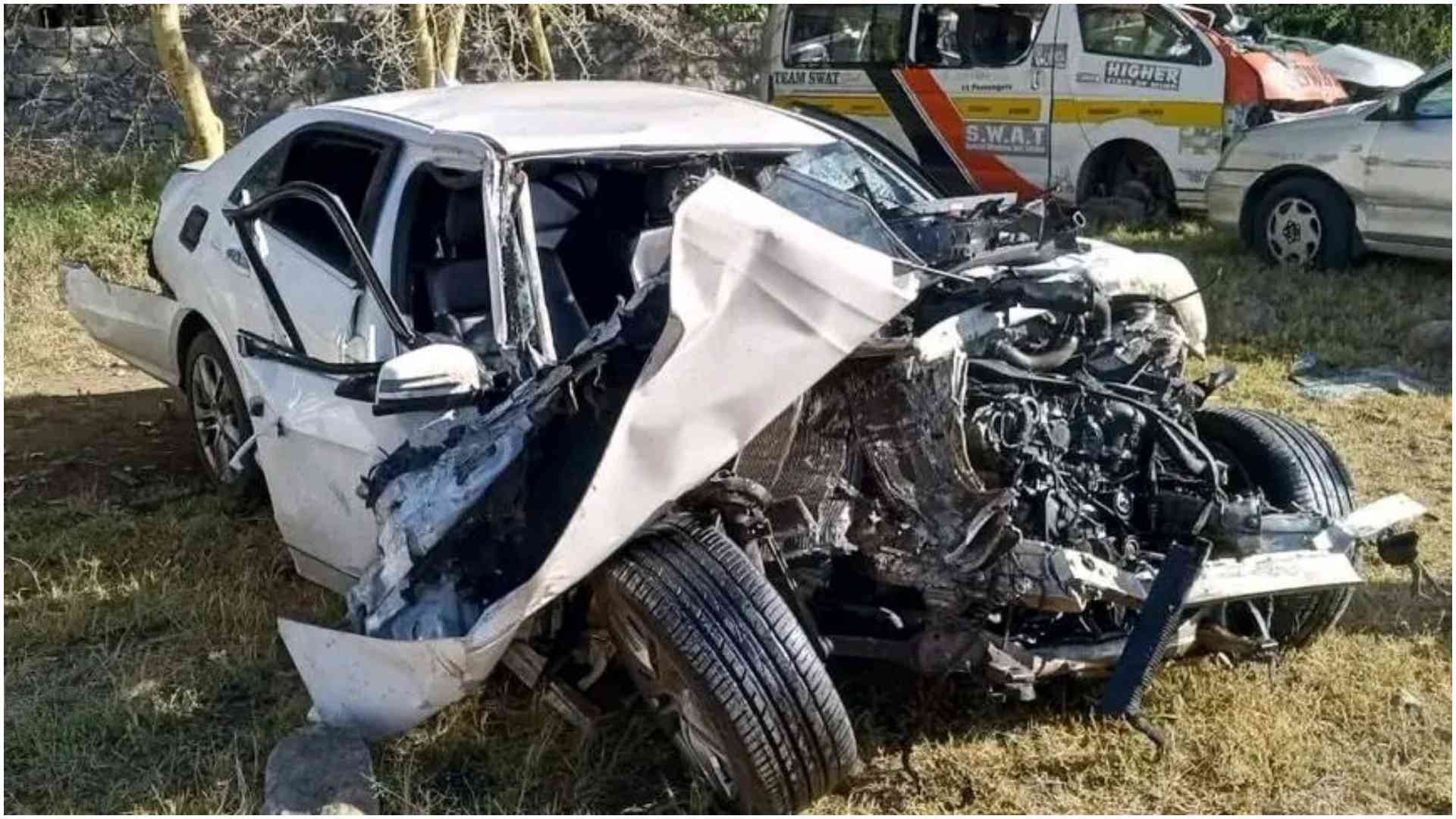

Having told friends at Karen Oasis Restaurant that he was heading straight to his city home at around 11pm, it remains a puzzle how Jirongo found himself in Naivasha in the wee hours. His Benz registration number KCZ 305U is captured by CCTV cameras entering Eagol Petrol Station on the Nairobi-Nakuru from the Nairobi direction. It did not refuel.
The Benz then stops at the station’s exit, and makes a right turn heading back to Nairobi. Few seconds later, it rams into the incoming bus that drags it a few metres along the highway, leaving Jirongo dead. His abrupt death left a shocked nation, coming few weeks after Jirongo expressed fear over his life because of the memoirs he had put together in a book that is yet to be published.
Morality
The postmortem showed he died from severe crush injuries to the chest sustained in a road crash. Pathologists reported blunt force trauma, including multiple rib fractures, a perforated heart, extensive chest and abdominal injuries, and internal bleeding, which were deemed unsurvivable.
The examination also found fractures on the right hand and both lower limbs. Family doctor Martin Wanyoike stated that the heart injuries were incompatible with life.
Jirongo was born into a religious household. His father was a preacher, a man deeply committed to Christian values, discipline and education. From a young age, Jirongo was exposed to sermons about morality, restraint and responsibility.
Ironically, those teachings would later contrast sharply with the life he chose to live, but they also instilled in him confidence, eloquence and commanding presence that served him well in politics.
Education was non-negotiable in the Jirongo household. He earned a place at Mang’u High School, one of Kenya’s most prestigious national schools, where he studied between 1978 and 1981. Mang’u has historically produced some of the country’s most influential leaders, and Jirongo would later fit seamlessly into that lineage of ambitious, politically alert young men.
After Mang’u, he joined Egerton University, graduating in 1986 with a degree that sharpened his intellectual grounding. His hunger for knowledge and power, however, did not stop there.
He later proceeded to the University of Cambridge in the United Kingdom, where he undertook advanced studies in Business Administration, a move that placed him among Kenya’s elite academic class at a time when overseas education was both rare and prestigious.
A Tiriki man from Vihiga County, Jirongo’s father later settled in Lumakanda, Lugari Constituency, where he would eventually plant his political roots and win a parliamentary seat. At the time of the migration around 1964, Jirongo was just a boy, probably aged three years.
Jirongo’s national prominence exploded in the early 1990s, a turbulent period marked by Kenya’s transition from a one-party state to multiparty democracy. While many politicians struggled to adapt, Jirongo thrived.
Young, energetic and daring, he emerged as the chairman of Youth for KANU ’92 (YK’92), a lobby group that became synonymous with political mobilisation, money politics and raw influence and power.
At a time when older, conservative figures dominated politics, Jirongo represented a new kind of power broker. He was young, visibly wealthy and fearless. Campaigns under YK’92 were loud, colourful and heavily funded. Money flowed freely, vehicles moved across the country, and choppers flew in the sky with crowds following wherever Jirongo appeared.
So iconic was his presence that the newly introduced Sh500 note quickly earned the nickname “Jirongo”.
“This currency note was printed during the 1992 campaign period, and it was called Jirongo because he was the first person to distribute it,” recalls Kakamega Deputy Governor Ayub Savula.
The nickname captured the era perfectly: politics reduced to cash, charisma and command.
At the height of his influence, Jirongo’s private life became public currency. Openly polygamous, he had four widely recognised wives, though reports at times placed the number higher.
His first wife was Joan Chemutai Kimeto, a Kalenjin, from whom he later divorced. He went on to marry Christine Nyokabi Kimani, a Kikuyu; Anne Kanini, a Kamba; and Anne Lanoi Pertet, a Maasai.
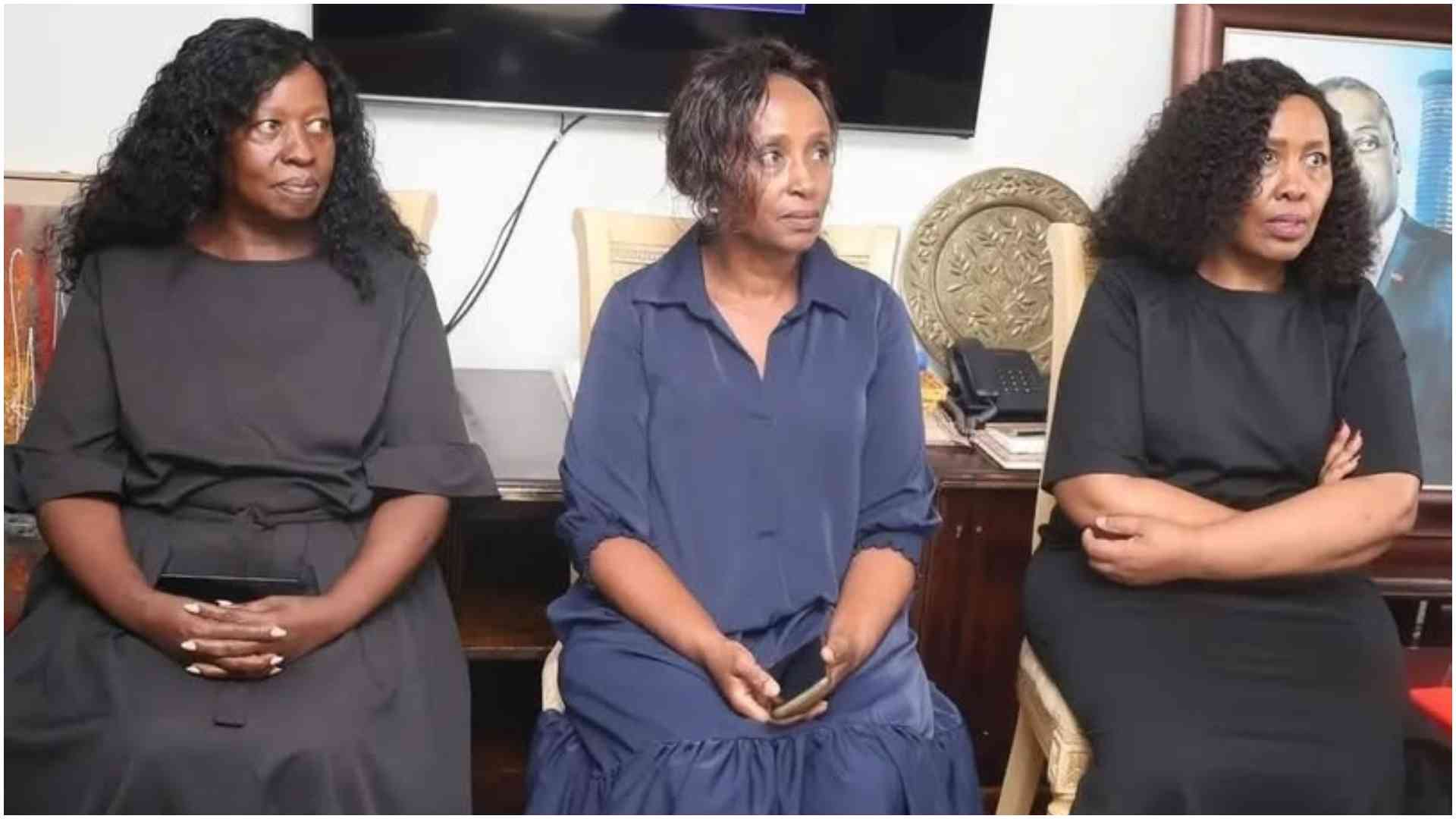
In a country where ethnicity shapes alliances and perceptions, Jirongo’s household quietly mirrored Kenya’s diversity. For admirers, this was proof of influence that cut across communities. For critics, it was a symbol of unchecked privilege.
He maintained multiple homes in Kitale, Lumakanda, Lavington and Gigiri where he lived until his death. His domestic arrangement reinforced his image as a political patriarch, a man who answered to no one.
In many Kenyan communities, particularly among the Luhya, polygamy has historically been associated with wealth, lineage and social standing.
Lawyer Kenneth Essendi explains that the Marriage Act of 2014 recognises polygamy under customary law.
“The Marriage Act, 2014, legalises polygamy primarily under customary and Islamic law. Section 6 classifies marriages as Christian, civil, customary, Hindu, or Islamic, with customary marriages inherently polygamous, allowing a man multiple wives per community customs, provided notification to the Registrar within three months,” says Essendi.
Section 9 of the Act prohibits a person in a monogamous marriage (Christian or civil) from contracting another marriage, but permits additional unions in polygamous forms without spousal consent, and the Tiriki, among the Luhya community, still embraces the same.
However, as Kenya urbanised and conversations around gender equality intensified, Jirongo’s lifestyle increasingly clashed with modernity. Stories of his reported 38 children became fodder for tabloids, memes and dinner-table conversations.
Even in moments of sorrow, Jirongo remained unmistakably himself. During the burial of his daughter, Lorraine Jelagat Jirongo, he delivered a eulogy that blended humour with reflection.
“I have told you she was my daughter. You know how my daughters behave, you know how my sons behave; it is just the way I behave,” he joked. “I am stupid; they are very intelligent,” he told attentive mourners.
In another moment, he narrated how his wandering eyes cost him a relationship, sending mourners into laughter.
“Mama knows she was the prettiest girl in this town at our time. And there is no way, with my big eyes, I’ll not have seen her. Honestly, I would have failed the people I come from… I saw Carol, very, very pretty. But I have bad manners. My eyes kept on seeing because they are bigger. So she took off because I kept on seeing others… and she said, ‘No, I can’t stand this character,” Jirongo cracked up the mourners.
It was a reminder that Jirongo never attempted to sanitise his image, even at funerals.
Years after leaving frontline politics, Jirongo found himself in the blurry world of Kenya’s celebrity culture.
His association with socialites and younger public figures reignited public interest, painting him as the “old money” figure whose influence stretched across generations.
In an era driven by curated images and social media morality, Jirongo’s refusal to apologise for his past choices stood out. To some, it was refreshing. To others, troubling.
Capable of killing
Socialite Huddah Monroe summed it up when she paid tribute to him online: “RIP J. Watu husema Luhyas hawatoi pesa, but this one alinitoa block. Ile block serious.”
The statement went viral; not because it was shocking, but because it reaffirmed what many already believed: Jirongo gave freely, lavishly and without hesitation.
Perhaps no episode captured Jirongo’s fearless candour more than his speech at the funeral of slain businessman Jacob Juma, his close friend.
Standing before mourners, Jirongo accused then Deputy President William Ruto of killing a man in the 1990s; a claim that stunned the nation.
“A young man came around and hit my vehicle with an arrow. George Kapten rushed out of the car, pursued the man then pounced on him. We all thought that we had apprehended the man, but that day my friend (Ruto) made me believe he was capable of killing when he strangled him before us. Those who were around know that the young man was killed by William Ruto,” Jirongo alleged.
The remarks cemented his reputation as a man unafraid of consequences.
Jirongo and Ruto had once been close allies. Both were energetic, ambitious and deeply connected within political and business circles. But the friendship deteriorated, giving way to public rivalry.
“Mimi nakuambia wewe uende pole pole.
The DP would later retort: “Unajua nilikuwa mtu wake wa mkono, sasa anashindwa nilipita wapi,”
Beyond politics, Jirongo’s name became synonymous with real estate, land ownership and protracted legal battles. Through companies such as Sololo Outlets Limited and Kuza Farms & Allied Limited, he undertook massive housing projects that later got entangled in legal disputes.
Court records show he was among the largest borrowers from Postbank Credit Limited, which collapsed in the 1990s after issuing unsecured loans to politically connected individuals.
Projects linked to him included Hazina Estate, Saika Estate, and Kemri Estate.
Hazina Estate, built on land belonging to the National Social Security Fund (NSSF) sparked years of litigation over compensation.
In 2017, Jirongo made headlines after the High Court ruled that he was personally liable to pay Sh110 million to Central Organisation of Trade Unions (Cotu) Secretary-General Francis Atwoli.
In its ruling, the court affirmed that the Cotu boss was entitled to enforce repayment of a Sh100 million “friendly loan” he had advanced to Jirongo, together with Sh10 million in interest.
Court papers show that Jirongo acknowledged receiving the loan from Atwoli, which was payable within 50 days alongside the agreed Sh10 million interest.
The decision came barely a week after another court declared him bankrupt, having found that he was unable to settle Sh700 million owed to eight companies.
Justice Francis Tuiyott dismissed Jirongo’s defence, ruling that his indebtedness was plain and obvious.
Yet amid financial collapse, stories of Jirongo’s generosity persisted. Those close to him describe a man who made money easily and lost it just as easily.
He could receive millions one day and give it all away the next. He hated seeing people suffer while he had means. It was generosity without strategy, compassion without caution.
Beyond politics and business, Jirongo served as AFC Leopards chairman in 1991, earning respect within Kenyan football circles.
As elders in Lumakanda prepare for his burial, Kenya reflects on a man who embodied its contradictions.
Jirongo lived loudly, loved openly, gave recklessly and ruled fearlessly. His private life was never private; it was political, symbolic and deeply Kenyan.
He leaves behind a legacy that defies simple judgment: part hero, part cautionary tale, wholly unforgettable. In life, he commanded attention. In death, he still does.