



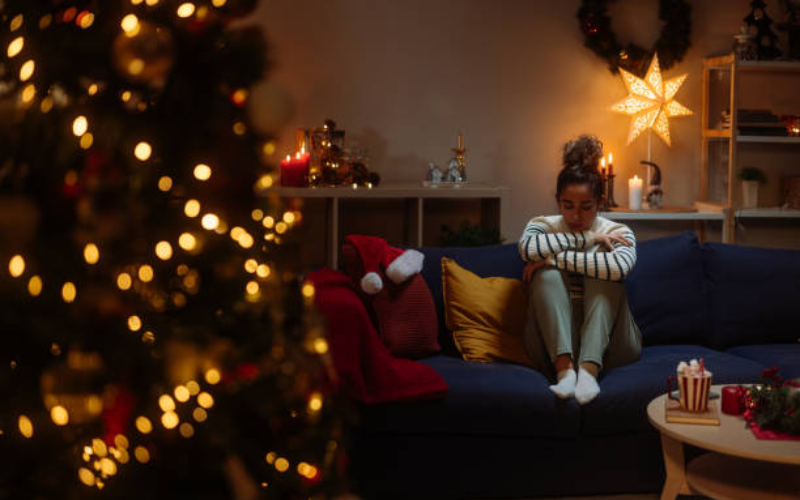
By the time Christmas decorations come down, the silence feels louder. The visitors have left, plates are stacked away, and the house returns to its usual shape, only now, it feels emptier.
For many families, the days after Christmas are not filled with cheer but with a quiet reckoning. This is the season few people talk about – the season when Christmas does not heal everything, when it exposes what is missing, when children notice the cracks, and adults try hard to hide.
For families navigating separation, grief, illness, or strained relationships, Christmas can arrive already broken and leave behind questions for which no one prepared answers.
Why is it different this year?
In a small rural village, Ann Kairuthi, a mother of two, says last Christmas was the hardest of her life. It was the first one since her husband moved out.
“We tried to keep things normal,” she recalls. “We decorated, we cooked together with the children, but my son kept asking when his father would arrive,” she recollects.
Experts say children are keen observers of emotional change. They may not understand adult decisions, but they feel the absence sharply, especially during seasons built around togetherness.
“Children expect Christmas to restore what the year has disrupted, and when it doesn’t, they experience confusion, sadness, and sometimes guilt,” explains Lisa Wanjiro, a counsellor and family coach.
Many children, she says, assume that if a family is not together, someone is to blame, and oftentimes, they blame themselves.
The weight of expectations
The family coach says Christmas carries heavy cultural expectations – reunion, abundance, laughter, unity, and when families fall short of this ideal, parents often feel they have failed, and work even harder to compensate.
“Some overspend, some overperform, while some insist on forced cheer,” she notes.
Psychologists warn that pretending everything is fine can leave children feeling unseen.
“Children don’t need perfection,” says the counsellor. “They need honesty that is age-appropriate and reassuring.”
In homes where grief is present, following the death of a parent, sibling, or close relative, Christmas becomes especially complex. Traditions once shared now feel fragile. Familiar songs trigger tears. Empty chairs speak loudly.
A widowed father, Joseph Ndunda, recalls his daughter asking if they could skip Christmas altogether. “She said it hurt too much to pretend,” he says. Though they did not skip it, they changed it.
Making space for grief
One of the hardest lessons for parents is learning that grief does not pause for holidays.
“Children grieve differently from adults,” explains Prof Rebecca Wambua, an educationist, author and Counsellor. “They may appear fine one moment and deeply sad the next. This unpredictability is normal.”
She says, suppressing grief in the name of celebration often backfires as children may act out, withdraw, or develop anxiety when emotions have no safe outlet.
She recommends allowing children to: talk about who or what is missing, ask difficult questions, and create new rituals that honour memory.
For some families, she explains, this means lighting a candle, while for others, it means visiting a grave, sharing stories, or allowing a quiet moment during the day.
“Grief acknowledged becomes grief shared,” says the counsellor. “That sharing strengthens children emotionally.”
When families are split
For separated or divorced parents, Christmas often comes with logistical and emotional strain. Negotiating where children spend the day, or the season, can be painful. Catherine Mugendi, a counsellor and family coach, says that children may feel torn between parents, worried about disappointing one or the other.
This is how Ann experienced it while navigating her first post-separation Christmas. She says she was heartbroken by the actions of her daughter, packing and unpacking her bag repeatedly. “She didn’t want to forget anything, and I realised she was carrying more than clothes. She was carrying loyalty,” she explains.
She urges parents to avoid placing children in the middle.
“Children should not feel responsible for adult emotions, and reassurance is crucial. Clear communication, consistent routines, and permission to enjoy time with both parents help children feel secure, even when circumstances are imperfect,” says Coach Mugendi.
Redefining “normal”
Wanjiro says that after Christmas, when routines begin to return, children often process the holiday more deeply – this is when questions surface: “Will next year be the same?” “Are we still a family?” “Will things get better?”
She explains that parents do not need perfect answers.
“What children need is emotional presence, and an answer such as ‘I don’t know, but I’m here’ is powerful,” says the counsellor, explaining that many families find healing in redefining traditions, letting go of what no longer fits and creating new rhythms that reflect their reality.
Justina Anyango, a single mother, shares how she and her children now spend the days after Christmas volunteering together. “It gives us perspective, and reminds us that broken doesn’t mean empty,” she says.
Teaching resilience, gently
Though painful, Prof Wambua writes in her book, The Hows, that difficult holidays can become formative moments in a child’s emotional development. “This is so when parents name feelings, model coping, and show compassion toward themselves. This helps children learn that sadness is survivable,” she explains.
The educationist says resilience is not taught through avoiding pain, but it is taught through walking through pain together.
This, she says, does not mean burdening children with adult struggles, but it does mean allowing authenticity.
The week between Christmas and the New Year is often the quietest of the year. It is also the most revealing. In this space, experts say, families have an opportunity to reset, not by pretending everything is fine, but by acknowledging what is true.
Broken holidays do not define broken families. They define families learning how to hold complexity with care.
As Anne reflects: “It wasn’t the Christmas I imagined, but it taught my children that love doesn’t disappear when things fall apart.”
And perhaps that lesson, though hard-earned, lasts far beyond the season.