



For more than a century, Africa’s famed wild animals have served as the primary draw for tourists to the region. This was no accident. The trend was popularised by influential global figures such as former US president Theodore Roosevelt, Ernest Hemingway, Karen Blixen and Edward, Prince of Wales.
It was Roosevelt who popularised the term “Big Five” during his 1909 trip to Kenya, where he collected wildlife artefacts for museums back home.
In the wake of these trailblazers, tour outfits cropped up to take advantage of a curious Western world.
Kenya’s wild spaces began reeling in wildlife enthusiasts eager to experience sightings of the Big Five in their natural habitats. In time, tourism in the country became almost synonymous with wildlife viewing.
Early travellers also popularised the term “safari,” a word rooted in the Arabic safariya, meaning a voyage. So popular were these journeys that safari became one of the first Swahili words to find its way into the English dictionary.
In the early days of the safari, clients slept in tents and showered using hot water poured into collapsible canvas containers hoisted high above the tents. In many camps and lodges across the country, some of these traditions still endure.
However, a new generation of travellers, no longer satisfied with simply spotting a lion or cheetah on a kill, is emerging. Neither are they content with drab tents offering only the most basic amenities.
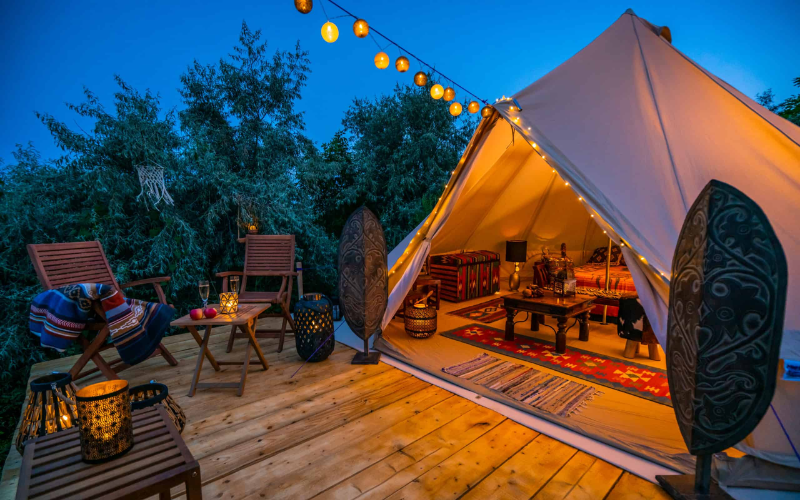
Enter glamping, or glamorous camping, where holistic experiences complement wildlife tourism.
Here, guests enjoy resort-style amenities such as WiFi, jacuzzis and fully equipped gyms—services once unheard of in traditional tourism, where game drives were the core activity.
“Unlike traditional tourism focused on sightseeing, experiential travel prioritises authentic connections, unique activities and personal growth. This trend is not only transforming traveller expectations but also redefining opportunities for tourism businesses worldwide,” states travel blog gocleartrip.com.
According to the blog, travellers are increasingly inclined to immerse themselves in local activities and culture, just as much as they enjoy wildlife sightings.
Newer lodges in Kenya, for example, are no longer just places to eat and sleep. They are evolving into centres of immersive experiences, where guest storytellers, expert stargazers and cultural guides introduce visitors to local ways of life.
During a recent visit to Sera Conservancy in Samburu, I met Biko Lepartingat, a local guide at Saruni Rhino who, in addition to leading guests through Kenya’s wild north, never misses a chance to showcase the Samburu way of life.
One evening, we visited Nawok Koon, a small village tucked deep within the conservancy. We arrived just as goats and their young herders returned from the grazing fields. At the boma, women armed with small metallic cups tugged at one goat at a time, milking them into traditional calabashes.
Song filled the air as young men engaged in mock fights. The Samburu are often referred to as the “butterfly people” because of their colourful regalia, which includes bright headgear adorned with ostrich feathers.
Biko briefly joined the young men before helping milk one of the goats. I tried my hand at it too, grabbing a not-so-friendly goat by the hind leg.
“This is the new tourism,” Biko told me. “No visitor leaves Sera without learning how to milk. They like the experience.”
After a game drive in Samburu National Reserve, I later met Ian Lekiluai, a professional stargazer based at Basecamp Samburu within Kalama Conservancy. At a campfire, Lekiluai pointed a laser into the sky, tracing the visible stretch of the Milky Way galaxy. The Samburu refer to the star-filled heavens as “God’s livestock.”
He then moved the laser to the four stars of Crux before sweeping across to Orion the hunter.
“All answers to life’s questions can be found in the sky,” he said. “If these stars dim their brightness, prepare for a drought.”
According to Lekiluai, stargazing has become an integral part of the modern travel experience, with lodges adjusting their offerings to accommodate the trend.
Basecamp Samburu, for instance, has curated night-time experiences through star beds, allowing guests to watch as stars, planets, galaxies and constellations glide across the equatorial sky.
“Those who sleep in these beds want to experience the full night sky near the equator,” he said. “They cannot do that back home in America or Europe, where it is cloudy for much of the year and light pollution is high.”
The Maasai Mara, too, has embraced its own version of glamping, where guests are immersed in local life through exclusive bush walks and evening talks by elders. With many lodges now installing strong internet connections, visitors can livestream these experiences in real time—a sharp departure from the past, when such activities were frowned upon.
Whether it is waking up to birdsong while sipping coffee on a veranda in the Maasai Mara, dining on gourmet meals in the heart of Laikipia, or falling asleep beneath a canopy of stars in Samburu, immersive travel experiences are reimagining adventure—proof that luxury and wilderness can coexist beautifully in Kenya.