



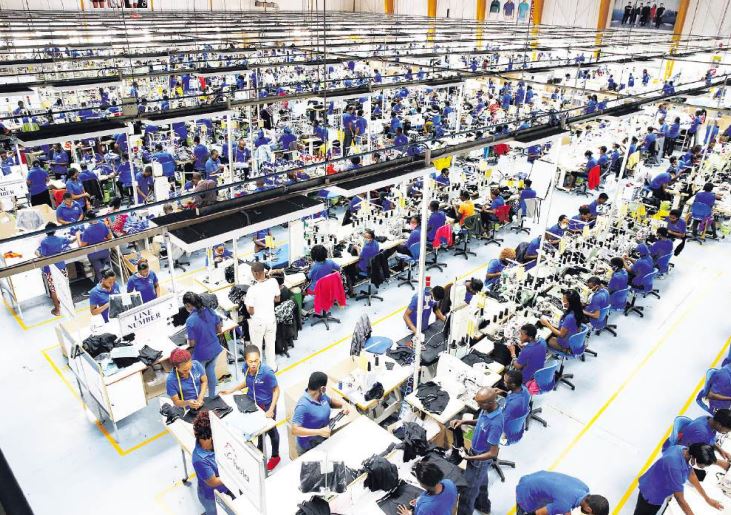
Kenyan workers prepare men’s underwear at Hela Intimates Export Processing Zone factory in Athi River, Machakos./FILE
Kenya’s position
in the international market weakened sharply in the third quarter of 2025, with
the current account deficit widening more than threefold to Sh135.3 billion.
This was an
increase from Sh43.5 billion when compared to the same period in 2024, according to
new data released by the Kenya National Bureau of Statistics (KNBS).
The widening
deficit means that the country is spending more foreign currency than it is
earning or rather importing more goods, services, income and transferes, than it is exporting.
The deterioration
was driven largely by a growing merchandise trade deficit, a shrinking surplus
in services and rising debt-servicing obligations by the government, pointing
to a persistent structural pressure on the country’s balance of payments.
In the review
period, KNBS data shows that the merchandise trade deficit expanded to Sh355.8
billion in the quarter ending September 2025, from Sh321.1 billion a year
earlier. This reflected a sharper increase in imports relative to export
earnings.
While exports rose
by Sh48.0 billion, imports surged by a much larger Sh82.7 billion, pushing the
trade gap wider.
“The higher import
bill was mainly attributed to increased imports of industrial machinery, iron
and steel, and road motor vehicles. Imports of industrial machinery jumped by
nearly 95 per cent, while iron and steel imports rose 41 per cent, and road
motor vehicles by 29.1 per cent during the quarter,” KNBS said in its quarterly
report.
In contrast, Kenya
recorded lower import expenditure on petroleum products, medicinal and
pharmaceutical products, wheat and chemical fertilisers, offering some relief
but not enough to offset the overall surge in imports.
On the export
front, total export earnings rose modestly to Sh289.4 billion, representing a 2.5
per cent increase compared to the third quarter of 2024.
Growth was largely
supported by stronger performance in animal and vegetable oils, whose export
value jumped 24.3 per cent and cut flowers, which recorded an 11.6 per cent
increase.
“Earnings from
domestic exports increased by 1.2 per cent in the third quarter of 2025
compared with the same quarter of 2024. This was primarily contributed by
higher export values of animal and vegetable oils and cut flowers, which rose
by 24.3 per cent and 11.6 per cent, respectively,” the report reads in part.
“Articles of
apparel and clothing accessories as well as edible products and preparations,
also recorded notable increases in their values during the review period.”
Regionally, Africa
remained Kenya’s largest export destination, accounting for 44.6 per cent of
total export earnings, supported by strong growth in exports to the Democratic
Republic of Congo, Uganda, Egypt and Rwanda.
Exports to Europe
also rose, driven by higher shipments of cut flowers and macadamia nuts,
particularly to the Netherlands.
However, exports
to Asia contracted by 14.2 per cent, with notable declines recorded in
shipments to the United Arab Emirates, India, Pakistan and Yemen, while
earnings from the Americas fell due to reduced coffee exports to the United
States.
Beyond trade in
goods, Kenya’s services account surplus shrank significantly, declining from Sh100.6
billion in the third quarter of 2024 to Sh57.2 billion in 2025.
The drop was
attributed to reduced net inflows from travel, transport, and government goods
and services.
Although tourism
receipts remained substantial, higher outbound travel and service payments
narrowed the net surplus.
The primary income
deficit narrowed slightly to Sh76.5 billion, supported by higher income
receipts, but continued outflows in the form of interest payments and profit
repatriation kept the account in negative territory.
Meanwhile, the secondary
income surplus, which includes diaspora remittances, declined to Sh239.8
billion, despite remittances inching up marginally to Sh165.5 billion during
the quarter.
Kenya’s external
financing position also weakened, with net external financing falling by 57.8
per cent to Sh25.7 billion, as debt servicing costs rose and inflows declined.
This prompted a Sh63.7
billion drawdown in foreign exchange reserves, compared to a reserve build-up
in the same period last year, signalling increased pressure from external
obligations.
At the same time,
the stock of external debt liabilities of the general government rose to Sh5.62
trillion by the end of September 2025, up from Sh5.43 trillion a year earlier.
The increase was
driven mainly by a 19.9 per cent rise in international sovereign bonds,
following new issuances in March and June 2025.
Multilateral loans
continued to dominate Kenya’s external debt portfolio, accounting for 76.4 per
cent of total external liabilities, while debt owed to bilateral lenders and
commercial banks declined following a restructuring exercise in July 2025.
Non-resident
holdings of Treasury bonds also fell, reflecting reduced foreign appetite for
domestic debt securities.