

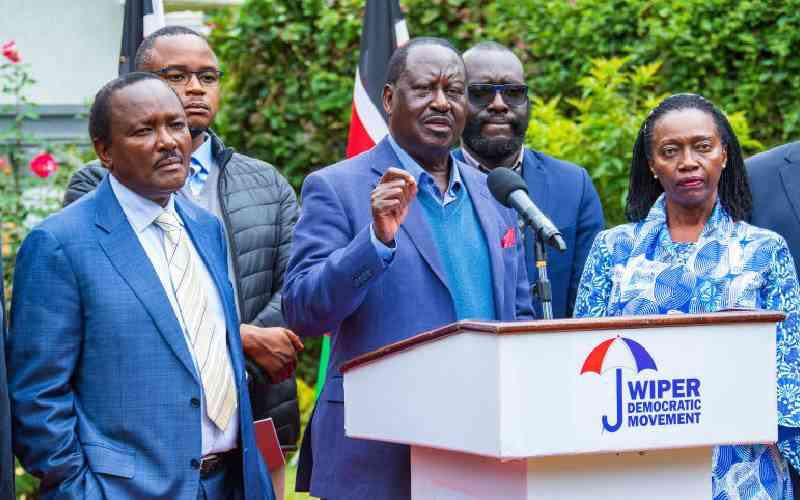
At the height of the 2022 presidential campaigns, the mobilisation machinery behind Raila Odinga’s candidature was visibly energetic but strategically hollow. While Azimio invested heavily in rallies, coalition building and elite endorsements, it failed at the most fundamental level of any serious presidential contest: Organising a professional, disciplined and coherent campaign secretariat capable of translating political capital into electoral victory.
Azimio la Umoja’s failure did not begin with polling agents, logistics or voting day operations. It began much earlier, with its inability to institutionalise the presidential campaign as a professional entity driven by research, strategy, narrative and message discipline. Any campaign worth its salt must be anchored on a central idea that informs every policy position, public appearance and communication output. Azimio never achieved this cohesion.
One of the most consequential nonfeasances of the Azimio campaign was its failure to segment its audience and weave a sharp campaign narrative and messaging framework that clearly distinguished it from its opponent. “Inawezekana” was presented as a rallying call, but it never rose beyond the level of a slogan. It did not amount to a message, nor did it articulate what exactly was possible, for whom, how, and why Azimio was best placed to deliver it.
Follow The Standard
channel
on WhatsApp
In contrast, this vague optimism paled in comparison to the clarity, consistency and discipline of the Kenya Kwanza campaign. Kenya Kwanza presented a complete narrative package. Its message was the ‘bottom-up economic approach’. Its slogan was ‘Kazi ni Kazi’. Its symbol was the wheelbarrow. Its defined and primary target group was the ‘hustler’, broadly framed as Kenyans at the base of the economic pyramid. It deliberately deprioritised the apex of the pyramid, reinforcing the hustler versus dynasty narrative to great effect while allocating its resources where returns were highest.
These elements were not random. They were mutually reinforcing components of a carefully constructed communication ecosystem. A message is a simple, direct and precise summary of what a candidate will do for the people, how it will be done, and the unique value they bring compared to the alternative. It must speak to the deepest fears, frustrations and aspirations of the electorate, while offering hope that feels attainable and credible. Importantly, it must remain relevant across social classes within the defined target audience.
A slogan, on the other hand, is a repetitive phrase designed to stir emotion, energise supporters and embed recall. A symbol is the visual representation that anchors both the message and the slogan in the public imagination. Kenya Kwanza understood this architecture. Azimio did not.
If one were to stop an Azimio supporter today and ask what the coalition told Kenyans that was distinct, valuable and superior to what Kenya Kwanza offered, the answer would likely be unclear. This was not because Azimio lacked policy ideas, but because those ideas were never distilled into a singular narrative that ordinary Kenyans could internalise and repeat.
William Ruto’s campaign narrative was concise, precise, well tested, relatable and contextual. It set him apart and elevated his pitch to the electorate. Every policy proposition, whether on the economy, agriculture or education, was anchored on this central narrative. Consistency, not complexity, was his greatest strength.
Even after assuming office, President Ruto has begun to hammer his latest message with remarkable discipline. He is now rallying citizens around the idea of moving Kenya from a third-world country to a first-world nation, with the aspirational destination framed as the Singapore of Africa. This framing, whether one agrees with it or not, is beginning to capture imagination and aspiration because it is simple, forward looking and emotionally resonant.
The lesson from Azimio is clear: Assembling ethnic kingpins without a unifying cause and compelling narrative is no longer sufficient. Kenya’s electorate has evolved. Identity politics without substance is increasingly ineffective.
As the political campaign mood begins to grip the country, the United Opposition must fundamentally review its strategy if it hopes to win the hearts and minds of Kenyans. Jumping from one policy critique to another without anchoring these positions to a singular, overarching message, is to invite the same fate that befell Azimio.
Follow The Standard
channel
on WhatsApp
At the height of the 2022 presidential campaigns, the mobilisation machinery behind Raila Odinga’s candidature was visibly energetic but strategically hollow. While Azimio invested heavily in rallies, coalition building and elite endorsements, it failed at the most fundamental level of any serious presidential contest: Organising a professional, disciplined and coherent campaign secretariat capable of translating political capital into electoral victory.
Azimio la Umoja’s failure did not begin with polling agents, logistics or voting day operations. It began much earlier, with its inability to institutionalise the presidential campaign as a professional entity driven by research, strategy, narrative and message discipline. Any campaign worth its salt must be anchored on a central idea that informs every policy position, public appearance and communication output. Azimio never achieved this cohesion.
One of the most consequential nonfeasances of the Azimio campaign was its failure to segment its audience and weave a sharp campaign narrative and messaging framework that clearly distinguished it from its opponent. “Inawezekana” was presented as a rallying call, but it never rose beyond the level of a slogan. It did not amount to a message, nor did it articulate what exactly was possible, for whom, how, and why Azimio was best placed to deliver it.
Follow The Standard
channel
on WhatsApp
In contrast, this vague optimism paled in comparison to the clarity, consistency and discipline of the Kenya Kwanza campaign. Kenya Kwanza presented a complete narrative package. Its message was the ‘bottom-up economic approach’. Its slogan was ‘Kazi ni Kazi’. Its symbol was the wheelbarrow. Its defined and primary target group was the ‘hustler’, broadly framed as Kenyans at the base of the economic pyramid. It deliberately deprioritised the apex of the pyramid, reinforcing the hustler versus dynasty narrative to great effect while allocating its resources where returns were highest.
These elements were not random. They were mutually reinforcing components of a carefully constructed communication ecosystem. A message is a simple, direct and precise summary of what a candidate will do for the people, how it will be done, and the unique value they bring compared to the alternative. It must speak to the deepest fears, frustrations and aspirations of the electorate, while offering hope that feels attainable and credible. Importantly, it must remain relevant across social classes within the defined target audience.
A slogan, on the other hand, is a repetitive phrase designed to stir emotion, energise supporters and embed recall. A symbol is the visual representation that anchors both the message and the slogan in the public imagination. Kenya Kwanza understood this architecture. Azimio did not.
If one were to stop an Azimio supporter today and ask what the coalition told Kenyans that was distinct, valuable and superior to what Kenya Kwanza offered, the answer would likely be unclear. This was not because Azimio lacked policy ideas, but because those ideas were never distilled into a singular narrative that ordinary Kenyans could internalise and repeat.
William Ruto’s campaign narrative was concise, precise, well tested, relatable and contextual. It set him apart and elevated his pitch to the electorate. Every policy proposition, whether on the economy, agriculture or education, was anchored on this central narrative. Consistency, not complexity, was his greatest strength.
Even after assuming office, President Ruto has begun to hammer his latest message with remarkable discipline. He is now rallying citizens around the idea of moving Kenya from a third-world country to a first-world nation, with the aspirational destination framed as the Singapore of Africa. This framing, whether one agrees with it or not, is beginning to capture imagination and aspiration because it is simple, forward looking and emotionally resonant.
The lesson from Azimio is clear: Assembling ethnic kingpins without a unifying cause and compelling narrative is no longer sufficient. Kenya’s electorate has evolved. Identity politics without substance is increasingly ineffective.
As the political campaign mood begins to grip the country, the United Opposition must fundamentally review its strategy if it hopes to win the hearts and minds of Kenyans. Jumping from one policy critique to another without anchoring these positions to a singular, overarching message, is to invite the same fate that befell Azimio.
Follow The Standard
channel
on WhatsApp
By Manasse Nyainda