



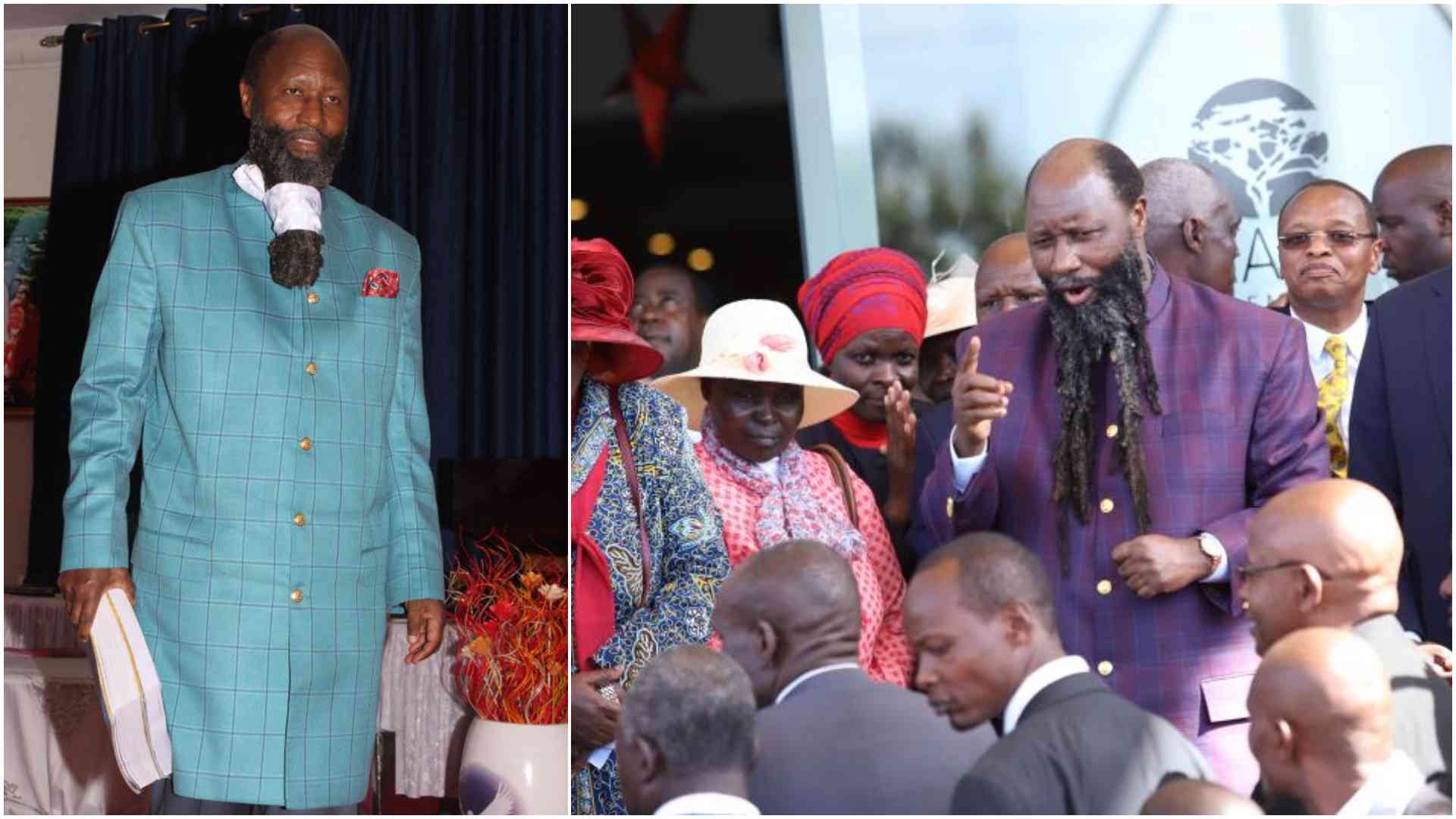
On any given weekend in Kenya, faith is never far from the headlines. But few religious figures have stirred as much fascination, devotion, outrage and national debate as David Owuor, the towering, soft-spoken preacher whose ministry has grown from dusty street sermons in Nakuru into one of the most polarising religious movements in the country.
To his followers, Prophet Dr Owuor is a divinely appointed messenger, a servant chosen for this generation. To critics, he represents the dangers of unchecked religious authority in a deeply spiritual society. Between these two extremes lies a story that touches on belief, power, politics, science and the human hunger for miracles.
When Owuor began preaching on the streets of Nakuru in the early 2000s, few could have predicted the scale of influence he would later command. Tall, unmistakable in his trademark white robes, long beards and armed with a booming biblical vocabulary, he cut a striking figure even then.
Little was publicly known about his past, save for his own account that he had once lived and worked in the United States, trained as a scientist, and taught in American medical schools before abandoning what many would consider the pinnacle of professional success.
In one of his earliest recorded interviews, Owuor offered a dramatic account of his calling; one that would later become foundational to his public identity.
He claimed that, while living abroad, he experienced a supernatural encounter that changed the course of his life entirely. According to his narration, God physically touched him, prophets of old appeared to him, and he was commissioned for a divine mission that would reveal future events to humanity.
From that moment, he said, he ceased being a scientist and became a servant of God.
By 2004, he had formally established the Repentance and Holiness Ministry, preaching repentance, holiness and preparation for the coming of Christ messages that resonated deeply in a society grappling with inequality, corruption and moral anxiety.
Over the years, Owuor’s ministry expanded rapidly. His crusades grew larger, his broadcasts reached wider audiences, and his message; delivered with an air of authority; attracted tens of thousands of followers across Kenya and beyond.
The annual Menengai Revival Meetings in Nakuru became a fixture on the religious calendar. Each year, pilgrims streamed in from all corners of the country; some walking with crutches, others wheeled in, many carrying hope as their final possession.
For believers, these gatherings were not merely church services. They were sacred moments where heaven touched earth.
For observers, they were a spectacle of faith on an industrial scale.
Central to Prophet Owuor’s appeal are claims of miraculous healings. Over time, his ministry has publicly testified to healings from paralysis, blindness, internal illnesses and, most controversially, HIV/AIDS.
One of the most widely discussed episodes occurred in 2017, when Owuor’s ministry claimed that Mama Rosa Chepochesau Samson, a woman from West Pokot, had been raised from the dead. The claim attracted international attention and was held up by followers as proof of divine power.
The ministry issued a brief message stating, “All is well,” and jubilant worshippers reportedly took to the streets in celebration.
However, later developments complicated the narrative. Mama Rosa reportedly passed away again later that year and was buried quietly, with little public explanation from the ministry. Her eulogy reportedly mentioned arthritis as the only ailment, raising further questions that were never conclusively addressed.
While such testimonies strengthened belief among followers, they also intensified scrutiny from medical professionals, religious bodies and the wider public.
As Owuor’s influence grew, so did the symbols of power around him.
In recent years, videos circulated online showing police officers stopping traffic along major highways to allow a convoy of high-end vehicles associated with the prophet to pass. The images sparked public outrage, with Kenyans questioning why a religious figure appeared to enjoy privileges normally reserved for heads of state.
To supporters, the motorcades were a sign of respect for a man of God. To critics, they symbolised the dangerous fusion of religion and state authority.
Political figures have not been absent from this equation.
Mumias East MP Peter Salasya has publicly defended the prophet and attended his crusades, praising him online and fiercely attacking critics, particularly Health CS Aden Duale when government institutions raised concerns about faith-healing claims.
Annual fixture
The most explosive chapter in the Owuor saga unfolded after his December 2025 Menengai crusade, where he claimed that several individuals who previously tested HIV positive were now HIV negative.

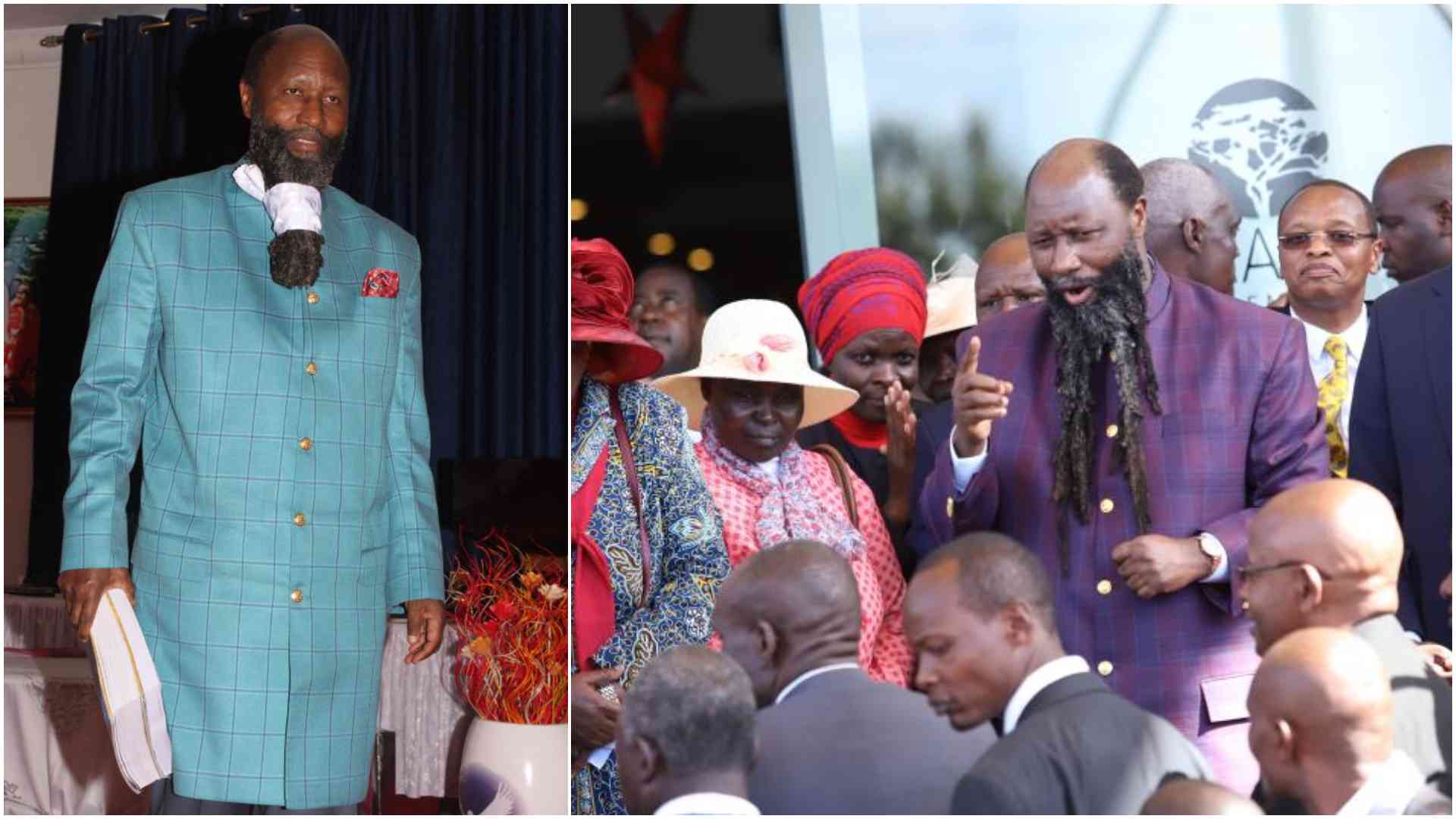
During the service, individuals were presented to the congregation holding placards declaring their alleged healing. Medical practitioners were invited to speak, outlining laboratory results and scientific processes that, they said, supported the claims.
The Nakuru event, popularly known as the Menengai 8 Revival Meeting, has become an annual fixture, drawing huge crowds to the Menengai Grounds. Dubbed the “Grand Mega Healing Service,” the latest crusade attracted thousands. Among those who attended are Salasya and Meru activist Mike Makarina.
“The fear of God is the beginning of wisdom. So blessed to attend the pastor’s conference of Repentance and Holiness ministry in Nakuru. Am blessed indeed this evening indeed (sic),” shared the legislator on his socials.
The moment ignited a national firestorm.
Health experts warned that such claims, if not rigorously verified, could encourage patients to abandon Antiretroviral Therapy (ART), risking drug resistance, illness and death.
The Kenya Medical Practitioners and Dentists Council (KMPDC) cautioned against medical misinformation, while Duale ordered investigations into the medics who publicly endorsed the claims.
Duale emphasised that while faith has a place in society, public health must remain grounded in evidence-based medicine.
Response
“The Ministry of Health recognizes and respects the important place of faith and spiritual nourishment in the lives of our people. However, matters of health and life must remain firmly grounded in science, ethics and evidence-based medicine,” Duale said, adding:
“Any claims of miraculous healing, especially by licensed medical practitioners, must be supported by verifiable, scientifically proven medical evidence. Unsubstantiated claims constitute medical misinformation and pose a direct threat to human life and public safety.”
Any medical professional making unverified claims, he warned, would face disciplinary action.
The response triggered a backlash from Owuor’s supporters, who accused the government of persecuting a religious leader and undermining faith.
As the controversy escalated, the National Council of Churches of Kenya (NCCK) issued a carefully worded statement distancing itself from the miracle claims.
While affirming belief in divine healing, NCCK officials stressed that no single preacher holds exclusive authority over healing and warned against discouraging believers from seeking medical treatment.
“This response follows assertions by Prophet David Owuor of the Repentance and Holiness Ministry. During recent public crusades in Nakuru, the preacher claimed to have cured serious medical conditions, including HIV and cerebral disorders,” the council said.
The council cautioned Kenyans to be wary of such assertions, insisting that spiritual or physical healing cannot be monopolised
“We believe in faith healing. We believe it is not pastors who heal. We believe it is God who heals, and we believe also that God chooses who he heals at a particular time,” NCCK national chairman Rev Elias Otieno said.
The council highlighted what it termed a “regulatory vacuum” in Kenya’s religious space, where independent churches operate without oversight or accountability.
“When we say the blood of Jesus heals HIV/AIDs, it is not just another claim but a verifiable miracle. Patient reference numbers with before-and-after medical statuses are available for testing even today. No sane person would risk their career, reputation and social status just to defend falsehood. The fact remains, God has come to help a dying generation,” a statement shared on Prophet Owuor’s X account was one of the responses.
Owuor’s reach has not been confined to Kenya.
He has made multiple high-profile visits to Venezuela where he was received by then-President Nicolás Maduro and accorded ceremonial honours. During one visit, Owuor publicly declared prophetic protection over Maduro and the nation.
The declaration later attracted renewed attention after Maduro was captured in a United States military raid earlier this week, an event that critics cited as undermining prophetic credibility, while supporters urged caution against simplistic interpretations of prophecy.
Hubris
Adding fuel to the debate is Nelson Amenya, a former media team member who has publicly distanced himself from the ministry.
Through a series of social media posts, Amenya has made allegations about manipulated footage, exaggerated narratives and internal operations.
“The guy in a blue suit on the right with glasses is called Thiong’o. He is the alleged link to Uhuru (former President Uhuru Kenyatta), later we found out that it’s Thiong’o who had hired the chopper and the story about Uhuru was all hubris,” read one of Amenya’s tweets.
For followers, Amenya is a disgruntled former insider. For critics, he is a rare glimpse into the inner workings of a tightly controlled religious brand.
The story of Prophet Owuor is ultimately not just about one man. It is about Kenya itself; a nation where faith runs deep, where miracles are yearned for, and where institutions struggle to regulate belief without infringing on freedom of worship.
It raises uncomfortable questions: Where does faith end and public safety begin? Who holds religious leaders accountable? And how does a society protect hope without exploiting it?
For now, Owuor continues to preach. His followers continue to gather. His critics continue to question.