



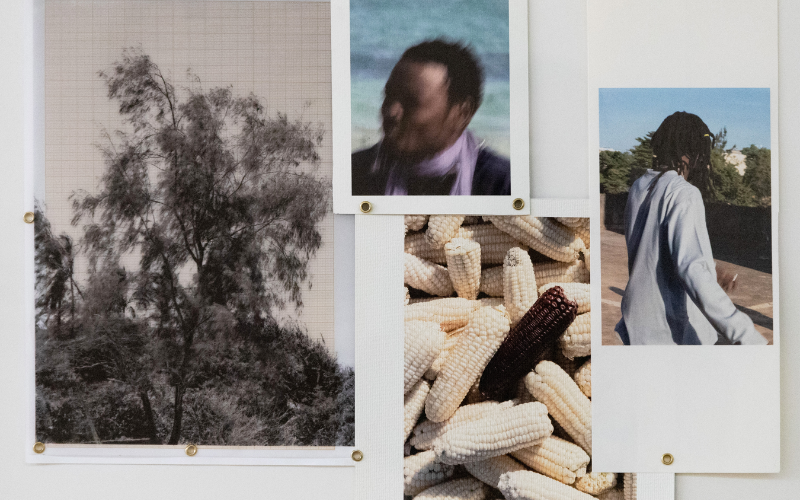
Ian Gichohi’s first solo photography exhibition, A Lot Has Happened, explores alternative ways of displaying images. Featuring 19 artworks, the exhibition examines unconventional approaches to how photographs can exist on different forms of paper.
In some works, Gichohi assembles several photographs within a single frame. These assemblages are clean-cut, influenced by his brief time studying architecture and his love for the photo book. Other images sit singularly within frames.
The exhibition opened on November 27 and runs until February 14 at Paper Café in Westlands, a fitting location given that paper is one of his primary media. It was curated by Paper Café founder Michael Mugambi.
The papers Gichohi uses include bond paper, packaging paper, watercolour paper, chiffon rag paper, archival photo paper and handmade paper.


“I have been thinking about alternative ways of showing images. There is a standard way that has existed for a long time of taking an image and printing it. This became an exercise to push myself to see how practical things could get,” says the multidisciplinary artist.
The first step of his process is taking the photograph, which he did during morning walks with his camera throughout the COVID-19 lockdown.
His photography practice revolves around still life, landscape and portraiture, capturing everyday objects to convey stillness.
These include a defunct telephone set against the sky in Niko (II) and the browning, curling decay of banana leaves in The Sound of Rain.
As he edits his images, Gichohi considers shadow, texture and colour. He then experiments with different types of paper, each with distinct surface qualities, which he has accumulated over the years.
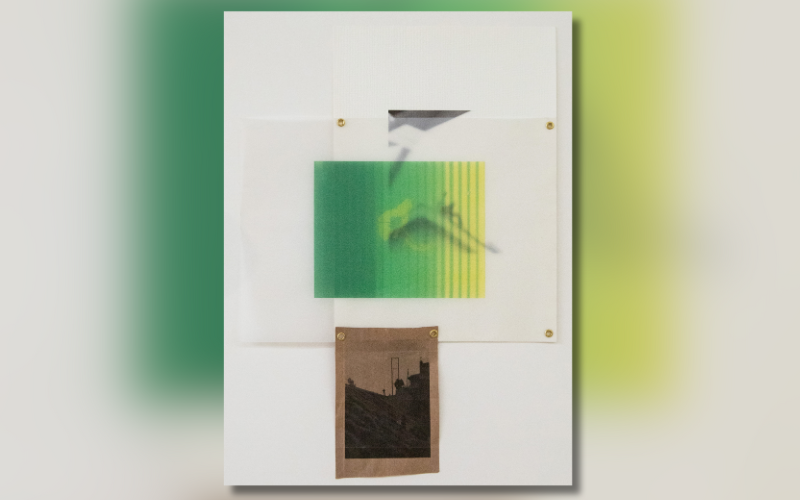
His approach to assembling images involves combining various photographs guided by principles drawn from art and architecture, though often subconsciously, until a cohesive composition emerges.
“When there is more than one image, I think of a single image as a letter of the alphabet, or a word, and several images together make a sentence. I’m using different images to convey a singular idea,” he says.
The exhibition’s title reflects the passage of time between when the photographs were taken and when they were assembled, as well as the personal experiences that unfolded during that period.