
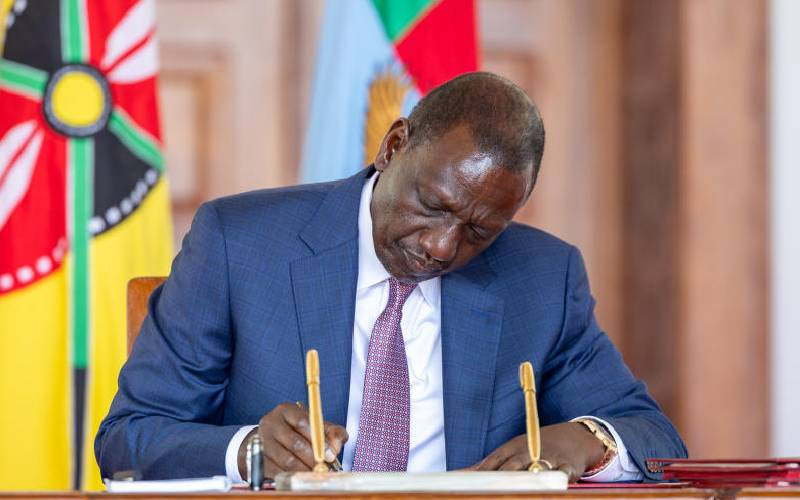
Your Excellency, President William Ruto,
Aerodynamically, the bumblebee should not be able to fly. However, the bumblebee does not know that, so it continues flying anyway. This is much like the experience of many learners with disabilities in Kenya. They have the potential to thrive, yet the education system limits their opportunities before they even begin.
Kenya’s transition to CBE aims to modernise learning and ensure no child is left behind. Yet the current Grade 10 placement exercise is revealing concerning patterns for learners with disabilities. Parents, teachers, and education stakeholders report that learners with disabilities are being placed almost entirely into special schools, with little or no opportunity to access mainstream institutions. This approach risks sidelining children whose talents and potential deserve recognition and support.
Parents are sharing that schools say they lack capacity, teachers are unprepared, or accommodating their children would be too difficult. Some learners are rejected outright, while others are admitted but face inaccessible classrooms, absent learning support, or subtle pressure to leave.Families with resources are taking their children to private schools and advocating proper support, but those with limited means have few options. Inclusion seems optional, something schools can decide rather than a right every child should enjoy. Special schools play an important role in providing focused support, particularly for children with complex disabilities. However, when they become the default placement for all learners with disabilities, the system risks isolating children, reinforcing stigma, and implying that children with disabilities are less capable. Learners are not a homogeneous group, and their abilities and aspirations differ widely.
Follow The Standard
channel
on WhatsApp
Consider the case of two learners who recently sat exams in Nyandarua. They were placed in a special school in Kericho, more than 400km from their homes. They reportedly scored approximately 26 and 53 points in the Kenya Junior School Education Assessment (KJSEA), yet were placed in the same institution.
Despite the large difference in academic performance and capacity, they were treated as if their needs were identical. The school caters to learners with a wide range of disabilities, including physical, visual, and intellectual impairments. Placing learners with such differing abilities together without proper assessment is neither fair nor educationally sound.
Equally concerning are reports that some public senior schools are rejecting learners with disabilities.
Of the estimated 1.3 million Kenyans living with disabilities, only 39 per cent attend mainstream primary schools and just nine per cent attend high school. With such delicate statistics, it is urgent that children in school are supported to continue and that children out of school are given pathways to enroll in institutions that meet their needs. Globally, evidence shows that inclusive education can work well. In Finland, learners with disabilities are supported within mainstream schools through targeted interventions and additional teaching support. Singapore integrates learners into mainstream classrooms using personalised learning plans, specialist support, and close monitoring.
These systems show that with proper planning, training, and resources, children with disabilities can thrive academically and socially, and schools become communities that value diversity.
Your Excellency, the solution is not to abolish special schools but to restore balance, choice, and individual assessment. You could review the Grade 10 placement outcomes to ensure decisions reflect each learner’s abilities and potential.
I hope you can create a safe space for learners with disabilities to share their experiences, ensuring that their voices directly inform policy and practice. Engaging parents and stakeholders in developing clear, rights-based placement guidelines would further ensure that inclusion is meaningful, equitable, and responsive to each child’s needs.
-Writer comments on topical issues
Follow The Standard
channel
on WhatsApp
Your Excellency, President William Ruto,
Aerodynamically, the bumblebee should not be able to fly. However, the bumblebee does not know that, so it continues flying anyway. This is much like the experience of many learners with disabilities in Kenya. They have the potential to thrive, yet the education system limits their opportunities before they even begin.
Kenya’s transition to CBE aims to modernise learning and ensure no child is left behind. Yet the current Grade 10 placement exercise is revealing concerning patterns for learners with disabilities. Parents, teachers, and education stakeholders report that learners with disabilities are being placed almost entirely into special schools, with little or no opportunity to access mainstream institutions. This approach risks sidelining children whose talents and potential deserve recognition and support.
Parents are sharing that schools say they lack capacity, teachers are unprepared, or accommodating their children would be too difficult. Some learners are rejected outright, while others are admitted but face inaccessible classrooms, absent learning support, or subtle pressure to leave.Families with resources are taking their children to private schools and advocating proper support, but those with limited means have few options. Inclusion seems optional, something schools can decide rather than a right every child should enjoy. Special schools play an important role in providing focused support, particularly for children with complex disabilities. However, when they become the default placement for all learners with disabilities, the system risks isolating children, reinforcing stigma, and implying that children with disabilities are less capable. Learners are not a homogeneous group, and their abilities and aspirations differ widely.
Follow The Standard
channel
on WhatsApp
Consider the case of two learners who recently sat exams in Nyandarua. They were placed in a special school in Kericho, more than 400km from their homes. They reportedly scored approximately 26 and 53 points in the Kenya Junior School Education Assessment (KJSEA), yet were placed in the same institution.
Despite the large difference in academic performance and capacity, they were treated as if their needs were identical. The school caters to learners with a wide range of disabilities, including physical, visual, and intellectual impairments. Placing learners with such differing abilities together without proper assessment is neither fair nor educationally sound.
Equally concerning are reports that some public senior schools are rejecting learners with disabilities.
Of the estimated 1.3 million Kenyans living with disabilities, only 39 per cent attend mainstream primary schools and just nine per cent attend high school. With such delicate statistics, it is urgent that children in school are supported to continue and that children out of school are given pathways to enroll in institutions that meet their needs. Globally, evidence shows that inclusive education can work well. In Finland, learners with disabilities are supported within mainstream schools through targeted interventions and additional teaching support. Singapore integrates learners into mainstream classrooms using personalised learning plans, specialist support, and close monitoring.
These systems show that with proper planning, training, and resources, children with disabilities can thrive academically and socially, and schools become communities that value diversity.
Your Excellency, the solution is not to abolish special schools but to restore balance, choice, and individual assessment. You could review the Grade 10 placement outcomes to ensure decisions reflect each learner’s abilities and potential.
I hope you can create a safe space for learners with disabilities to share their experiences, ensuring that their voices directly inform policy and practice. Engaging parents and stakeholders in developing clear, rights-based placement guidelines would further ensure that inclusion is meaningful, equitable, and responsive to each child’s needs.
-Writer comments on topical issues
Follow The Standard
channel
on WhatsApp
By Wanja Maina