

Economists in Sub-Saharan Africa are anticipating slow growth as geopolitical uncertainty and trade and investment tensions persist.
The Chief Economists’ Outlook published by the World Economic Forum shows that as the number of economists anticipating moderate growth in the year dropped, those expecting weak growth increased almost by the same value.
The January 2026 publication notes that the outlook for Sub-Saharan Africa slightly deteriorated compared to the previous edition.
Follow The Standard
channel
on WhatsApp
“While the share of respondents anticipating moderate growth in the year declined from 57 per cent to 47 per cent, the share of those expecting weak growth increased from 29 per cent to 40 per cent,” the report says.
Regionally, the report documents the International Monetary Fund (IMF) projection of 4.4 per cent in 2026.
Part of the reason behind this weak growth lies behind the increasing debt burden that the report describes as threatening to the region’s financial ecosystem.
While other factors such as artificial intelligence (AI), inflation and consumer prices are noted in the report to be either insignificant to topple the scale or on a downward trend, public debt stands out as a concern among the economists.
Nevertheless, more than four in five respondents (81 per cent) expect monetary policy in Sub-Saharan Africa to remain unchanged in this year.
The report says public debt across the continent has increased substantially since 2010, with many countries forced to weigh debt servicing against social and infrastructure spending.
“More recently, domestic borrowing has started to surge, raising concerns about the vulnerability of local banks, which now hold around half of total government debt in the region,” the report says. “In Sub-Saharan Africa, almost two-thirds of respondents (64 per cent) expect fiscal policy to remain unchanged in the year ahead.”
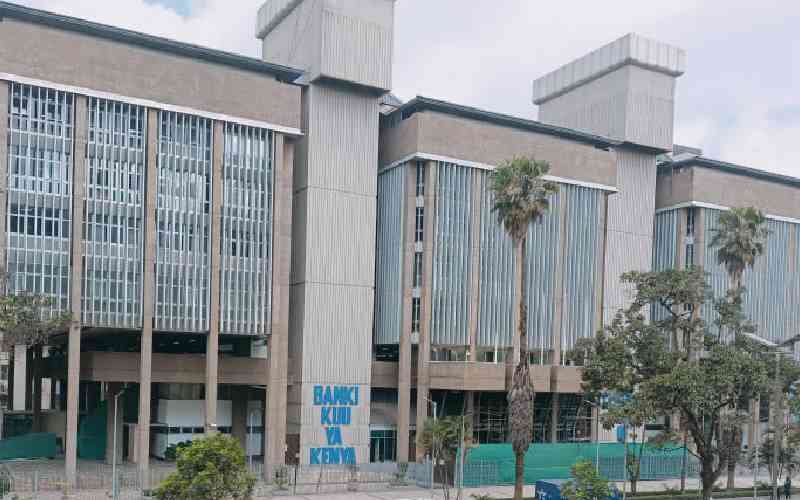
Kenya is among such countries with its debt level closing in on the Sh13 trillion mark against Sh16.2 trillion nominal gross domestic product (GDP).
“The issue of debt, both public and private, has moved to the forefront as governments and corporations contend with the legacy of prolonged borrowing and managing elevated debt levels, prompting a reassessment of fiscal approaches,” the report says.
The report says that areas such as defence, digital infrastructure and energy are expected to command larger shares of public budgets, reflecting the demands of a more unpredictable world and the imperatives of technological change.
“At the same time, the need to balance these priorities with other objectives is intensifying debates about the future direction of monetary and fiscal policies,” it adds.
The report cites that investment in AI remains limited in the region, and a majority of 56 per cent of chief economists surveyed expect its direct impact on growth to be insignificant (43 per cent) or very insignificant (13 per cent).
It adds that almost two-thirds (64 per cent) of respondents expect moderate inflation in Sub-Saharan Africa in the year ahead, while a quarter anticipates inflation to be high.
“Average consumer prices are expected to continue on their downward trajectory in 2026,” the report says.
Globally, the document states that 53 per cent of chief economists expect global economic conditions to weaken, with 28 per cent predicting no change and 19 per cent looking forward to a stronger economy.
“The prospects for the global economy tilt towards the negative in the year ahead, albeit with improved sentiment compared to last year’s outlook,” it explains.
The findings in the report are based on a survey conducted between November 19 and December 3, 2025.
Follow The Standard
channel
on WhatsApp
Economists in Sub-Saharan Africa are anticipating slow growth as geopolitical uncertainty and trade and investment tensions persist.
The Chief Economists’ Outlook published by the World Economic Forum shows that as the number of economists anticipating moderate growth in the year dropped, those expecting weak growth increased almost by the same value.
The January 2026 publication notes that the outlook for Sub-Saharan Africa slightly deteriorated compared to the previous edition.
Follow The Standard
channel
on WhatsApp
“While the share of respondents anticipating moderate growth in the year declined from 57 per cent to 47 per cent, the share of those expecting weak growth increased from 29 per cent to 40 per cent,” the report says.
Regionally, the report documents the International Monetary Fund (IMF) projection of 4.4 per cent in 2026.
Part of the reason behind this weak growth lies behind the increasing debt burden that the report describes as threatening to the region’s financial ecosystem.
While other factors such as artificial intelligence (AI), inflation and consumer prices are noted in the report to be either insignificant to topple the scale or on a downward trend, public debt stands out as a concern among the economists.
Nevertheless, more than four in five respondents (81 per cent)
expect monetary policy
in Sub-Saharan Africa to remain unchanged in this year.
The report says public debt across the continent has increased substantially since 2010, with many countries forced to weigh debt servicing against social and infrastructure spending.
“More recently, domestic borrowing has started to surge, raising concerns about the vulnerability of local banks, which now hold around half of total government debt in the region,” the report says. “In Sub-Saharan Africa, almost two-thirds of respondents (64 per cent) expect fiscal policy to remain unchanged in the year ahead.”
Kenya is among such countries with its debt level closing in on the Sh13 trillion mark against Sh16.2 trillion nominal gross domestic product (GDP).
“The issue of debt, both public and private, has moved to the forefront as governments and corporations contend with the legacy of prolonged borrowing and managing elevated debt levels, prompting a reassessment of fiscal approaches,” the report says.
The report says that areas such as defence, digital infrastructure and energy are expected to command larger shares of public budgets, reflecting the demands of a more unpredictable world and the imperatives of technological change.
“At the same time, the need to balance these priorities with other objectives is intensifying debates about the future direction of monetary and fiscal policies,” it adds.
Stay informed. Subscribe to our newsletter
The report cites that investment in AI remains limited in the region, and a majority of 56 per cent of chief economists surveyed expect its direct impact on growth to be insignificant (43 per cent) or very insignificant (13 per cent).
It adds that almost two-thirds (64 per cent) of respondents expect moderate inflation in Sub-Saharan Africa in the year ahead, while a quarter anticipates inflation to be high.
“Average consumer prices are expected to
continue on their downward trajectory
in 2026,” the report says.
Globally, the document states that 53 per cent of chief economists expect global economic conditions to weaken, with 28 per cent predicting no change and 19 per cent looking forward to a stronger economy.
“The prospects for the global economy tilt towards the negative in the year ahead, albeit with improved sentiment compared to last year’s outlook,” it explains.
The findings in the report are based on a survey conducted between November 19 and December 3, 2025.
Follow The Standard
channel
on WhatsApp
By Graham Kajilwa