

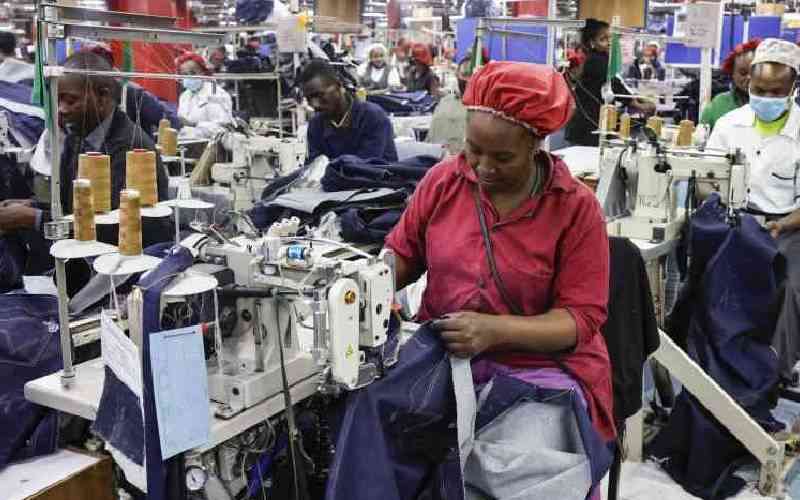
The government has intensified its push for local manufacturing, warning that Kenya’s growing dependence on imported goods and the proliferation of counterfeit products are undermining economic growth, destroying jobs, and keeping the cost of living high.
Speaking during a stakeholders’ sensitisation meeting in Nairobi, Principal Secretary for Investment, Trade and Industry, Juma Makwana, said Kenya cannot continue being a consumption-driven economy, and therefore, there is a need to take manufacturing seriously, whether at small, medium, or industrial scale.
“Our call is one; we want more Kenyans to go into manufacturing,” Makwana said. “We complain about the high cost of living because we are spending our money buying other people’s products and importing goods that we can make here.”
Kenya’s manufacturing sector remains underperforming despite repeated policy pledges to make it a growth engine. According to recent economic data, manufacturing contributes less than 10 per cent of Kenya’s GDP, well below the 15 per cent target set under successive development frameworks.
Follow The Standard
channel
on WhatsApp
The weak performance has come at a time when imports of finished goods continue to surge. Kenya currently spends over Sh1.6 trillion annually on imported manufactured products, ranging from processed foods and textiles to pharmaceuticals, electronics, and household goods. Many of these imports compete directly with products that can be manufactured locally.
This imbalance has widened the country’s trade deficit and increased pressure on the shilling. “If we make what we consume, we retain money in the economy, create jobs, and support our farmers who supply raw materials,” Mukwana said.
But even as the government encourages production, counterfeit and substandard goods remain a major threat to local industry and consumer safety. According to the Anti-Counterfeit Authority (ACA), Kenya loses nearly Sh110 billion every year due to counterfeit goods, a loss that directly affects manufacturers, tax revenues, and jobs.
Dr Robi Mbugua Njoroge, executive director of ACA, said counterfeiting has forced many local manufacturers to close operations after losing market share to cheap imitations.
“Counterfeiting is not just an economic crime. It is a public health and safety issue,” Njoroge said. “Fake drugs do not heal, fake spare parts cause accidents, and fake consumer goods expose Kenyans to serious risks,” ACA says. Fighting counterfeits requires collaborative efforts.
Follow The Standard
channel
on WhatsApp
The government has intensified its push for local manufacturing, warning that Kenya’s growing dependence on imported goods and the proliferation of counterfeit products are undermining economic growth, destroying jobs, and keeping the cost of living high.
Speaking during a stakeholders’
sensitisation meeting in Nairobi, Principal Secretary for Investment, Trade and Industry, Juma Makwana, said Kenya cannot continue being a consumption-driven economy, and therefore, there is a need to take manufacturing seriously, whether at small, medium, or industrial scale.
“Our call is one; we want more Kenyans to go into manufacturing,” Makwana said. “We complain about the high cost of living because we are spending our money buying other people’s products and importing goods that we can make here.”
Kenya’s manufacturing sector remains underperforming despite repeated policy pledges to make it a growth engine. According to recent economic data, manufacturing contributes less than 10 per cent of Kenya’s GDP, well below the 15 per cent target set under successive development frameworks.
Follow The Standard
channel
on WhatsApp
The weak performance has come
at a time when imports of finished goods continue to surge. Kenya currently spends over Sh1.6 trillion annually on imported manufactured products, ranging from processed foods and textiles to pharmaceuticals, electronics, and household goods. Many of these imports compete directly with products that can be manufactured locally.
This imbalance has widened the country’s trade deficit and increased pressure on the shilling. “If we make what we consume, we retain money in the economy, create jobs, and support our farmers who supply raw materials,” Mukwana said.
But even as the government encourages production, counterfeit and substandard goods remain a major threat to local industry and consumer safety. According to the Anti-Counterfeit Authority (ACA), Kenya loses nearly Sh110 billion every year due to counterfeit goods, a loss that directly affects manufacturers, tax revenues, and jobs.
Dr Robi Mbugua Njoroge, executive director of ACA, said counterfeiting has forced many local manufacturers to close operations after losing market share to cheap imitations.
“Counterfeiting is not just an economic crime. It is a public health and safety issue,” Njoroge said. “Fake drugs do not heal, fake spare parts cause accidents, and fake consumer goods expose Kenyans to serious risks,” ACA says. Fighting counterfeits requires collaborative efforts.
Follow The Standard
channel
on WhatsApp
By Sofia Ali