

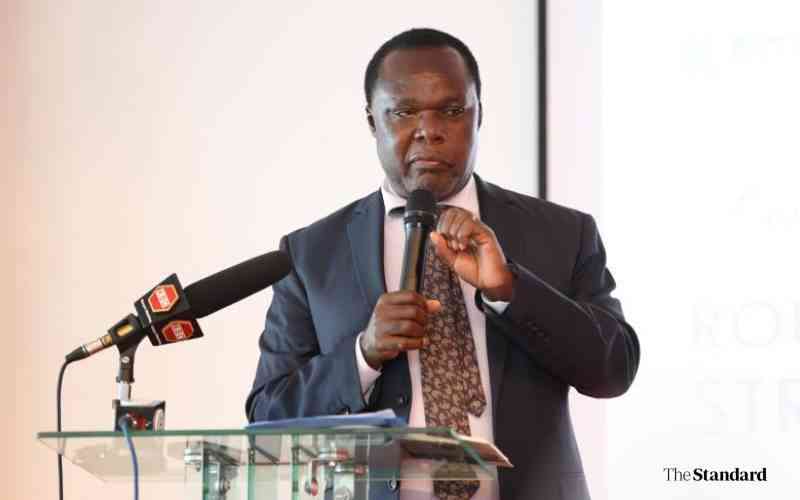
The government has launched reforms of the accreditation system to strengthen compliance with standards and boost trade by improving access to regional and international markets.
Kenya Accreditation Service (Kenas) officials said yesterday that the proposed reforms, through the Kenya Accreditation Service (Amendment) Bill, 2025, Kenya Accreditation Service (General) Regulations, 2025 and Kenya Accreditation Service (Fees) Regulations, 2025, are designed to facilitate trade by expanding market access.
The officials added that the reforms aim to strengthen country’s national quality infrastructure and enhance confidence in conformity assessment results.
Speaking during a public participation forum for Mombasa, Kwale, Kilifi, Taita Taveta, Tana River and Lamu counties at the Technical University of Mombasa, Kenas Manager for Inspection Abrahim Wekesa said the new legal framework will simplify enforcement of compliance and generate funds for operations, reducing the burden on taxpayers.
Follow The Standard
channel
on WhatsApp
“The proposed legal framework will simplify operations and provide effective mechanisms for enforcing compliance,” he said.
He added that the reforms will align the accreditation tribunal with the Judiciary and ensure that trainers and inspection bodies are fully competent.
Kenas Manager for Legal Services, Walter Nyamwaya, said the changes will improve the quality of trainers and training institutions and strengthen compliance, especially in the health and safety sectors, by providing funds for enforcement.
“Since 2012, the fees have not been reviewed despite inflation. We cannot effectively enforce compliance with the current fees,” he noted.
In a speech, Principal Secretary for the State Department of Industry, Juma Mukhwana, said the ongoing reforms will align Kenya’s accreditation framework with international, regional and continental best practices.
“A strong accreditation system is a foundational enabler of trade. It reduces barriers, supports regulatory cooperation and facilitates the acceptance of Kenyan products and services across borders,” he said, with the speech presented by Director of Industries Stanley Sawe.
Mukhwana said the reforms are strategically designed to support Kenya’s participation in the East African Community (EAC), the African Continental Free Trade Area (AfCFTA), and other regional and international trade arrangements.
“By aligning Kenya’s accreditation system with internationally recognised standards and mutual recognition arrangements, the proposed framework will ensure that test results, inspection reports and certifications issued in Kenya are accepted across the region and beyond. This will lower the cost of doing business, reduce duplication,” he said.
Follow The Standard
channel
on WhatsApp
The government has launched reforms of the accreditation system to strengthen compliance with standards and boost trade by improving access to regional and international markets.
Kenya Accreditation Service
(Kenas) officials said yesterday that the proposed reforms, through the Kenya Accreditation Service (Amendment) Bill, 2025, Kenya Accreditation Service (General) Regulations, 2025 and Kenya Accreditation Service (Fees) Regulations, 2025, are designed to facilitate trade by expanding market access.
The officials added that the reforms aim to strengthen country’s national quality infrastructure and enhance confidence in conformity assessment results.
Speaking during a public participation forum for Mombasa, Kwale, Kilifi, Taita Taveta, Tana River and Lamu counties at the Technical University of Mombasa, Kenas Manager for Inspection Abrahim Wekesa said the new legal framework will simplify enforcement of compliance and generate funds for operations, reducing the burden on taxpayers.
Follow The Standard
channel
on WhatsApp
“The proposed legal framework will simplify operations and
provide effective mechanisms
for enforcing compliance,” he said.
He added that the reforms will align the accreditation tribunal with the Judiciary and ensure that trainers and inspection bodies are fully competent.
Kenas Manager for Legal Services, Walter Nyamwaya, said the changes will improve the quality of trainers and training institutions and strengthen compliance, especially in the health and safety sectors, by providing funds for enforcement.
“Since 2012, the fees have not been reviewed despite inflation. We cannot effectively enforce compliance with the current fees,” he noted.
In a speech, Principal Secretary for the State Department of Industry, Juma Mukhwana, said the ongoing reforms will align Kenya’s accreditation framework with international, regional and continental best practices.
“A strong accreditation system is a foundational enabler of trade. It reduces barriers, supports regulatory cooperation and facilitates the acceptance of Kenyan products and services across borders,” he said, with the speech presented by Director of Industries Stanley Sawe.
Mukhwana said the reforms are strategically designed to support Kenya’s participation in the East African Community (EAC), the African Continental Free Trade Area (AfCFTA), and other regional and international trade arrangements.
“By aligning Kenya’s accreditation system with internationally recognised standards and mutual recognition arrangements, the proposed framework will ensure that test results, inspection reports and certifications issued in Kenya are accepted across the region and beyond. This will lower the cost of doing business, reduce duplication,” he said.
Follow The Standard
channel
on WhatsApp
By Patrick Beja