

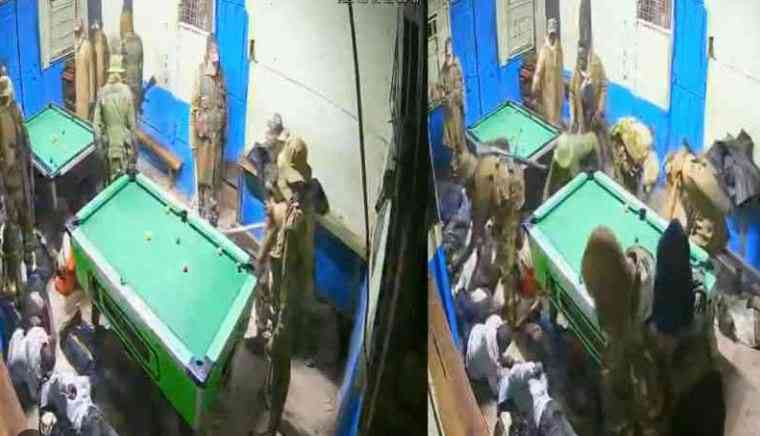
Once again, the police are in the news for all the wrong reasons. Last week, there was a viral video showing police officers violently assaulting young men at a lounge in Nandi Hills town who were found playing pool.
The footage shows the youths peacefully engaged in a leisure activity when the police entered the venue. They were subjected to dehumanising punishment, made to lie down on the floor and beaten. There is no indication that the young men had done anything to warrant such treatment.
Many observers have rightly identified this incident as part of a broader culture of brutality that continues to characterise policing in Kenya.
Follow The Standard
channel
on WhatsApp
A less noted issue, and my focus here, is that it exemplifies the deeply troubling criminalisation of leisure in Kenya, especially for poorer Kenyans. For many young people, particularly poor and working-class young men, simply gathering to enjoy themselves is seen by the authorities as a threat to public order.
The police seem to understand their role as being primarily about dispersing groups of young men. Any gathering of young men, especially in informal or low-income settings, is viewed as a (potential) source of disorder. This logic is reinforced by policy discourses that frame leisure as idleness or laziness and a failure to participate productively in the economy, which then deserves punishment. Leisure, in this view, becomes something that requires regulation, control and even punishment.
These ideas have deep roots in colonial ideology, where Africans were expected to be productive labourers in service of colonial economic interests. Rather than being seen as an opportunity to recharge and thus enhance productivity, engaging in leisurely activities was seen a distraction from production. Unfortunately, many of these orientations toward governance and policing were retained after independence.
The raid on this pool lounge is not unique. Police often raid video halls in poorer neighbourhoods where young people gather to watch sports.
Other times, they waylay and attack them as they head home. The brutal killing of Carilton Maina, a former student at Leeds University, as he was heading home after watching a football match, is a painful illustration of how policing of leisure can turn deadly.
In my field research, I have observed youth playing board games such as chess and Ludo on Sunday afternoons, having to put someone on the lookout to warn them if any police officers approach.
Young people have been accustomed to being accused of engaging in “gang activity” when they gather to engage in leisure activities. The elastic and indiscriminate use of the term “gang” allows the state to criminalise virtually all youth, excusing their surveillance, control, and abuse.
Despite Kenya’s enormous potential in sports and recreation, it is clear that only certain activities are recognised and supported by the state, while others are treated with suspicion or outright hostility.
The refusal of the state to support David Munyua for his darts competition is a case in point. Notably, it is the sporting activities that require the least investment, and which will therefore be more possible in poorer areas, that get ignored and criminalised. This reveals a clear class dimension.
There is nothing inherently criminal about playing pool or watching football. Wealthier Kenyans routinely engage in these activities in high-end establishments without police interference. It is inconceivable that such an attack would occur in an upscale venue in Nairobi.
Yet similar violence is common in low-income neighbourhoods, small towns and villages across the country. This makes it evident that policing here is less about ensuring security and fairness and more about policing poverty.
Statements from the National Police Service and the Independent Policing Oversight Authority indicate that investigations are underway and that officers will be held accountable. While this would be a welcome step, it is insufficient.
Holding individual officers responsible does little to address the deeply entrenched institutional culture that treats leisure and poverty as criminal. What is needed is a fundamental transformation of policing culture toward service, protection, and respect for citizens’ rights.
-Dr Wairuri is a political scientist and criminologist
Follow The Standard
channel
on WhatsApp
Once again, the police are in the news for all the wrong reasons. Last week, there was a viral video showing police officers violently assaulting young men at a lounge in Nandi Hills town who were found playing pool.
The footage shows the youths peacefully engaged in a leisure activity when the police entered the venue. They were subjected to dehumanising punishment, made to lie down on the floor and beaten. There is no indication that the young men had done anything to warrant such treatment.
Many observers have rightly identified this incident as part of a broader culture of brutality that continues to characterise policing in Kenya.
Follow The Standard
channel
on WhatsApp
A less noted issue, and my focus here, is that it exemplifies the deeply troubling criminalisation of leisure in Kenya, especially for poorer Kenyans. For many young people, particularly poor and working-class young men, simply gathering to enjoy themselves is seen by the authorities as a threat to public order.
The police seem to understand their role as being primarily about dispersing groups of young men. Any gathering of young men, especially in informal or low-income settings, is viewed as a (potential) source of disorder. This logic is reinforced by policy discourses that frame leisure as idleness or laziness and a failure to participate productively in the economy, which then deserves punishment. Leisure, in this view, becomes something that requires regulation, control and even punishment.
These ideas have deep roots in colonial ideology, where Africans were expected to be productive labourers in service of colonial economic interests. Rather than being seen as an opportunity to recharge and thus enhance productivity, engaging in leisurely activities was seen a distraction from production. Unfortunately, many of these orientations toward governance and policing were retained after independence.
The raid on this pool lounge is not unique. Police often raid video halls in poorer neighbourhoods where young people gather to watch sports.
Other times, they waylay and attack them as they head home. The brutal killing of Carilton Maina, a former student at Leeds University, as he was heading home after watching a football match, is a painful illustration of how policing of leisure can turn deadly.
In my field research, I have observed youth playing board games such as chess and Ludo on Sunday afternoons, having to put someone on the lookout to warn them if any police officers approach.
Young people have been accustomed to being accused of engaging in “gang activity” when they gather to engage in leisure activities. The elastic and indiscriminate use of the term “gang” allows the state to criminalise virtually all youth, excusing their surveillance, control, and abuse.
Despite Kenya’s enormous potential in sports and recreation, it is clear that only certain activities are recognised and supported by the state, while others are treated with suspicion or outright hostility.
The refusal of the state to support David Munyua for his darts competition is a case in point. Notably, it is the sporting activities that require the least investment, and which will therefore be more possible in poorer areas, that get ignored and criminalised. This reveals a clear class dimension.
There is nothing inherently criminal about playing pool or watching football. Wealthier Kenyans routinely engage in these activities in high-end establishments without police interference. It is inconceivable that such an attack would occur in an upscale venue in Nairobi.
Yet similar violence is common in low-income neighbourhoods, small towns and villages across the country. This makes it evident that policing here is less about ensuring security and fairness and more about policing poverty.
Stay informed. Subscribe to our newsletter
Statements from the National Police Service and the Independent Policing Oversight Authority indicate that investigations are underway and that officers will be held accountable. While this would be a welcome step, it is insufficient.
Holding individual officers responsible does little to address the deeply entrenched institutional culture that treats leisure and poverty as criminal. What is needed is a fundamental transformation of policing culture toward service, protection, and respect for citizens’ rights.
-Dr Wairuri is a political scientist and criminologist
Follow The Standard
channel
on WhatsApp
By Dr Kamau Wairuri