

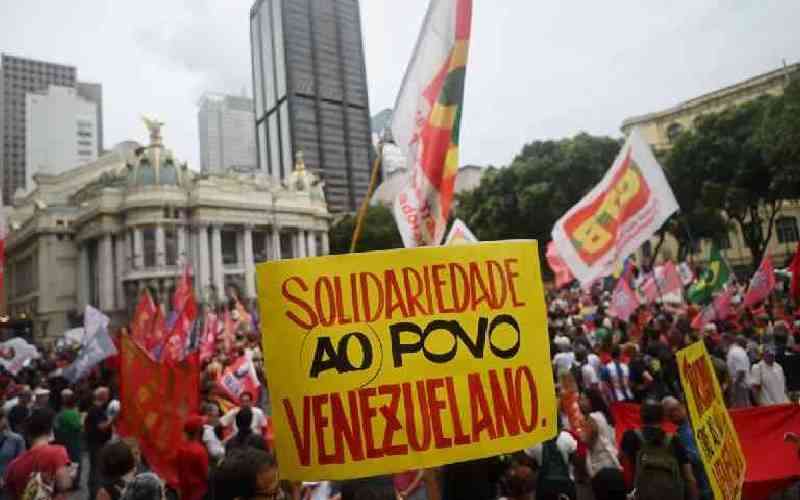
From Nairobi, the United States’ invasion of Venezuela does not feel unprecedented. What is alarming is not the use of force itself, but the abandonment of restraint, the open dismissal of law, legitimacy, and multilateral consent as necessary justifications for power.
That shift should unsettle Africa profoundly, where the promise of the rule of law has been repeatedly crushed by raw force, often with the quiet approval of external powers.
Historically, American power operated in two ways: Overtly unapologetic, as in Panama, Iraq, and Libya, and covertly, through coups and destabilisation cloaked in the language of international order, collective security, and democracy.
As Fareed Zakaria recently observed, US dominance endured not because it was well-intentioned, but because it sought to convert power into legitimacy. Even when flouting global rules, Washington invoked international law, assembled allies, and framed its actions in universal principles.
Follow The Standard
channel
on WhatsApp
That effort, however selective, mattered. It suggested that rules could, at times, restrain force. Venezuela signals a departure. When senior US officials boast of “running” another country or casually discuss controlling its oil, the message is clear: Power entitles, law follows.
Venezuela signals a departure. When senior US officials boast of “running” another country, or casually discuss controlling its oil, the message is clear: Power entitles, and law follows.
For Africa, this is not abstract; it reopens scars. The US has intervened directly or through proxies across the continent since its independence. The Democratic Republic of Congo remains a devastating example: Its first prime minister, Patrice Lumumba, was assassinated in 1961 with CIA involvement.
His crime was not tyranny, but insisting on genuine political, economic, and ideological independence. What followed were decades of kleptocratic rule under Mobutu Sese Seko, backed by Washington in the name of Cold War stability.
The pattern repeated: Coups in Ghana; support for authoritarian regimes in Liberia, Chad, and Sudan; backing of factions in Somalia; and “constructive engagement” with apartheid South Africa, prioritising strategic interests over confronting racial domination.
After the Cold War, this posture evolved into counter-terrorism campaigns across the Sahel and Horn of Africa. The rationale shifted from communism to terrorism to competition with China. The method did not.
What distinguished the past was pretense. There was at least an effort to speak the language of law, democracy, and international order.
That language provided leverage. African courts, civil society, journalists, and reformers could invoke it sometimes successfully against state excess. With Venezuela and threats over Greenland, that constraint is now eroding.
China offers a contrast. Early this year, China’s foreign minister Wang Yi embarked on his annual Africa tour, symbolising Beijing’s growing influence. The visit highlighted how openly great powers now trade principles for advantage.
In Tanzania, emerging from a violent election marked by repression and internet shutdowns, Beijing’s infrastructure-first, no-questions-asked diplomacy dominated. Subdued Ethiopia reaffirmed China’s position on Taiwan while distancing itself from recognising Somaliland, despite its own economic interest in Somaliland’s port.
For Western partners pressing governance concerns, the message is stark: Insist on principles and lose influence, or adapt and stay relevant.
Uganda’s internet blackouts, defiance of court orders, and threats on the life of the opposition leader fit this global mood. When great powers signal that law is optional, smaller states internalise the lesson quickly. Power becomes the only credible currency.
Kenya occupies an uneasy middle ground. Its progressive Constitution anchors authority in the independence of the judiciary, legislature, and executive. Yet court orders are ignored, Parliament often acts as a tool of the executive, police violence persists, and the presidency grows increasingly impatient with legal constraints.
This erosion is reinforced by a global environment where legality no longer confers advantage.”
The tragedy of Venezuela is not only what unfolds there, but what it signals about international order. When, arguably, the most powerful state no longer believes it must justify power, the fragile scaffolding protecting weaker states collapses.
From Nairobi, the conclusion is unavoidable: the erosion of the rule of law abroad always comes home. Africa has seen this film before, and it never ends with stability, prosperity, or democracy.
Dr Muyumbu and Mr Mwendwa are researchers on the history of the rule of law in Kenya
Follow The Standard
channel
on WhatsApp
From Nairobi, the United States’ invasion of Venezuela does not feel unprecedented. What is alarming is not the use of force itself, but the abandonment of restraint, the open dismissal of law, legitimacy, and multilateral consent as necessary justifications for power.
That shift should unsettle Africa profoundly, where the promise of the rule of law has been repeatedly crushed by raw force, often with the quiet approval of external powers.
Historically, American power operated in two ways: Overtly unapologetic, as in Panama, Iraq, and Libya, and covertly, through coups and destabilisation cloaked in the language of international order, collective security, and democracy.
As Fareed Zakaria recently observed, US dominance endured not because it was well-intentioned, but because it sought to convert power into legitimacy. Even when flouting global rules, Washington invoked international law, assembled allies, and framed its actions in universal principles.
Follow The Standard
channel
on WhatsApp
That effort, however selective, mattered. It suggested that rules could, at times, restrain force. Venezuela signals a departure. When senior US officials boast of “running” another country or casually discuss controlling its oil, the message is clear: Power entitles, law follows.
Venezuela signals a departure. When senior US officials boast of “running” another country, or casually discuss controlling its oil, the message is clear: Power entitles, and law follows.
For Africa, this is not abstract; it reopens scars. The US has intervened directly or through proxies across the continent since its independence. The Democratic Republic of Congo remains a devastating example: Its first prime minister, Patrice Lumumba, was assassinated in 1961 with CIA involvement.
His crime was not tyranny, but insisting on genuine political, economic, and ideological independence. What followed were decades of kleptocratic rule under Mobutu Sese Seko, backed by Washington in the name of Cold War stability.
The pattern repeated: Coups in Ghana; support for authoritarian regimes in Liberia, Chad, and Sudan; backing of factions in Somalia; and “constructive engagement” with apartheid South Africa, prioritising strategic interests over confronting racial domination.
After the Cold War, this posture evolved into counter-terrorism campaigns across the Sahel and Horn of Africa. The rationale shifted from communism to terrorism to competition with China. The method did not.
What distinguished the past was pretense. There was at least an effort to speak the language of law, democracy, and international order.
That language provided leverage. African courts, civil society, journalists, and reformers could invoke it sometimes successfully against state excess. With Venezuela and threats over Greenland, that constraint is now eroding.
China offers a contrast. Early this year, China’s foreign minister Wang Yi embarked on his annual Africa tour, symbolising Beijing’s growing influence. The visit highlighted how openly great powers now trade principles for advantage.
In Tanzania, emerging from a violent election marked by repression and internet shutdowns, Beijing’s infrastructure-first, no-questions-asked diplomacy dominated. Subdued Ethiopia reaffirmed China’s position on Taiwan while distancing itself from recognising Somaliland, despite its own economic interest in Somaliland’s port.
For Western partners pressing governance concerns, the message is stark: Insist on principles and lose influence, or adapt and stay relevant.
Stay informed. Subscribe to our newsletter
Uganda’s internet blackouts, defiance of court orders, and threats on the life of the opposition leader fit this global mood. When great powers signal that law is optional, smaller states internalise the lesson quickly. Power becomes the only credible currency.
Kenya occupies an uneasy middle ground. Its progressive Constitution anchors authority in the independence of the judiciary, legislature, and executive. Yet court orders are ignored, Parliament often acts as a tool of the executive, police violence persists, and the presidency grows increasingly impatient with legal constraints.
This erosion is reinforced by a global environment where legality no longer confers advantage.”
The tragedy of Venezuela is not only what unfolds there, but what it signals about international order. When, arguably, the most powerful state no longer believes it must justify power, the fragile scaffolding protecting weaker states collapses.
From Nairobi, the conclusion is unavoidable: the erosion of the rule of law abroad always comes home. Africa has seen this film before, and it never ends with stability, prosperity, or democracy.
Dr Muyumbu and Mr Mwendwa are researchers on the history of the rule of law in Kenya
Follow The Standard
channel
on WhatsApp
By Gilbert Muyumbu and John Mwendwa