

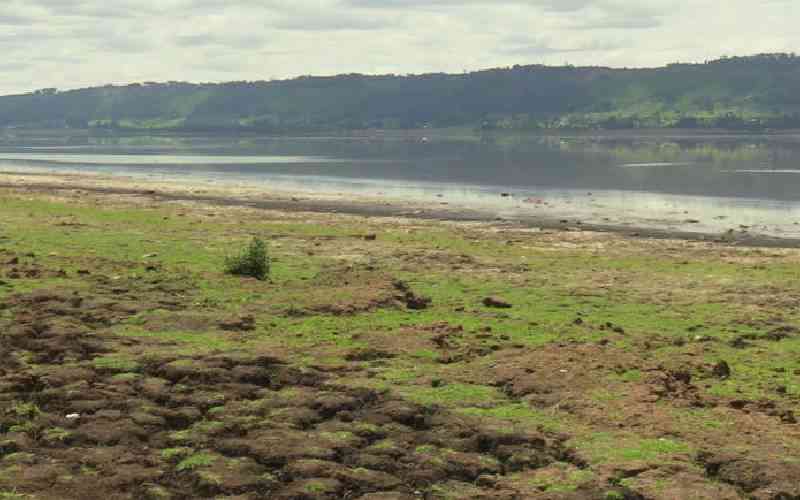
Lake Ol Bolossat in Nyandarua. [File, Standard]
Rainy seasons in Kenya have become synonymous with flooding, displacement, damaged roads, and an inevitable question: What went wrong? We often blame “unusual weather” and climate change. But the truth is less comfortable. In many cases, the water is simply returning to where it has always belonged, wetlands and floodplains that have been ignored, reclaimed, or built over.
Across much of the country, wetlands are still viewed as idle land. Swamps are drained, riverbanks encroached upon, floodplains developed, and mangroves cleared for short-term gains. These actions are rarely labelled as wetland destruction, yet their consequences are unmistakable: More severe floods, longer droughts, declining fisheries, and growing water insecurity.
On World Wetlands Day, as the world recognises the importance of these ecosystems, Kenya has much to reflect on, not in a celebratory sense, but honestly. Wetlands are not wastelands. They are among the most valuable natural assets the country has.
Follow The Standard
channel
on WhatsApp
From the mangroves of Lamu to Kwale, to the floodplains of the Tana River Delta, the papyrus swamps of Lake Victoria, and the seasonal wetlands of arid and semi-arid lands, wetlands sit at the centre of how our landscapes function. They regulate floods and water flows, absorb excess rainfall, recharge groundwater, filter pollutants, and sustain fisheries and agriculture.
Across Eastern Africa, this stabilising role is just as evident. In Ethiopia’s Abijatta–Shalla lakes, reduced inflows have shown how quickly wetland degradation translates into water stress and biodiversity loss. In Tanzania’s Rufiji Delta, mangroves and floodplains underpin fisheries, agriculture, and coastal protection, while upstream decisions determine whether the delta absorbs floods or amplifies risk. Along Lake Victoria, wetlands such as Sio-Siteko and Sango Bay in Uganda quietly filter water, support fish breeding, and stabilise shorelines, functions whose loss reverberates across the entire basin.
Globally, wetlands provide an estimated $8–39 trillion in benefits each year, supporting water security, disaster risk reduction, food systems, and climate regulation. Yet the Global Wetland Outlook 2025 reports that wetlands continue to be lost at an average rate of 0.52 per cent annually, steadily undermining these critical services. When wetlands function well, they do so quietly, preventing disasters without drawing attention. When they are degraded, failure is dramatic and costly.
The lesson is clear. Wetlands have shrunk due to urbanisation, infrastructure development, and poor land-use planning. Natural buffers have been destroyed or disconnected from rivers. As a result, floodwaters move faster, impacts are more severe, and recovery becomes harder. This is not only a climate change problem; it is a problem of how we use and value land.
Along the coast, mangroves tell a similar story, and one that underscores the importance of ecological mangrove restoration. Decades of degradation have weakened fisheries and exposed shorelines, directly affecting household incomes. In places like Lamu, community-led restoration is beginning to reverse this trend, with early signs of recovering fish stocks and improved coastal protection. The message is simple: When mangroves are restored, ecosystems recover and so do livelihoods.
Mangroves also play a critical role in climate change mitigation. They are globally recognised as powerful blue carbon ecosystems, storing carbon more efficiently than many terrestrial forests. When mangroves are destroyed, that carbon is released, emissions increase, and communities become more vulnerable to climate impacts.
Less visible, but equally important, are inland wetlands and peatlands that store water and carbon over long periods. Once drained, these systems shift from stabilising the climate to accelerating its breakdown. Restoration is possible, but far more expensive than protection.
The paradox is that wetlands are often destroyed in the name of development, yet without them, development becomes fragile. Wetlands support fisheries, grazing, agriculture, tourism, and clean water, which are the pillars of Kenya’s economy and rural livelihoods. When these systems fail, the costs are borne by households, counties, and the national budget through disaster response, infrastructure repairs, and lost productivity.
This is where the growing global conversation on the Rights of Wetlands becomes relevant. Recognising wetlands as living systems with intrinsic value – not just land awaiting conversion – changes how decisions are made. It promotes governance that prioritises long-term ecological health, equity, and responsibility to future generations. For Kenya, this approach aligns with the urgent need to balance development with resilience in a changing climate.
What is needed now is not awareness alone, but integration. Wetlands must be treated as critical infrastructure; as essential as roads, dams, and ports, and embedded in climate action plans, water strategies, and spatial planning. Conservation, restoration, and sustainable use should be seen not merely as environmental actions, but as risk reduction measures and economic investments.
World Wetlands Day is a timely reminder that Kenya is not alone in facing these challenges. But recognition must translate into action. Wetlands are not wastelands; they are life-support systems. If we continue to lose them, we will pay through floods, food insecurity, and climate vulnerability. If we protect them, we invest in resilience, and in the country’s future.
Follow The Standard
channel
on WhatsApp
Lake Ol Bolossat in Nyandarua.
[File, Standard]
Rainy seasons in Kenya have become synonymous with flooding, displacement, damaged roads, and an inevitable question: What went wrong? We often blame “unusual weather” and climate change. But the truth is less comfortable. In many cases, the water is simply returning to where it has always belonged, wetlands and floodplains that have been ignored, reclaimed, or built over.
Across much of the country, wetlands are still viewed as idle land. Swamps are drained, riverbanks encroached upon, floodplains developed, and mangroves cleared for short-term gains. These actions are rarely labelled as wetland destruction, yet their consequences are unmistakable: More severe floods, longer droughts, declining fisheries, and growing water insecurity.
On World Wetlands Day, as the world recognises the importance of these ecosystems, Kenya has much to reflect on, not in a celebratory sense, but honestly. Wetlands are not wastelands. They are among the most valuable natural assets the country has.
Follow The Standard
channel
on WhatsApp
From the mangroves of Lamu to Kwale, to the floodplains of the Tana River Delta, the papyrus swamps of Lake Victoria, and the seasonal wetlands of arid and semi-arid lands, wetlands sit at the centre of how our landscapes function. They regulate floods and water flows, absorb excess rainfall, recharge groundwater, filter pollutants, and sustain fisheries and agriculture.
Across Eastern Africa, this stabilising role is just as evident. In Ethiopia’s Abijatta–Shalla lakes, reduced inflows have shown how quickly wetland degradation translates into water stress and biodiversity loss. In Tanzania’s Rufiji Delta, mangroves and floodplains underpin fisheries, agriculture, and coastal protection, while upstream decisions determine whether the delta absorbs floods or amplifies risk. Along Lake Victoria, wetlands such as Sio-Siteko and Sango Bay in Uganda quietly filter water, support fish breeding, and stabilise shorelines, functions whose loss reverberates across the entire basin.
Globally, wetlands provide an estimated $8–39 trillion in benefits each year, supporting water security, disaster risk reduction, food systems, and climate regulation. Yet the Global Wetland Outlook 2025 reports that wetlands continue to be lost at an average rate of 0.52 per cent annually, steadily undermining these critical services. When wetlands function well, they do so quietly, preventing disasters without drawing attention. When they are degraded, failure is dramatic and costly.
The lesson is clear. Wetlands have shrunk due to urbanisation, infrastructure development, and poor land-use planning. Natural buffers have been destroyed or disconnected from rivers. As a result, floodwaters move faster, impacts are more severe, and recovery becomes harder. This is not only a climate change problem; it is a problem of how we use and value land.
Along the coast, mangroves tell a similar story, and one that underscores the importance of ecological mangrove restoration. Decades of degradation have weakened fisheries and exposed shorelines, directly affecting household incomes. In places like Lamu, community-led restoration is beginning to reverse this trend, with early signs of recovering fish stocks and improved coastal protection. The message is simple: When mangroves are restored, ecosystems recover and so do livelihoods.
Mangroves also play a critical role in climate change mitigation. They are globally recognised as powerful blue carbon ecosystems, storing carbon more efficiently than many terrestrial forests. When mangroves are destroyed, that carbon is released, emissions increase, and communities become more vulnerable to climate impacts.
Less visible, but equally important, are inland wetlands and peatlands that store water and carbon over long periods. Once drained, these systems shift from stabilising the climate to accelerating its breakdown. Restoration is possible, but far more expensive than protection.
The paradox is that wetlands are often destroyed in the name of development, yet without them, development becomes fragile. Wetlands support fisheries, grazing, agriculture, tourism, and clean water, which are the pillars of Kenya’s economy and rural livelihoods. When these systems fail, the costs are borne by households, counties, and the national budget through disaster response, infrastructure repairs, and lost productivity.
This is where the growing global conversation on the Rights of Wetlands becomes relevant. Recognising wetlands as living systems with intrinsic value – not just land awaiting conversion – changes how decisions are made. It promotes governance that prioritises long-term ecological health, equity, and responsibility to future generations. For Kenya, this approach aligns with the urgent need to balance development with resilience in a changing climate.
What is needed now is not awareness alone, but integration. Wetlands must be treated as critical infrastructure; as essential as roads, dams, and ports, and embedded in climate action plans, water strategies, and spatial planning. Conservation, restoration, and sustainable use should be seen not merely as environmental actions, but as risk reduction measures and economic investments.
World Wetlands Day is a timely reminder that Kenya is not alone in facing these challenges. But recognition must translate into action. Wetlands are not wastelands; they are life-support systems. If we continue to lose them, we will pay through floods, food insecurity, and climate vulnerability. If we protect them, we invest in resilience, and in the country’s future.
Stay informed. Subscribe to our newsletter
Follow The Standard
channel
on WhatsApp
By Abdul Hazeez