

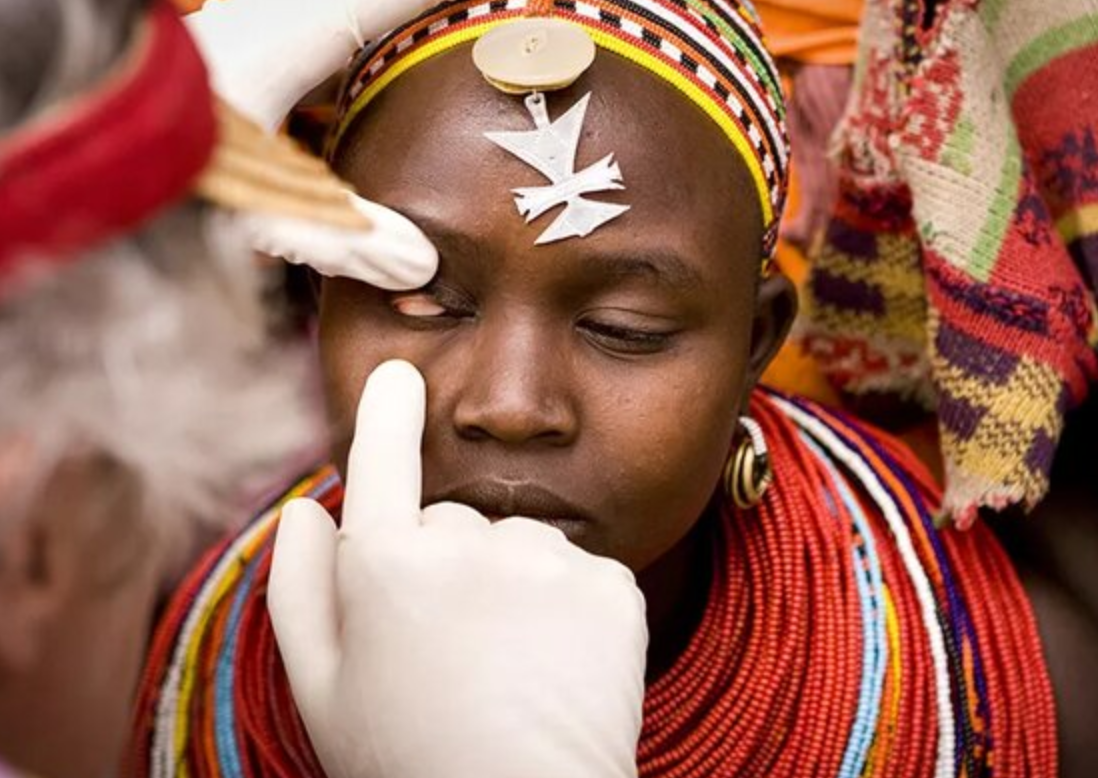
At the heart of this success is Kenya’s Ministry of Health, working closely with county health departments and development partners.
Trachoma
is the world’s leading infectious cause of blindness. As World Neglected
Tropical Disease (NTD) Day is marked globally, Kenya stands at the brink of a
landmark public health victory, the elimination of Trachoma as a disease of Public Health
Importance.
Once
endemic in many arid and semi-arid regions of the country, Trachoma’s burden
has dramatically declined thanks to sustained national commitment by the
Government of Kenya, coordinated partnerships with diverse stakeholders, and
strengthened health systems across counties.
Trachoma,
caused by Chlamydia trachomatis, thrives where poverty, limited water
access, and inadequate sanitation intersect. Repeated infections can lead to
trachomatous trichiasis, a painful turning inward of the eyelids that scars the
eye and ultimately causes blindness without surgical intervention.
Women and
children bear the greatest burden of trachoma. Children are the main reservoir
of infection due to close contact and challenges with hygiene. At the same time, women as
primary caregivers experience repeated exposure, making them up to four times
more likely to develop trichiasis than men. Addressing trachoma is therefore
not only a health priority, but also a matter of gender equity and child
wellbeing.
Over years of consistent implementation of the World Health
Organisation (WHO)-endorsed SAFE strategy (Surgery, Antibiotics, Facial
cleanliness and Environmental improvement),
Kenya has systematically reduced the disease’s prevalence toward
elimination thresholds.
At the
heart of this success is Kenya’s
Ministry of Health,
working closely with county health departments and development partners, including WHO, Sight Savers, CBM Operation Eye Sight, KEMRI.
Through national
planning and county-led implementation, the number of trachoma-endemic
districts has steadily declined as intensive interventions push the disease
toward elimination as a public health problem.
The
Role of Partnerships and The Fred Hollows Foundation
The Fred Hollows Foundation’s contribution extends well beyond direct service delivery. Since
2012, the Foundation has played a critical role in strengthening county health
systems to plan, finance, monitor, and sustain eye health services as an
integral part of routine health care.
Across six counties of Turkana, West
Pokot, Baringo, Kitui, Embu and Trans Mara in Narok County, the Foundation has
supported eye health screening for approximately 7.8 million people and the
treatment of over 6 million individuals with antibiotics through trachoma Mass
Drug Administration. This has been complemented by sustained investments in
workforce development, including the training of eye health workers and
trichiasis surgeons, and the capacity building of thousands of community health
promoters to support service delivery, referral, and community engagement.
In addition,
the Foundation has renovated, constructed, and equipped eye health facilities,
strengthening service readiness and improving access to quality care in
hard-to-reach settings. Community-led social and behaviour change interventions
promoting facial cleanliness, hygiene, and environmental improvement have
further reinforced these efforts.
Together,
these integrated investments have laid critical foundations for the elimination
of trachoma and the prevention of other vision-threatening conditions, while
embedding eye health within county health systems for long-term sustainability.
Cross-Border
Cooperation and Migratory Communities
Trachoma
does not respect political borders. In Kenya’s arid north and west, pastoralist
communities move fluidly across international boundaries in search of pasture
and water.
Joint cross-border mass drug administration campaigns with
neighbouring Uganda and synchronised efforts with Tanzania have aimed to reach
nomadic populations where traditional health-service delivery is challenging.
Such coordination enhances surveillance, synchronises antibiotic distribution
and strengthens regional cooperation essential to elimination.
From
Campaigns to Routine Services
As
prevalence falls, the program emphasis is shifting from intensive, vertical
campaigns to routine
health service delivery
led by counties.
Community health workers and facility‐based
teams are now routinely screening, identifying and managing residual cases of
trachoma and other eye conditions. This transition ensures sustainability,
embeds NTD work within broader primary health care, and strengthens overall
health systems, linking eye health to water, sanitation and hygiene promotion.
A
Model for Sustainable Public Health
Kenya’s
progress, driven by data-guided
planning, community engagement, cross-sector partnerships, and empowered county
systems, shows what is possible when health systems unite with communities and
partners. As the country edges closer to achieving trachoma elimination, which
the Government of Kenya has projected to be by 2030, the lessons from this journey
offer a blueprint for tackling other NTDs and building resilient, equitable
primary health care for all.