

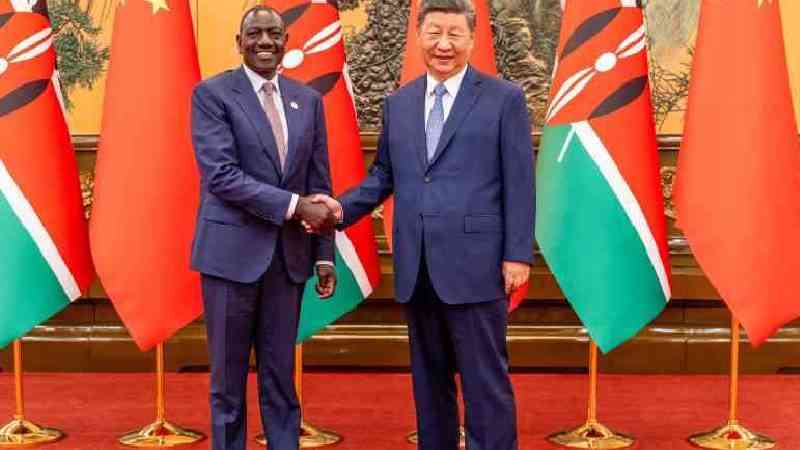
Great powers stage their rivalries on summit platforms, but African countries, including Kenya, live with the consequences in prices, supplies, and stability, and must learn to read the architecture beneath the drama.
Kenyan households feel the cost of great power rivalry long before they see it on a summit stage. When superpowers study one another, they reach for the Thucydides Trap, the fear that a rising power and an established one are destined for collision. But when smaller nations study superpowers, they remember the Melian Dialogue, the moment when a great power destroyed a weaker society simply to preserve its credibility.
These two anxieties shape different parts of the world. Yet both frame how the Global South experiences the new era of great power competition. For Africans, it is a drama staged in distant capitals but felt in the price of food, fuel, and medicine.
The world has seen this performance before. Major powers amplify their confrontations for domestic audiences, and summits become symbolic stages where leaders signal resolve to watchers at home.
Follow The Standard
channel
on WhatsApp
The 2025 G20 leaders’ summit in Johannesburg, chaired by South Africa and marked by the absence of the United States under President Donald Trump, revived the sense that geopolitical tension is hardening once again.
This summit underscored the visible fragmentation in global governance as key powers sought to advance their own agendas. Yet beneath the drama, the structure of interdependence remains.
Rivalry commands the spotlight. Interdependence keeps the world functioning. For African countries, including Kenya, this dynamic plays out not just in political rhetoric but in practical challenges, such as trade disruptions, debt burdens, and the scarcity of climate finance, issues that shape daily life more directly than any geopolitical showdown.
The gap between political performance and the operational reality of global systems is particularly apparent in Africa, where the survival of these interconnected networks is often taken for granted even as they come under increasing strain.
Rules-based order
Prime Minister Mark Carney of Canada recently pointed to what he called a growing “rupture, not a transition” in the global order. In his 2026 speech at the World Economic Forum, he argued that the post-Cold War rules-based order is not returning and that great powers are using economic integration, tariffs, financial systems, and supply chains as instruments of coercion.
Carney’s diagnosis, which some hear as an abrupt break, sits within structural changes that have been unfolding for decades. His message to Canada and other middle powers is that they must adopt new strategies, not simply building walls or clinging to old alliances, but forming coalitions that can navigate a more fragmented landscape. What looks like rupture from Ottawa or Davos is, for much of the Global South, simply another visible phase in an ongoing reordering that has long shaped their economies, security, and diplomacy.
This distinction became sharply visible during the early months of Covid-19. Public rhetoric between major powers created the impression that the world was splintering into opposing blocs. Yet the practical realities I confronted as Somalia’s ambassador to China revealed a more layered truth. Hospitals in Mogadishu struggled to secure oxygen and protective equipment.
Supply chains tightened under pressure. But even while political accusations intensified, the systems connecting countries did not stop. Cargo ships continued moving, and scientific information still crossed borders. Medical components manufactured in Asia sustained hospitals in Africa, Europe, and North America. The political performance projected rupture. The operational reality revealed enduring interdependence.
This duality was familiar long before the pandemic. While serving in Washington and later at the United Nations in New York, I often saw public disagreements coexist with quiet coordination.
The idea of a world dividing cleanly into rival blocs does not align with the lived experience of the Global South. Our economies depend on interconnected markets, shared institutions, and transnational supply chains shaped by all major powers. More than three-quarters of Africa’s pharmaceutical imports come from supply networks linked to Europe, China, or India.
Nearly every African state relies on global maritime routes for food, fuel, and essential goods, from Mombasa to Maputo. For us, rivalry is not an abstract contest of strategy; it arrives as prices, shortages, and instability.
Recent decades have reinforced this pattern. From Aids to SARS, from the global financial crisis to Ebola, the United States and China cooperated repeatedly out of necessity rather than goodwill. Their economies remain tied through manufacturing systems, scientific networks, and financial channels that neither can sever without harming itself.
Covid-19 exposed the vulnerabilities of this arrangement but also confirmed its inevitability. Vaccine nationalism was real. So was the continuation of interdependent systems. The United States still depended on Chinese medical inputs.
China still relied on dollar-based financial pathways and global shipping routes. Scientific exchange persisted because global health required it. What fractured was political messaging, not the underlying architecture.
This widening gap between the performance above and the structure below is now one of the defining strategic challenges for the Global South. The loudness of rivalry does not necessarily reflect the depth of division.
The choreography may be dramatic, but the dancers remain tied to the same floor. When countries in Africa interpret global affairs entirely through visible confrontation, they risk misreading the system they depend on. If they respond to the performance rather than the underlying patterns, they may take symbolic positions that offer little benefit yet carry high costs.
Essential goods
Multilateral cooperation, predictable trade routes, scientific exchange, and stable financial frameworks are not luxuries for developing regions. They are lifelines. The Global South needs systems that protect access to essential goods, keep markets functioning, and prevent external shocks from destabilising societies. These foundations do not rely on the theatre of rivalry. They depend on the quieter architecture beneath it.
Citizens experience these realities long before leaders acknowledge them. A disruption in one shipping corridor can raise food prices in Nairobi, Delhi, and Detroit within days. Currency swings reshape household budgets faster than governments can respond. Energy shocks cross continents in hours. Domestic stability depends on the functioning of global systems.
For the global South, the task is not to choose sides in a rivalry that will continue regardless of our preferences. The task is to understand how the dance works. To recognise the difference between performance and reality. To see rivalry as noise and interdependence as the underlying rhythm. To build resilience at home and read global politics with clarity rather than reaction.
Follow The Standard
channel
on WhatsApp
Great powers stage their rivalries on summit platforms, but African countries, including Kenya, live with the consequences in prices, supplies, and stability, and must learn to read the architecture beneath the drama.
Kenyan households feel the cost of great power rivalry long before they see it on a summit stage. When superpowers study one another, they reach for the Thucydides Trap, the fear that a rising power and an established one are destined for collision. But when smaller nations study superpowers, they remember the Melian Dialogue, the moment when a great power destroyed a weaker society simply to preserve its credibility.
These two anxieties shape different parts of the world. Yet both frame how the Global South experiences the new era of great power competition. For Africans, it is a drama staged in distant capitals but felt in the price of food, fuel, and medicine.
The world has seen this performance before. Major powers amplify their confrontations for domestic audiences, and summits become symbolic stages where leaders signal resolve to watchers at home.
Follow The Standard
channel
on WhatsApp
The 2025 G20 leaders’ summit in Johannesburg, chaired by South Africa and marked by the absence of the United States under President Donald Trump, revived the sense that geopolitical tension is hardening once again.
This summit underscored the visible fragmentation in global governance as key powers sought to advance their own agendas. Yet beneath the drama, the structure of interdependence remains.
Rivalry commands the spotlight. Interdependence keeps the world functioning. For African countries, including Kenya, this dynamic plays out not just in political rhetoric but in practical challenges, such as trade disruptions, debt burdens, and the scarcity of climate finance, issues that shape daily life more directly than any geopolitical showdown.
The gap between political performance and the operational reality of global systems is particularly apparent in Africa, where the survival of these interconnected networks is often taken for granted even as they come under increasing strain.
Rules-based order
Prime Minister Mark Carney of Canada recently pointed to what he called a growing “rupture, not a transition” in the global order. In his 2026 speech at the World Economic Forum, he argued that the post-Cold War rules-based order is not returning and that great powers are using economic integration, tariffs, financial systems, and supply chains as instruments of coercion.
Carney’s diagnosis, which some hear as an abrupt break, sits within structural changes that have been unfolding for decades. His message to Canada and other middle powers is that they must adopt new strategies, not simply building walls or clinging to old alliances, but forming coalitions that can navigate a more fragmented landscape. What looks like rupture from Ottawa or Davos is, for much of the Global South, simply another visible phase in an ongoing reordering that has long shaped their economies, security, and diplomacy.
This distinction became sharply visible during the early months of Covid-19. Public rhetoric between major powers created the impression that the world was splintering into opposing blocs. Yet the practical realities I confronted as Somalia’s ambassador to China revealed a more layered truth. Hospitals in Mogadishu struggled to secure oxygen and protective equipment.
Supply chains tightened under pressure. But even while political accusations intensified, the systems connecting countries did not stop. Cargo ships continued moving, and scientific information still crossed borders. Medical components manufactured in Asia sustained hospitals in Africa, Europe, and North America. The political performance projected rupture. The operational reality revealed enduring interdependence.
This duality was familiar long before the pandemic. While serving in Washington and later at the United Nations in New York, I often saw public disagreements coexist with quiet coordination.
The idea of a world dividing cleanly into rival blocs does not align with the lived experience of the Global South. Our economies depend on interconnected markets, shared institutions, and transnational supply chains shaped by all major powers. More than three-quarters of Africa’s pharmaceutical imports come from supply networks linked to Europe, China, or India.
Stay informed. Subscribe to our newsletter
Nearly every African state relies on global maritime routes for food, fuel, and essential goods, from Mombasa to Maputo. For us, rivalry is not an abstract contest of strategy; it arrives as prices, shortages, and instability.
Recent decades have reinforced this pattern. From Aids to SARS, from the global financial crisis to Ebola, the United States and China cooperated repeatedly out of necessity rather than goodwill. Their economies remain tied through manufacturing systems, scientific networks, and financial channels that neither can sever without harming itself.
Covid-19 exposed the vulnerabilities of this arrangement but also confirmed its inevitability. Vaccine nationalism was real. So was the continuation of interdependent systems. The United States still depended on Chinese medical inputs.
China still relied on dollar-based financial pathways and global shipping routes. Scientific exchange persisted because global health required it. What fractured was political messaging, not the underlying architecture.
This widening gap between the performance above and the structure below is now one of the defining strategic challenges for the Global South. The loudness of rivalry does not necessarily reflect the depth of division.
The choreography may be dramatic, but the dancers remain tied to the same floor. When countries in Africa interpret global affairs entirely through visible confrontation, they risk misreading the system they depend on. If they respond to the performance rather than the underlying patterns, they may take symbolic positions that offer little benefit yet carry high costs.
Essential goods
Multilateral cooperation, predictable trade routes, scientific exchange, and stable financial frameworks are not luxuries for developing regions. They are lifelines. The Global South needs systems that protect access to essential goods, keep markets functioning, and prevent external shocks from destabilising societies. These foundations do not rely on the theatre of rivalry. They depend on the quieter architecture beneath it.
Citizens experience these realities long before leaders acknowledge them. A disruption in one shipping corridor can raise food prices in Nairobi, Delhi, and Detroit within days. Currency swings reshape household budgets faster than governments can respond. Energy shocks cross continents in hours. Domestic stability depends on the functioning of global systems.
For the global South, the task is not to choose sides in a rivalry that will continue regardless of our preferences. The task is to understand how the dance works. To recognise the difference between performance and reality. To see rivalry as noise and interdependence as the underlying rhythm. To build resilience at home and read global politics with clarity rather than reaction.
Follow The Standard
channel
on WhatsApp
By Awale Kullane