



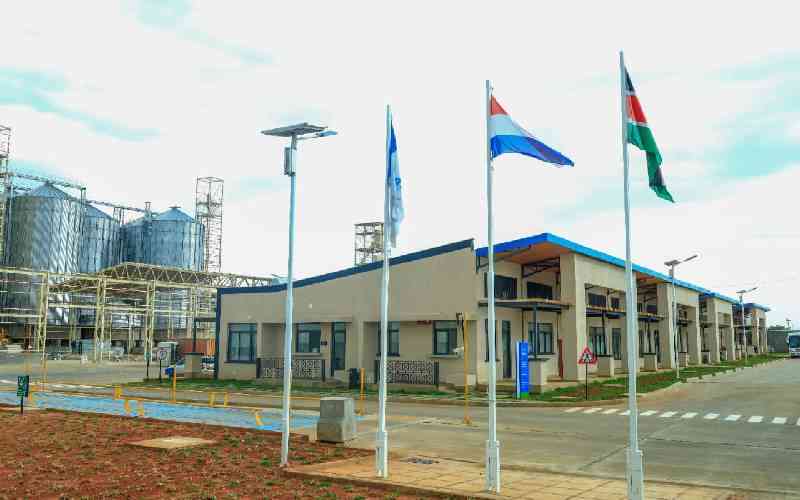
A Dutch-based firm is now eying the Kenyan market with an upcoming Sh3 billion animal feed factory.
The state-of-the-art animal feed manufacturing facility in Athi River will be officially opened on Feb 18, under the management of global animal nutrition company De Heus Kenya.
Follow The Standard
channel
on WhatsApp
The facility is one of the largest private-sector investments in the country’s livestock and agribusiness sector in recent years.
The company’s Managing Director, Wiehan Visagie, said the factory will strengthen local feed supply, improve quality and consistency, create jobs, and support national efforts toward food security and industrial growth in line with its long-term commitment to Kenya’s agricultural transformation.
“This factory is about building reliable systems for farmers,” said Visagie, adding, “By manufacturing feed locally, we are addressing long-standing challenges such as inconsistent quality and dependence on imports, while supporting farmers to improve productivity and profitability.”
According to him, the Athi River plant will have an annual production capacity of 200,000 metric tonnes, with a future expandable capacity to 260,000 Metric tonnes positioning it among the largest feed mills in East Africa.
It will produce a wide range of animal nutrition products, including compound feeds, concentrates, premixes, and speciality feeds for poultry, pigs, ruminants, and aquaculture.
Kenya’s livestock sector contributes an estimated 12 per cent of national GDP and supports millions of livelihoods, yet productivity remains below potential.
Feed costs account for up to 70 per cent of total livestock production expenses, making feed quality and availability a critical determinant of farm performance.
“By producing feed locally, De Heus Kenya aims to shorten supply chains, improve traceability, and tailor nutrition to Kenyan farming systems, helping farmers achieve more consistent results while reducing exposure to global supply disruptions,” said Mr Visagie.
The facility is expected to create approximately 250 direct jobs and up to 1,000 indirect jobs across transport, logistics, packaging, distribution, and raw material supply chains.
The company also plans to source key raw materials, including maize and soybeans, from Kenyan farmers, supporting local grain markets and rural incomes.
In addition to manufacturing, Visagie said De Heus Kenya will provide technical advisory services to farmers, focusing on feed utilisation, ration formulation, and animal nutrition management.
These services, he said, are aimed at helping farmers translate feed quality into measurable productivity gains.
Founded in 1911 in the Netherlands, the company combines global research with local manufacturing, testing, and farmer support to strengthen livestock value chains.
Follow The Standard
channel
on WhatsApp
The state-of-the-art animal feed manufacturing facility in Athi River will be officially opened on Feb 18, under the management of global animal nutrition company De Heus Kenya.
Follow The Standard
channel
on WhatsApp
The facility is one of the largest private-sector investments in the
country’s livestock
and agribusiness sector in recent years.
The company’s Managing Director, Wiehan Visagie, said the factory will strengthen local feed supply, improve quality and consistency, create jobs, and support national efforts toward food security and industrial growth in line with its long-term commitment to Kenya’s agricultural transformation.
“This factory is about building reliable systems for farmers,” said Visagie, adding, “By manufacturing feed locally, we are addressing long-standing challenges such as inconsistent quality and dependence on imports, while supporting farmers to improve productivity and profitability.”
According to him, the Athi River plant will have an annual production capacity of 200,000 metric tonnes, with a future expandable capacity to 260,000 Metric tonnes positioning it among the largest feed mills in East Africa.
It will produce a wide range of animal nutrition products, including compound feeds, concentrates, premixes, and speciality feeds for poultry, pigs, ruminants, and aquaculture.
Kenya’s livestock sector contributes an estimated 12 per cent of national GDP and supports millions of livelihoods, yet productivity remains below potential.
Feed costs account for up to 70 per cent of total livestock production expenses, making feed quality and availability a critical determinant of farm performance.
“By producing feed locally,
De Heus Kenya aims to shorten
supply chains, improve traceability, and tailor nutrition to Kenyan farming systems, helping farmers achieve more consistent results while reducing exposure to global supply disruptions,” said Mr Visagie.
The facility is expected to create approximately 250 direct jobs and up to 1,000 indirect jobs across transport, logistics, packaging, distribution, and raw material supply chains.
The company also plans to source key raw materials, including maize and soybeans, from Kenyan farmers, supporting local grain markets and rural incomes.
In addition to manufacturing, Visagie said De Heus Kenya will provide technical advisory services to farmers, focusing on feed utilisation, ration formulation, and animal nutrition management.
Stay informed. Subscribe to our newsletter
These services, he said, are aimed at helping farmers translate feed quality into measurable productivity gains.
Founded in 1911 in the Netherlands, the company combines global research with local manufacturing, testing, and farmer support to strengthen livestock value chains.
Follow The Standard
channel
on WhatsApp
By Juliet Omelo