

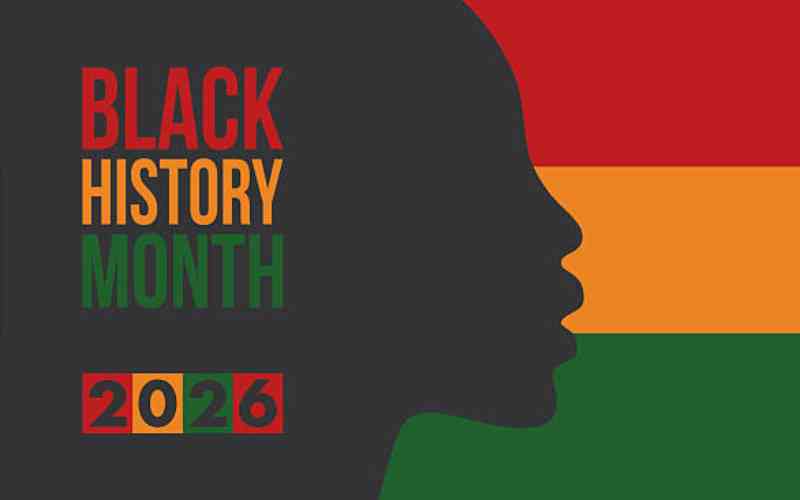
On the literary front, February is the month when the world marks what has come to be known as Black History Month. Originally marked by month-long activities mainly in the United States and Canada, Black History Month was established by Carter G. Woodson in 1926 as “Negro History Week” to acknowledge the contribution of African-Americans to the socio-cultural and economic development of the US and Canada.
A former coal mine worker and son of former slaves, Carter G. Woodson defied the odds to become the second African-American – after W. E. B. Du Bois – to earn a doctorate from Harvard University. He chose February as Black History Month because it is also the birthday month of Abraham Lincoln and Frederick Douglass, both of whom are closely associated with the abolition of slavery.
Woodson critiqued the treatment of African-Americans and famously argues, most notably in his seminal work, The Miseducation of the Negro (1933), that a people without a history lack a worthwhile tradition.
Significantly, the establishment of Black History Month came at a time of great literary awakening among African-American poets, in what has come to be known as the Harlem Renaissance.
Follow The Standard
channel
on WhatsApp
Pushed to the wall by the pain and challenges of slavery, poets of the Harlem Renaissance took to the pen to assert the universality of human rights and freedom. The literary outpouring that has come to be known as the Harlem Renaissance was not confined to the United States, but rather extended to the Caribbean islands (West Indies).
A notable contribution from the West Indian side of the Americas is seen through the works of such poets as Claude McKay, a former policeman and poet from Jamaica who migrated to the US in 1912. McKay’s ability to craft Shakespearean sonnets and lace them with defiance of tone epitomised the protest against racial injustice. McKay is best known for his poem, “If We Must Die”, arguably the world’s most “violent” poem against racial injustice.
Today, Black History Month is part of the global calendar. And the ideas forged in the Harlem Renaissance era have, in time, travelled back across the Atlantic ocean, informing African nationalist thought and shaping the literary imagination of writers on the continent.
For me, the most interesting thing today is how the politics of identity in African literary studies has changed over the past one century. It all began with the politics of colour, where lines between privilege and penury were drawn in black and white, pun proudly intended. Then as the world slowly but surely came to terms with the fact that skin colour does not determine one’s intellect, struggles among the wretched of the earth became increasingly a factor of economics rather than just skin colour.
Allow me to use Achebe’s works, which serve as a moving mirror of African life, one last time. Where Achebe’s first novels were on the relations between European settlers (whites) and his own Igbo people (black), his later works were more about Africans suffering under the same yoke they did under colonial authorities many years after independence.
In Arrow of God, the European colonial administrators could order the arrest of anyone, including Ezeulu, the previously revered chief priest of Ulu and custodian of unity among the many tribes of Umuaro. In Anthills of the Savannah, which satirises the postcolonial excesses of African leaders, His Excellency Sam cuts short a Cabinet meeting and dispatches one of his minions to find a way of shooing away a delegation from a place called Abazon who have come to seek help over drought and famine.
Achebe casts Sam, a military strongman, as a great admirer not only of his former European teachers, but also their mannerisms. He is said to have undergone a complete metamorphosis of character after a trip abroad, in an extended metaphor that shows the postcolonial African reality as what Fanon would call Black Skin, White Masks, or what Derek Walcott (and later Ngugi wa Thiong’o) would call Petals of Blood, or, indeed, what led one of Imbuga’s characters in Betrayal in the City to famously quip, “It was better while we waited.”
We have come a long way. During the Harlem Renaissance era, and struggle for independence across Africa in the 1950s and 1960s, and the war on apartheid in Southern Africa much later, race and skin colour predetermined who the oppressor and the oppressed would be. Today, however, identity has shifted significantly from the geographical origin to economic ability.
In his powerful Swahili play, Visiki, Kenyan scholar Khaemba Ongeti shows how politicians in the postcolonial African setting have perpetuated the divide-and-rule tactics of the colonial era for political survival. When the elections draw near, the main politicians in the play feign enmity and agree to retreat to their respective tribes, where they tell their people tales of horror about what would happen if a leader from the other tribe rises to power or is not removed from power. Once elections are over, the politicians go back to working together.
By giving the play the title Visiki (which means “stumps” or “obstacles”), Ongeti seems to suggest that backward politics that weaponises identity and origin for selfish ends is a major hindrance to progress. In Big Chiefs, Meja Mwangi shows how this tribal arithmetic as an election strategy may end up sowing seeds of unrest, with cataclysmic effects in terms of instability and possible loss of life.
So, as the world marks Black History Month, perhaps it is time to reflect afresh on identity and freedom. Perhaps it is time we reconciled ourselves to the reality that while identity and freedom are great ideas, they are also double-edged swords whose reckless deployment could cause more harm than what we desire in our idealised thoughts. For, where the world yesterday thought we were different based on who we are or where we come from, today we know that even our identity could be weaponised for nefarious ends.
And where we associated freedom with who lorded over our lives and where they came from, today we also know that what matters with fellow human beings is what they truly stand for rather than their geographical origin. We have really come a long way from the era of Harlem Renaissance, struggle for independence and the postcolonial struggle for freedom. We should be the wiser for it.
Follow The Standard
channel
on WhatsApp
On the literary front, February is the month when the world marks what has come to be known as Black History Month. Originally marked by month-long activities mainly in the United States and Canada, Black History Month was established by Carter G. Woodson in 1926 as “Negro History Week” to acknowledge the contribution of African-Americans to the socio-cultural and economic development of the US and Canada.
A former coal mine worker and son of former slaves, Carter G. Woodson defied the odds to become the second African-American – after W. E. B. Du Bois – to earn a doctorate from Harvard University. He chose February as Black History Month because it is also the birthday month of Abraham Lincoln and Frederick Douglass, both of whom are closely associated with the abolition of slavery.
Woodson critiqued the treatment of African-Americans and famously argues, most notably in his seminal work, The Miseducation of the Negro (1933), that a people without a history lack a worthwhile tradition.
Significantly, the establishment of Black History Month came at a time of great literary awakening among African-American poets, in what has come to be known as the Harlem Renaissance.
Follow The Standard
channel
on WhatsApp
Pushed to the wall by the pain and challenges of slavery, poets of the Harlem Renaissance took to the pen to assert the universality of human rights and freedom. The literary outpouring that has come to be known as the Harlem Renaissance was not confined to the United States, but rather extended to the Caribbean islands (West Indies).
A notable contribution from the West Indian side of the Americas is seen through the works of such poets as Claude McKay, a former policeman and poet from Jamaica who migrated to the US in 1912. McKay’s ability to craft Shakespearean sonnets and lace them with defiance of tone epitomised the protest against racial injustice. McKay is best known for his poem, “If We Must Die”, arguably the world’s most “violent” poem against racial injustice.
Today, Black History Month is part of the global calendar. And the ideas forged in the Harlem Renaissance era have, in time, travelled back across the Atlantic ocean, informing African nationalist thought and shaping the literary imagination of writers on the continent.
For me, the most interesting thing today is how the politics of identity in African literary studies has changed over the past one century. It all began with the politics of colour, where lines between privilege and penury were drawn in black and white, pun proudly intended. Then as the world slowly but surely came to terms with the fact that skin colour does not determine one’s intellect, struggles among the wretched of the earth became increasingly a factor of economics rather than just skin colour.
Allow me to use Achebe’s works, which serve as a moving mirror of African life, one last time. Where Achebe’s first novels were on the relations between European settlers (whites) and his own Igbo people (black), his later works were more about Africans suffering under the same yoke they did under colonial authorities many years after independence.
In Arrow of God, the European colonial administrators could order the arrest of anyone, including Ezeulu, the previously revered chief priest of Ulu and custodian of unity among the many tribes of Umuaro. In Anthills of the Savannah, which satirises the postcolonial excesses of African leaders, His Excellency Sam cuts short a Cabinet meeting and dispatches one of his minions to find a way of shooing away a delegation from a place called Abazon who have come to seek help over drought and famine.
Achebe casts Sam, a military strongman, as a great admirer not only of his former European teachers, but also their mannerisms. He is said to have undergone a complete metamorphosis of character after a trip abroad, in an extended metaphor that shows the postcolonial African reality as what Fanon would call Black Skin, White Masks, or what Derek Walcott (and later Ngugi wa Thiong’o) would call Petals of Blood, or, indeed, what led one of Imbuga’s characters in Betrayal in the City to famously quip, “It was better while we waited.”
We have come a long way. During the Harlem Renaissance era, and struggle for independence across Africa in the 1950s and 1960s, and the war on apartheid in Southern Africa much later, race and skin colour predetermined who the oppressor and the oppressed would be. Today, however, identity has shifted significantly from the geographical origin to economic ability.
In his powerful Swahili play, Visiki, Kenyan scholar Khaemba Ongeti shows how politicians in the postcolonial African setting have perpetuated the divide-and-rule tactics of the colonial era for political survival. When the elections draw near, the main politicians in the play feign enmity and agree to retreat to their respective tribes, where they tell their people tales of horror about what would happen if a leader from the other tribe rises to power or is not removed from power. Once elections are over, the politicians go back to working together.
By giving the play the title Visiki (which means “stumps” or “obstacles”), Ongeti seems to suggest that backward politics that weaponises identity and origin for selfish ends is a major hindrance to progress. In Big Chiefs, Meja Mwangi shows how this tribal arithmetic as an election strategy may end up sowing seeds of unrest, with cataclysmic effects in terms of instability and possible loss of life.
So, as the world marks Black History Month, perhaps it is time to reflect afresh on identity and freedom. Perhaps it is time we reconciled ourselves to the reality that while identity and freedom are great ideas, they are also double-edged swords whose reckless deployment could cause more harm than what we desire in our idealised thoughts. For, where the world yesterday thought we were different based on who we are or where we come from, today we know that even our identity could be weaponised for nefarious ends.
Stay informed. Subscribe to our newsletter
And where we associated freedom with who lorded over our lives and where they came from, today we also know that what matters with fellow human beings is what they truly stand for rather than their geographical origin. We have really come a long way from the era of Harlem Renaissance, struggle for independence and the postcolonial struggle for freedom. We should be the wiser for it.
Follow The Standard
channel
on WhatsApp
By Henry Munene