

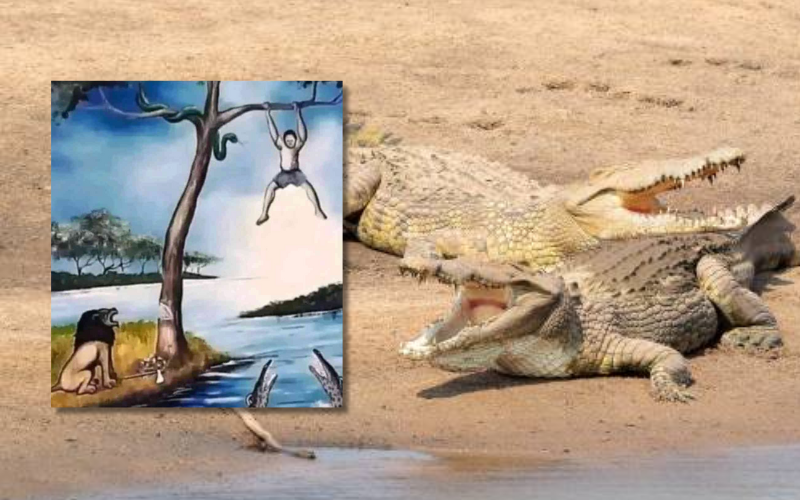
It reads like a riddle or a grim metaphor for life’s struggles, but for one fisherman in Zambia, it became a horrifying reality.
A routine fishing trip ended in tragedy when a man was killed by a crocodile after fleeing from a herd of elephants.
The victim, identified as 52-year-old Dean Nyirenda, was returning from fishing with two friends on Wednesday when they suddenly encountered the elephants. As panic set in and the trio scattered in search of safety, Nyirenda made a fatal decision.
According to the BBC, local police chief Robertson Mweemba said Nyirenda jumped into a nearby river to escape the charging animals, unaware of the danger lurking beneath the surface.
A crocodile immediately attacked him.
Nyirenda reportedly fought back, striking the reptile with a stick and managing to drag himself out of the water as his friends rushed to help. However, he was bleeding heavily, and despite their efforts to save him, he succumbed to his injuries shortly after.
The tragedy occurred in eastern Zambia’s Mambwe district, near South Luangwa National Park—a biodiversity-rich area known for its large populations of elephants and Nile crocodiles.
Zambia is home to one of Africa’s largest elephant populations, a factor that often leads to deadly human-wildlife encounters. The Luangwa River, which cuts through the park, is also believed to host one of the continent’s highest concentrations of Nile crocodiles, a species notorious for its aggression.
In 2023 alone, the country recorded 26 wildlife-related deaths, 15 of which were linked to crocodile attacks, most occurring along the Luangwa River, according to conservation group Resource Africa.
The group notes that expanding human activity continues to encroach on wildlife habitats, increasing risks for communities such as fishermen who rely on rivers for their livelihoods.
Authorities have since urged residents and tourists to exercise extreme caution in wildlife zones, particularly when moving through known hotspots. Wildlife officials say measures to curb human-animal conflict are under consideration, including the construction of protective fencing around high-risk areas to prevent further loss of life.