

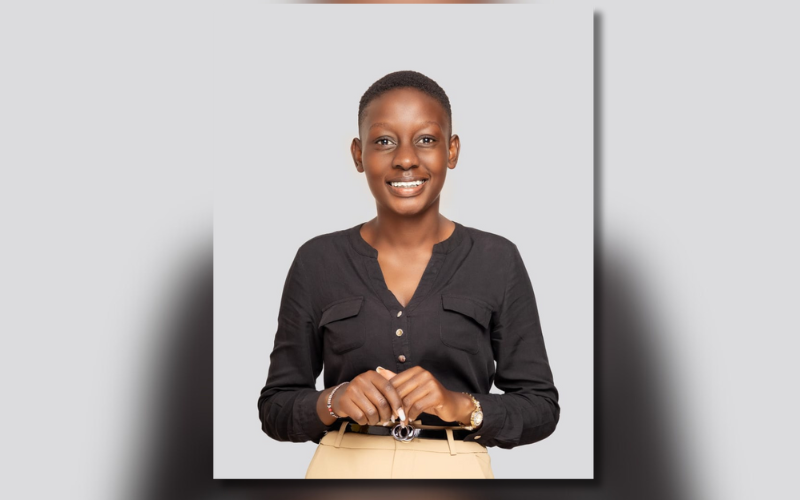
Give us a glimpse of who Rhoda is.
I’m Rhoda Kavutha Mwongela, popularly known as Bossbaby, a 24-year-old Kenyan public servant and mental health advocate. I currently serve as Private Secretary and Senior Office Administrator to the Deputy Governor of Murang’a County, managing protocol, communication, and high-level administrative operations.
My journey began as a student advocate and grew into a national mental health initiative, impacting over 2,000 documented cases across colleges and universities. Alongside public service, I work as a PR consultant and journalist, staying true to my professional line.
Where and what did you study in university/college?
I hold a Bachelor’s degree in Linguistics and Communication from Murang’a University of Technology and a Postgraduate Diploma in Mass Communication from the Kenya Institute of Mass Communication (KIMC).
Which were your favourite and least favourite units?
Communication, public relations, and disability reporting. Linguistics was not my favourite, and media law proved challenging.
Best/worst lecturer?
I was fortunate to have supportive lecturers, especially while working and studying. My favourite lecturers were Dr Ndavula, who mentored me and helped me balance work and academics, and Dr Chege, who guided my academic journey. I cannot single out a worst lecturer.
How was campus life generally?
Campus life was vibrant and memorable. I was active in drama, leadership, community initiatives, and student politics. I wasn’t much of a party person, but I made an impact and presence. Balancing work and studies taught me discipline and resilience.
I also gained international exposure through youth programmes, including summits supported by former Cabinet Secretary for Youth Affairs, Sports and the Arts Ababu Namwamba. I collaborated with the Office of the Second Lady on programmes supporting men’s mental health. Campus was a full, enriching, and transformative season of growth.
How did you make money while on campus?
In my first year, I worked at a friend’s small salon and grocery, earning Sh100–150 daily. In my second year, I sold mitumba, did digital marketing, engaged in student leadership, and explored small business opportunities. These ventures sustained me and taught me entrepreneurship and responsibility.
How was dating life then?
I had my fair share of heartbreaks, about two or three campus relationships. Campus boys can really show you dust, and I went through that phase like everyone else. Still, it was part of the learning process.
What do you think of campus relationships?
Campus relationships are timely, formative, and important for personal growth. They teach communication, compromise, emotional intelligence, and self-understanding. Skipping this experience can mean missing lessons crucial for adult relationships. My advice is date, experience the ups and downs, and allow yourself to grow.
What did you do with your free time?
Honestly, I had very little free time. I focused on building my future through short courses, community service, mental health awareness initiatives, and youth summits. Balancing school, work, and building my personal brand was challenging, but it instilled resilience and discipline.
Classmates you will never forget?
Amani, my best friend, was a pure soul. Others who supported me included Zack, Tamah, Purity, Rehema, Betty, Sharon, Manu, and Celestine, our class representative. They helped me academically and emotionally, and they remain part of my cherished campus community.
What led you to become a GBV advocate, and what are some of the challenges you have encountered?
My advocacy arose from witnessing unreported or poorly handled GBV cases, which often led to mental health challenges. I wanted to create a bridge where survivors could access both support and healing. One of the hardest challenges is rescuing abused children, only to face resistance from caregivers or communities.
Sometimes, communities hold “kangaroo courts” to silence cases. At times, I have been labelled for intervening. These experiences were painful, but they strengthened my resolve to continue advocacy.
What next for Rhoda?
I see myself entering elective politics, whether as an MP, Senator, or on an international platform, to influence legislation and policies for societal improvement. Politics is, for me, a tool for service, advocacy, and change. I aim to champion causes that matter at every level.
You won Activist of the Year 2022. How did that feel?
Being recognised as Activist of the Year in Kenya was defining. It affirmed the impact of my work in mental health and GBV advocacy. I dedicated the award to those going through mental health struggles, and it motivated me to continue pushing for change.
Your advice to the youth?
Start where you are, no matter how small the step. For me, it began with WhatsApp blogs on mental health, expanding to communities, media platforms, and a wide network. Document your work; share it. Words and actions affect people in ways you may not see. Be intentional, invest in your growth, and accept that sacrifices today build the foundation for tomorrow. Balancing work, school and community service shapes resilience and character.
One last thing you’d tell your campus self?
I am proud of you. Every sleepless night, challenge, and juggle between work, school, and personal projects was worth it.
Any final word or encouragement, caution or a tip you would like to share with anyone?
I leave a message from Sylvia Mulinge: “If I die today, I want my legacy to be that my life was well lived because I lived it for others.” For me, it’s about service, advocacy, and intentional growth. Every step, challenge, and effort contributes to impact and personal transformation.