



Audio By Vocalize
Somalia is steadily charting a path towards economic recovery, and infrastructure development has emerged as a central pillar of that resurgence.
At the heart of this transformation is Mogadishu’s Aden Adde International Airport, where the recent inauguration of the country’s first Commercially Important Person (CIP) terminal signals far more than a new building, it reflects a nation rebuilding confidence, connectivity, and commerce.
The newly opened Arimas CIP Terminal forms part of Somalia’s broader strategy to position Mogadishu as a competitive regional aviation hub, alongside established centers such as Nairobi and Addis Ababa. For a country long associated with instability, the development represents a visible shift toward modernization, investment attraction, and global engagement.
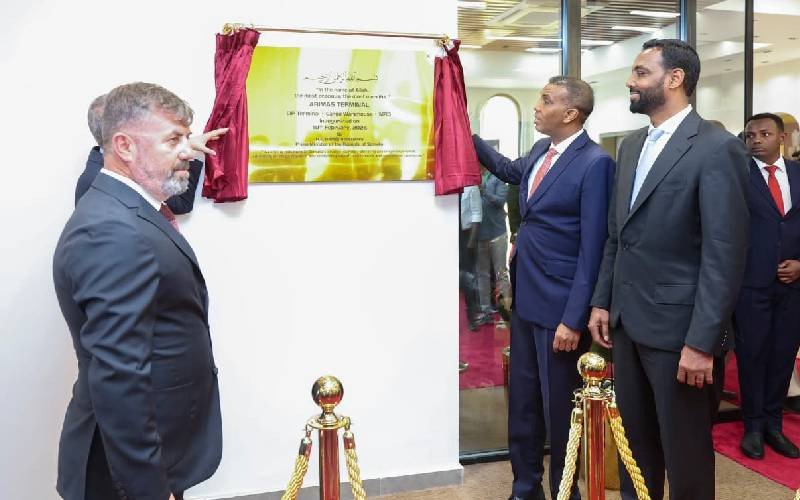
Prime Minister Hamza Abdi Barre, who officiated the ribbon-cutting ceremony, emphasised the deeper economic significance of the project.
He said: “Air travel is not merely about transportation. It is the bridge that connects Somalia to regional markets, global partners, and investment opportunities. A modern aviation sector strengthens our economic growth, enhances trade, and reinforces our country’s linkage to the world.”
Adding to the optimism, Aden Ali Mohammed, a business analyst, noted that Somalia stands at a turning point in its economic journey.
“Somalia has enormous untapped potential to transform itself into a regional economic hub. The modernization of Mogadishu airport marks a starting point. It sends a clear message that the country is open for business, investment, and partnership.”
The CIP terminal is designed to decongest the main passenger facility while elevating service standards to international benchmarks. Built with contemporary architectural design and modern operational systems, it caters primarily to business travelers, diplomats, and high-profile passengers.
The facility offers dedicated check-in and passenger handling, exclusive VIP lounges, meeting rooms, cargo services, and specialized ground support. Passengers benefit from streamlined processing and direct transfers to aircraft, services that align Mogadishu with regional aviation standards.
This milestone comes amid broader economic progress. Somalia has increased trade with neighboring countries, strengthening commercial ties across the Horn of Africa and the wider East African region. Cross-border commerce in livestock, agricultural produce, and manufactured goods has expanded, supported by improved logistics and infrastructure upgrades.
The recent renovation and modernization of the Port of Mogadishu have also played a crucial role in boosting economic activity. Enhanced cargo handling capacity and improved port efficiency have increased revenue collection and reinforced Somalia’s position within regional supply chains.
Security gains have further strengthened this economic revival. Although challenges persist, Somalia has recorded a decline in large-scale terrorist attacks compared to previous years. Improved stabilization efforts have created a more conducive environment for commerce, diaspora engagement, and foreign direct investment.
The Arimas CIP Terminal, financed by Somali investors, underscores sustained international confidence in Somalia’s recovery trajectory. Combined with port upgrades, expanding regional trade, and improving security, the airport development symbolizes more than aviation progress, it represents a country steadily rebuilding its economic foundations and reconnecting with the global marketplace.
Follow The Standard
channel
on WhatsApp
Somalia is steadily charting a path towards economic recovery, and infrastructure development has emerged as a central pillar of that resurgence.
At the heart of this transformation is Mogadishu’s Aden Adde International Airport, where the recent inauguration of the country’s first Commercially Important Person (CIP) terminal signals far more than a new building, it reflects a nation rebuilding confidence, connectivity, and commerce.
The newly opened Arimas CIP Terminal forms part of Somalia’s broader strategy to position Mogadishu as a competitive regional aviation hub, alongside established centers such as Nairobi and Addis Ababa. For a country long associated with instability, the development represents a visible shift toward modernization, investment attraction, and global engagement.
Prime Minister Hamza Abdi Barre, who officiated the ribbon-cutting ceremony, emphasised the deeper economic significance of the project.
He said: “Air travel is not merely about transportation. It is the bridge that connects Somalia to regional markets, global partners, and investment opportunities. A modern aviation sector strengthens our economic growth, enhances trade, and reinforces our country’s linkage to the world.”
Adding to the optimism, Aden Ali Mohammed, a business analyst, noted that Somalia stands at a turning point in its economic journey.
“Somalia has enormous untapped potential to transform itself into a regional economic hub. The modernization of Mogadishu airport marks a starting point. It sends a clear message that the country is open for business, investment, and partnership.”
The CIP terminal is designed to decongest the main passenger facility while elevating service standards to international benchmarks. Built with contemporary architectural design and modern operational systems, it caters primarily to business travelers, diplomats, and high-profile passengers.
The facility offers dedicated check-in and passenger handling, exclusive VIP lounges, meeting rooms, cargo services, and specialized ground support. Passengers benefit from streamlined processing and direct transfers to aircraft, services that align Mogadishu with regional aviation standards.
This milestone comes amid broader economic progress. Somalia has increased trade with neighboring countries, strengthening commercial ties across the Horn of Africa and the wider East African region. Cross-border commerce in livestock, agricultural produce, and manufactured goods has expanded, supported by improved logistics and infrastructure upgrades.
The recent renovation and modernization of the Port of Mogadishu have also played a crucial role in boosting economic activity. Enhanced cargo handling capacity and improved port efficiency have increased revenue collection and reinforced Somalia’s position within regional supply chains.
Security gains have further strengthened this economic revival. Although challenges persist, Somalia has recorded a decline in large-scale terrorist attacks compared to previous years. Improved stabilization efforts have created a more conducive environment for commerce, diaspora engagement, and foreign direct investment.
The Arimas CIP Terminal, financed by Somali investors, underscores sustained international confidence in Somalia’s recovery trajectory. Combined with port upgrades, expanding regional trade, and improving security, the airport development symbolizes more than aviation progress, it represents a country steadily rebuilding its economic foundations and reconnecting with the global marketplace.
Follow The Standard
channel
on WhatsApp
By Fuad Haji Abdiweli