



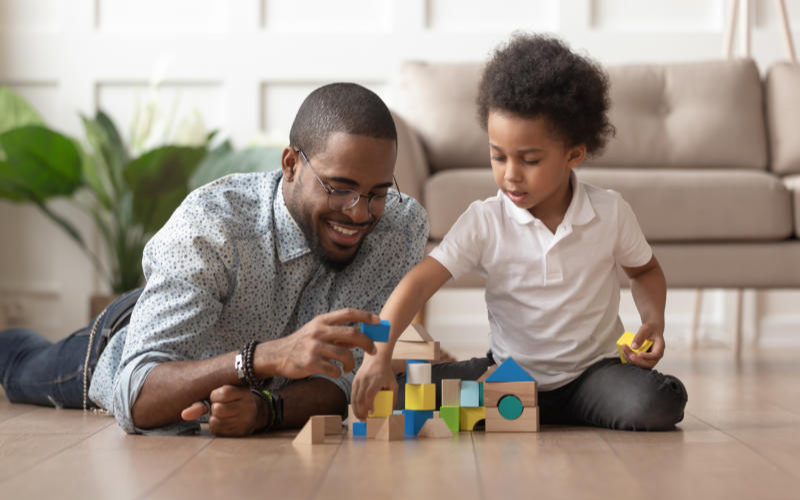
In Ongata Rongai, Kajiado, Samuel Koisani, a father of three boys aged 7, 11 and 15, once believed leadership was something he would formally teach when his sons were older.
“I thought I would sit them down one day and talk about being responsible men,” he says.
However, the lessons were already unfolding.
One afternoon, Samuel returned home after a business deal collapsed. He was frustrated, tempted to snap at the boys for making noise, but instead, something deep inside him, he says, urged him to pause.
“I apologised, and explained to them (boys) that I was disappointed, but it wasn’t their fault,” he says.
Later that evening, he heard his 11-year-old gently telling his younger brother, ‘Don’t shout when you’re angry. Just breathe’. Samuel says he always smiles when he recalls this day.
From this day, he says he is careful how he conducts himself in their presence. “They are watching how I handle failure. Not just how I celebrate success,” he says.
Experts call it the “hidden curriculum”, the unspoken lessons children absorb simply by observing adult behaviour.
Miriam Waweru, a Nairobi-based child psychologist, explains that children internalise how adults respond to stress.
“If a parent explodes at every inconvenience, a child learns that power equals volume, and if a parent navigates conflict with calm and accountability, the child learns leadership is grounded in self-control,” she explains.
Miriam says children do not separate the personal from the public – the way you speak to the house help, the security guard, or your spouse. To them, she notes, that is leadership.
Mary Solei, mother of 10-year-old Aisha Solei, says her daughter once told her, “You’re the boss of our house”. She says she corrected her gently: “I’m not the boss. I’m responsible.”
Miriam says leadership at home is not domination, but it is stewardship.
Across many households, children are growing up watching women step into visible leadership, as entrepreneurs, pastors, executives and activists.
But even empowered spaces carry hidden messages.
“I didn’t want my daughter to think leadership means exhaustion,” says Lydia, a social entrepreneur in Kiambu.
For years, Lydia worked late nights, constantly on calls. One evening her daughter asked, “Do leaders ever rest?”
That question unsettled her.
“Looking back, I realised I was modelling burnout as success,” she says.
Today, Lydia schedules device-free evenings and speaks openly about boundaries.
“I tell her, rest is also leadership,” she adds.
This she notes, is because when children watch their parents and other adults, they are not just learning ambition, they are learning what success costs.
Prof Rebecca Wambua, an author of Parenting guides and an educationist, says leadership modelling is particularly significant for boys.
“In many African contexts, boys are taught leadership through authority, but what they need to see is relational leadership – empathy, partnership, shared responsibility,” says the Professor.
In Isiolo, 14-year-old Hassan began cooking during school holidays after watching his father help in the kitchen.
“Some boys laughed at me,” he admits. “But my dad said, ‘A leader serves.’” That sentence stayed with him. Boys will watch and learn when their father apologise, when they consult instead of command, and when they discipline without humiliation.
“Boys are always learning scripts for manhood, while girls who watch possibility expand,” says Miriam.
“That quiet moment may shape how she raises her hand in class, negotiates her salary, or chooses a partner who respects her voice,” says Prof Rebecca.
“Children do not need motivational speeches about empowerment, they need front-row seats to lived examples,” she says.
Conflict is also a lesson
Leadership is not proven when life is smooth. It is revealed when tension rises.
During a financial disagreement, Caroline and her husband asked for a pause instead of escalating.
“We didn’t want our children to think conflict means shouting,” she says. Later, they explained calmly that adults sometimes disagree, but resolve issues respectfully.
Later, she would over-hear her son telling a friend, “My parents argue, but they don’t fight.”
That distinction is powerful, explains Miriam, is powerful, especially for children who witness healthy conflict – they learn negotiation, while children who witness silence, learn avoidance, and children who witness aggression learn fear.
“Unfortunately, our homes are the first leadership laboratory for Children detect inconsistency quickly.” our children, and this is important for parents to know.”
“You cannot preach integrity and cheat in front of your children, as they detect inconsistency quickly, especially is we speak about honesty but cut corners, if we demand respect but belittle others or if we preach discipline but lack self-control,” Miriam cautions.
The message fractures, she says, as leadership is not declared, but rather, it is demonstrated, and yet leadership does not require perfection. It requires repair.
Prof Rebecca says repair teaches humility, accountability, and teaches that strength includes admitting wrong. “Perhaps that is the most powerful leadership lesson of all,” she says.
Miriam says years from now, children may not remember their parents’ lectures. “However, they will remember how their parents’ handled disappointment, how they treated waiters, how they spoke about people who disagreed with them, how they navigated money, and how they rested”.
More importantly, she says, they will remember whether leadership in their home felt like fear, or safety.
Because long before our children step into their own classrooms, churches, businesses or communities, they rehearse leadership by watching us, in the quiet, in the ordinary, and every day.
When children watch us lead, they are not just observing, they are becoming.