



Let us go down memory lane. It is 1931. Nairobi is nothing more than a collection of structures and an ambition.
Thirty years earlier, at the dawn of the 20th century, railway engineer Roland Preston described the future global metropolis as a “bleak, swampy stretch of soggy quagmire, windswept, devoid of any human habitation of any sort, the resort of thousands of wild animals of every species”.
Preston was right. Before the railway’s arrival, only the local Maasai had found some worthy use of the soggy quagmire, the watery world they called enkare nyrobi, or a place of cool waters. Here, wild animals competed with Maasai cattle for the waters and verdant grazing fields. Few fancied making this swamp their permanent home. But that was about to change.
The arrival and operationalisation of the railway attracted a sizeable number of Europeans who felt the fledgling city and the so-called ‘White Highlands’ heralded an economic windfall. Fast forward to 1931 and the largely white community, then numbering about 8,000 in Nairobi, was already “drinking pink gin in impressive quantities”.
Rosina Emily Taws must have been among the gin drinkers. That name may not ring a bell unless you are a keen student of history. I got to thinking about that name this Wednesday as I sat for coffee with Kaliq Essop, the South African cluster general manager of the Fairview Hotel, Holiday Inn, and Best Western.
My interest in Taws was piqued further by Pango, an underground wine cellar in Fairview Hotel, and perhaps the only one such installation in Nairobi. The hotel, including the cellar, was built in 1931. Rosina was central to the construction process.
A European database states Rosina was born in Gloucestershire, United Kingdom, in 1883. She got married to William Thomas Taws in 1915 in Johannesburg, South Africa. Then there is this entry about her: “built the original Fairview Hotel in 1931”. But why on earth did Rosina build an underground wine cellar? Whatever the reasons, this woman must have given thought to what would keep the bottles chilled in Nairobi’s unforgiving heat. And what a place for local gossip!

The “discovery” of the underground wine cellar got me to probe this city gem further. Despite having lived and dined in this city for more than 30 years, I had never stepped inside this ‘hospitality museum’ and a haunt of Nairobi’s creme de la creme, including Robert Timothy Gachecheh, who took his lunch daily at a poolside table till his death in 2018. The table is still marked with a plaque bearing his name.
In December of that year, the Taws acquired a five-acre plot (No. 319) to build a 12-bedroom Hotel. Little did they know that this would become one of the city’s most enduring landmarks and an intimate hospitality outlet that was ahead of its time.
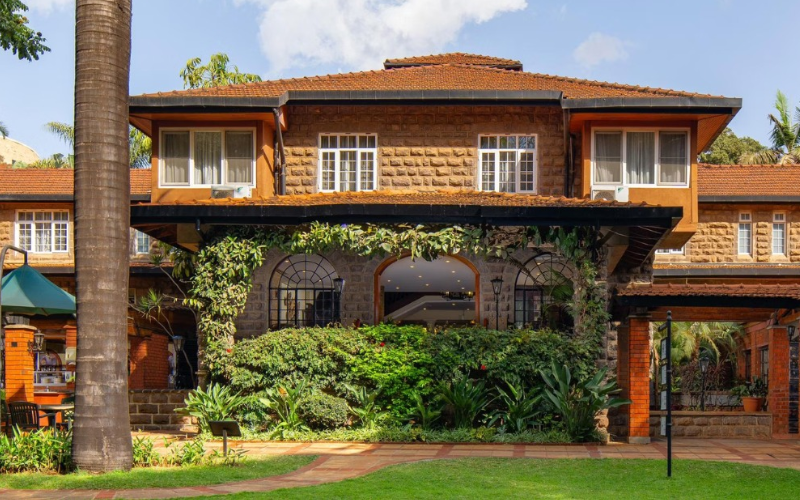
The exterior is clad with blue quarry stones, wrought iron accents and arched windows that stand in sharp contrast with the high, glass-clad edifices such as the Prism Towers just a street away. Subsequent renovations, including the 1938 addition of two wings to the right and left of the original building, kept the original character intact.
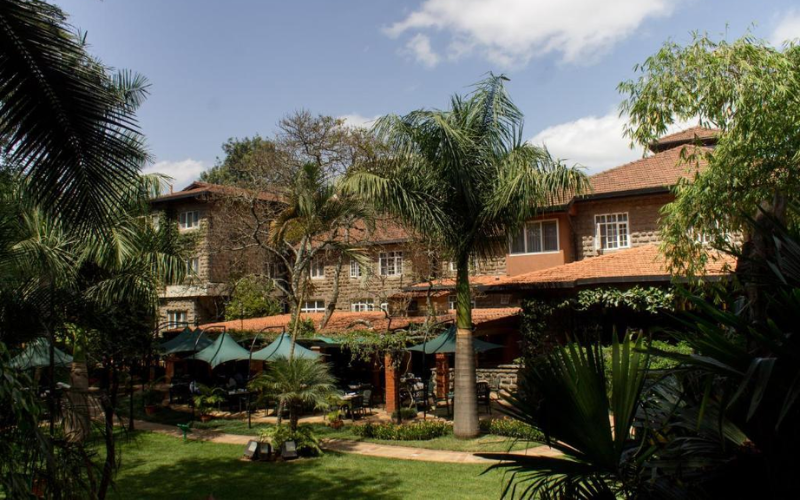
The trend continued in 1946 when Szlapaks, a Jewish family, took over the hotel and made further improvements, especially room expansion to include single, doubles and family units and the now expansive gardens described by Essop as a “living garden sanctuary in the middle of the city”. Even the latest renovations that have seen the 99-room hotel join the prestigious Vignette Collection have not watered down the Taw’s family dream.
At the lobby, an ancient telephone hangs on a wall, and visitors get to listen in on this piece of history through “SimuStories”, or information about the expected experience, the chequered history, an upgrade or a discounted offer.
An atrium (again installed 95 years ago) continues to expel foul air from the lobby without the use of a mechanical system, forward-looking technology before such sustainable practices became the norm.
While it is the dream of any hotelier to work in such a quaint property, Essop’s tour of duty in Nairobi came as a surprise. “My family visited Kenya and stayed at this hotel at the tail end of Covid-19,” Essop tells me. “We fell in love with it, and it was my wife’s prayer that one day I would get to work here. It happened.”
His first assignment was to oversee the 18-month renovation culminating in the entry of this piece of art into the Vignette Collection, a group of 27 hotels worldwide and the first in Africa.
The avid golfer and hiker is a graduate of Durban University whose sojourn in the hospitality industry includes a 30-year stint with Southern Sun hotels. “I started as a night auditor, then a night manager,” he says. Essop would go on to become the first non-white general manager of the prestigious Southern Sun Elangeni in Durban.
By the way, have you ever wondered what hotel general managers do? Dealing with people and taking charge of daily hotel activities, including balancing all the numbers. That you knew.
They also take note of the miscellaneous tabs. For Essop, this includes informing a manager about misaligned wall hanging and checking which of the Koi fish in the water feature is not swimming well.
“We had a fish that tried to jump out of the water and got injured. The fish doctor told us to remove it before it infects the water and kills other fish,” he says. “You don’t need to know everything, but invest in the right people for success”.