

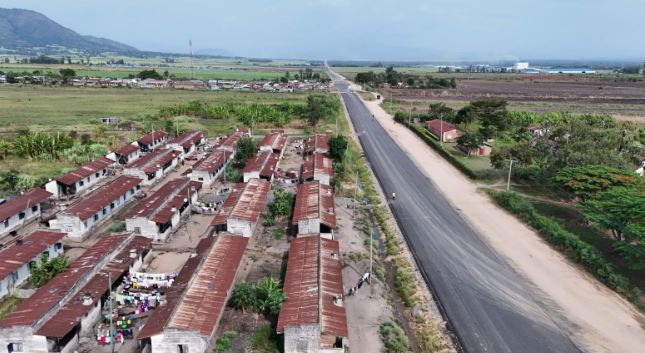
Ongoing upgrade of the Mamboleo–Miwani–Chemelil–Muhoroni–KipsiteRoad (C674), a 122-kilometre corridor cutting across Kenya’s Sugar belt. FAITH MATETEOngoing upgrade of the Mamboleo–Miwani–Chemelil–Muhoroni–KipsiteRoad (C674), a 122-kilometre corridor cutting across Kenya’s sugar belt./FAITH MATETE
The national government has intensified the upgrade of the Mamboleo–Miwani–Chemelil–Muhoroni–KipsiteRoad (C674), a 122-kilometre corridor cutting across Kenya’s sugar belt, in a move aimed at strengthening regional connectivity and boosting trade.
The road, which links Kisumu, Nandi and Kericho counties, is undergoing major reconstruction, with the core works focusing on approximately 63 kilometres of the main carriageway.
Complementary improvements on feeder roads and associated sections extend the total project scope to about 122 kilometres.
According to Interior PS Raymond Omollo, the project is part of the government’s broader plan to modernise road infrastructure across the country and unlock economic potential in key production zones.
“This corridor is strategic not only for the sugar industry but also for regional trade and national growth. Once complete, it will significantly improve mobility for farmers, traders, and transporters while easing pressure within Kisumu City,” said Omollo.
The upgraded road is expected to serve as a crucial bypass, diverting heavy commercial vehicles away from Ahero and reducing congestion within Kisumu.
Transporters moving goods between the lake region and the Rift Valley are also set to benefit from reduced travel time and lower vehicle maintenance costs.
For sugarcane farmers and other agricultural producers in the belt, the improved road network promises easier access to mills and markets.
The corridor cuts through key sugar-growing zones, making it a lifeline for thousands of households that depend on agriculture. Beyond local benefits, the road is projected to strengthen Kenya’s regional trade position.
It will serve as a vital transit route for goods headed to neighbouring countries including Uganda, Rwanda, Burundi and the Democratic Republic of Congo, enhancing cross-border commerce within the East and Central African region.
Omollo noted that the State Department for Internal Security and National Administration is working closely with implementing agencies and local leaders to ensure the project proceeds smoothly.
“Our role is to provide a secure environment for contractors and workers, coordinate with local administrators, and ensure that communities along the route are fully engaged throughout the construction period,” he said.
He added that the whole-of-government approach reflects the administration’s commitment to using infrastructure as a driver of economic growth, regional integration, and improved livelihoods.
Residents and business owners along the corridor have welcomed the upgrade, expressing optimism that better roads will attract investment, create jobs, and stimulate economic activity in the sugar belt and beyond.