



Audio By Vocalize
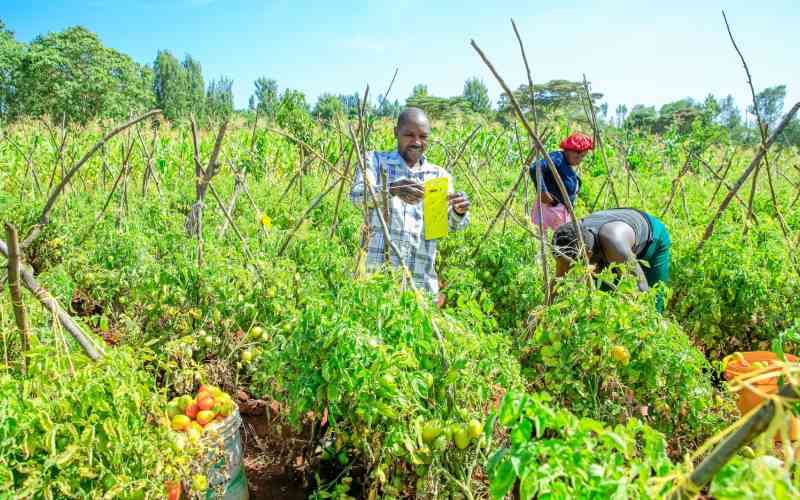
Tomato farmers deploy Tuta absoluta traps supplied by International Centre of Insect Physiology and Ecology to curb destructive moth infestations. [Jane Mugambi, Standard]
International Center of Insect Physiology and Ecology (ICIPE), in collaboration with the county government of Kirinyaga County, has started a training partnership that will ensure tomato farmers adopt a safer and more sustainable method of controlling crop pests that have caused losses to them.
One of the trainings has a programme being done to farmers in the 11 tomato-growing areas, which has equipped farmers with practical skills in Integrated Pest Management (IPM), reducing reliance on harmful synthetic chemicals while safeguarding farmer health, crop quality, and the environment, and also enlightening farmers on how to manage the destructive Tuta Absoluta.
Farmers had been using harmful pesticides as a way of controlling pests from destroying their farm produce.
The initiative is emphasising biological pest control, farm sanitation, soil health, and the use of biopesticides instead of excessive chemical spraying, which has long posed health and environmental risks.
Tomato farmers deploy Tuta absoluta traps supplied by International Centre of Insect Physiology and Ecology to curb destructive moth infestations. [Jane Mugambi, Standard]
Tuta absoluta is a species of moth known for its devastating effect on tomatoes. It is a major concern for farmers in tomato-growing zones like Kirinyaga, as it is said to contribute over 20 percent of post-harvest yield losses. The biggest challenge in the management of the pest is its fast development of resistant strains for the larvae and adults. Over the years, farmers have relied on the use of agrochemicals to control pests.
Farmers are being trained on non-chemical control methods, including pheromone traps that prevent pest reproduction, biopesticides, soil testing, and strict farm sanitation.
Pheromone traps are highly specific, eco-friendly tools designed to attract, monitor, or suppress insect pests by using synthetic scents that mimic natural female mating pheromones. They are crucial in IPM for early detection, enabling precise, reduced, or zero-chemical pesticide usage in agriculture, warehouses, and residential areas.
Governor Waiguru said the initiative is part of deliberate county investments aimed at transforming agriculture through science-led, farmer-centered interventions.
“Kirinyaga is the leading tomato-producing county in Kenya, with annual production rising significantly in recent years. Through capacity building, promotion of high-yield varieties and market access, production has increased from 46,000 tonnes in 2017 to 116,000 tonnes today, earning farmers approximately Sh6.9 billion annually,” Waiguru said.
She noted that as production grows, the county is prioritising safe farming practices that protect farmers from chemical exposure and ensure consumers have access to clean, residue-free produce.
Speaking during one of the trainings in Nyangati ward, County Executive Committee Member for Agriculture John Gachara said the training directly addresses the long-standing problem of over-use of agrochemicals in tomato farming.
“We are training farmers on how to stop using synthetic chemicals, which have been used excessively and pose serious risks. The goal is to ensure that food coming from Kirinyaga is safe, while also securing better markets for our produce,” Gachara mentioned.
He said the county, under the guidance of Governor Waiguru, has partnered with ICIPE to train 1,000 farmers on the use of biopesticides and integrated pest management, targeting wards with high tomato production.
“This is part of a wider agricultural transformation programme. Beyond tomatoes, we have similar initiatives for coffee, rice, and other horticultural crops,” Gachara added.
ICIPE Research Officer Peterson Wachira said the County Government played a central role in identifying the pest challenges and facilitating farmer trainings through extension services.
“The Kirinyaga County Government enabled us to train agricultural officers and work directly with farmers on integrated pest management,” Wachira said, adding that Tuta absoluta remains one of the pests that causes severe losses in tomato production.
ICIPE also conducted two-season demonstrations, comparing 35 farmers using integrated pest management with conventional chemical-based farming.
“We proved that it is possible to control Tuta absoluta without spraying harsh chemicals. From trapping to biopesticides and sanitation, the tomatoes never come into contact with hard chemicals. For the first time, farmers were able to eat clean tomatoes directly from their farms,” Wachira said.
Farmers say the impact of the training has been immediate.
Lucy Wanjiku, a tomato farmer from Kanyekiine Ward, said the training held in Kiaga helped farmers reduce losses and cut production costs.
“Using organic methods has reduced diseases, lowered costs, and significantly reduced losses caused by Tuta absoluta. With the traps, our expenses have gone down, and profits have increased. The county has supported us by providing planting inputs and pest traps,” Wanjiku noted
Stephen Munene, who attended the training at Kithiriti, said adopting organic practices has improved both yields and income.
“The output is very good compared to chemical fertilizers. This method is leaving me with better returns,” Munene said.
Another farmer, Njuki Mara from Nyangati Ward, said reducing chemical use had both economic and health benefits.
“Conventional chemicals are expensive and harmful to our bodies,” Mara said. “When we fall sick, treatment is even more costly, so these safer methods are better for our health and our pockets.”
Follow The Standard
channel
on WhatsApp
Tomato farmers deploy Tuta absoluta traps supplied by International Centre of Insect Physiology and Ecology to curb destructive moth infestations.
[Jane Mugambi, Standard]
International Center of Insect Physiology and Ecology (ICIPE), in collaboration with the county government of Kirinyaga County, has started a training partnership that will ensure
tomato farmers
adopt a safer and more sustainable method of controlling crop pests that have caused losses to them.
One of the trainings has a programme being done to farmers in the 11 tomato-growing areas, which has equipped farmers with practical skills in Integrated Pest Management (IPM), reducing reliance on harmful synthetic chemicals while safeguarding farmer health, crop quality, and the environment, and also enlightening farmers on how to manage the destructive Tuta Absoluta.
Farmers had been using harmful pesticides as a way of controlling pests from destroying their farm produce.
The initiative is emphasising biological pest control, farm sanitation, soil health, and the use of biopesticides instead of excessive chemical spraying, which has long posed health and environmental risks.
Tomato farmers deploy Tuta absoluta traps supplied by International Centre of Insect Physiology and Ecology to curb destructive moth infestations.
[Jane Mugambi, Standard]
Tuta absoluta is a species of moth known for its devastating effect on tomatoes. It is a major concern for farmers in tomato-growing zones like Kirinyaga, as it is said to contribute over 20 percent of post-harvest yield losses. The biggest challenge in the management of the pest is its fast development of resistant strains for the larvae and adults. Over the years, farmers have relied on the use of agrochemicals to control pests.
Farmers are being trained on non-chemical control methods, including
pheromone traps
that prevent pest reproduction, biopesticides, soil testing, and strict farm sanitation.
Pheromone traps are highly specific, eco-friendly tools designed to attract, monitor, or suppress insect pests by using synthetic scents that mimic natural female mating pheromones. They are crucial in IPM for early detection, enabling precise, reduced, or zero-chemical pesticide usage in agriculture, warehouses, and residential areas.
Governor Waiguru said the initiative is part of deliberate county investments aimed at transforming agriculture through science-led, farmer-centered interventions.
“Kirinyaga is the leading tomato-producing county in Kenya, with annual production rising significantly in recent years. Through capacity building, promotion of high-yield varieties and market access, production has increased from 46,000 tonnes in 2017 to 116,000 tonnes today, earning farmers approximately Sh6.9 billion annually,” Waiguru said.
She noted that as production grows, the county is prioritising safe farming practices that protect farmers from chemical exposure and ensure consumers have access to clean, residue-free produce.
Speaking during one of the trainings in Nyangati ward, County Executive Committee Member for Agriculture John Gachara said the training directly addresses the long-standing problem of over-use of agrochemicals in tomato farming.
“We are training farmers on how to stop using synthetic chemicals, which have been used excessively and pose serious risks. The goal is to ensure that food coming from Kirinyaga is safe, while also securing better markets for our produce,” Gachara mentioned.
He said the county, under the guidance of Governor Waiguru, has partnered with ICIPE to train 1,000 farmers on the use of biopesticides and integrated pest management, targeting wards with high tomato production.
Stay informed. Subscribe to our newsletter
“This is part of a wider agricultural transformation programme. Beyond tomatoes, we have similar initiatives for coffee, rice, and other horticultural crops,” Gachara added.
ICIPE Research Officer Peterson Wachira said the County Government played a central role in identifying the pest challenges and facilitating farmer trainings through extension services.
“The Kirinyaga County Government enabled us to train agricultural officers and work directly with farmers on integrated pest management,” Wachira said, adding that Tuta absoluta remains one of the pests that causes severe losses in tomato production.
ICIPE also conducted two-season demonstrations, comparing 35 farmers using integrated pest management with conventional chemical-based farming.
“We proved that it is possible to control Tuta absoluta without spraying harsh chemicals. From trapping to biopesticides and sanitation, the tomatoes never come into contact with hard chemicals. For the first time, farmers were able to eat clean tomatoes directly from their farms,” Wachira said.
Farmers say the impact of the training has been immediate.
Lucy Wanjiku, a tomato farmer from Kanyekiine Ward, said the training held in Kiaga helped farmers reduce losses and cut production costs.
“Using organic methods has reduced diseases, lowered costs, and significantly reduced losses caused by Tuta absoluta. With the traps, our expenses have gone down, and profits have increased. The county has supported us by providing planting inputs and pest traps,” Wanjiku noted
Stephen Munene, who attended the training at Kithiriti, said adopting organic practices has improved both yields and income.
“The output is very good compared to
chemical fertilizers
. This method is leaving me with better returns,” Munene said.
Another farmer, Njuki Mara from Nyangati Ward, said reducing chemical use had both economic and health benefits.
“Conventional chemicals are expensive and harmful to our bodies,” Mara said. “When we fall sick, treatment is even more costly, so these safer methods are better for our health and our pockets.”
Follow The Standard
channel
on WhatsApp
By Jane Mugambi