



Audio By Vocalize
Kenya is a magical country, not because of the wildlife and landscape. It’s magical because of our economic model.
We can add the co-existence and adherence to two contradicting beliefs: we were created by God, but we are also the cradle of mankind, and we evolved.
Back to the economic model. We know Kenya’s economy is largely informal. About 80 per cent of the jobs are in that sector.
Dig deeper, and the magic appears. It is assumed that the small and micro enterprises that define the Kenyan economy are independent. But they are linked to the formal economy.
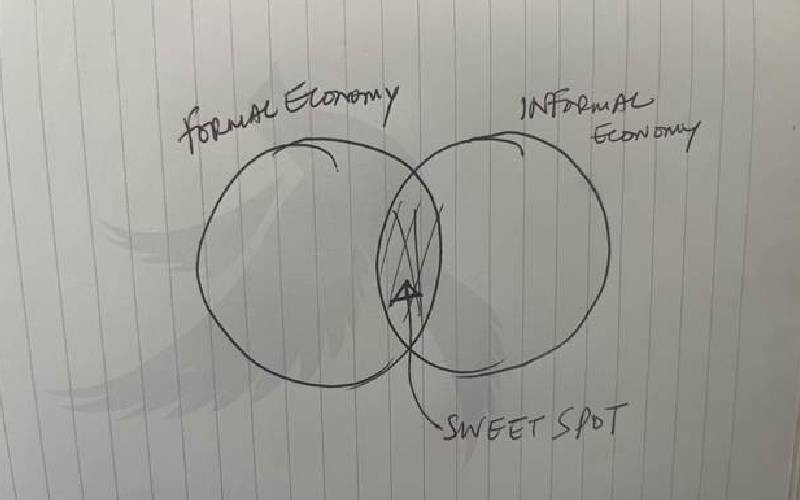
Simply put, lots of informal sector businesses are owned by the formal economy. That is Kenya’s sweet spot, the magic or uniqueness.
Lots of employed Kenyans own small businesses, their side hustles. In one study, I found that 65 per cent of a sample of employed Kenyans own side hustles.
Even independent SMEs most likely got their funding from the formal sector, loans or donations from employed relatives.
Why is this magical?
We can experiment with entrepreneurship in the safety of formal employment. Some run the parallel programme until the side hustle pays off, and they leave employment.
Others have one family member, often the spouse run the side hustle.
This model, it‘s argued stop us from taking big risks and perhaps explains why we have the “missing middle” in Africa, firms between the many SMEs and big multinational corporations. Seeing entrepreneurship as part-time stymies its growth.
Why are our entrepreneurs risk-averse and going through an intermediary step?
If we gave them more support, they would take bigger risks. The biggest support is buying their goods or services.
But we rarely support them, sometimes out of petty jealousy. That is why entrepreneurs, far away from home, immigrants, do so well. That anonymity is an asset.
Unfortunately, the model creates avenues for corruption, from stealing employers‘ time to shifting business to side hustles. In which sectors is this notorious?
Branding by big firms endears them to us, at the expense of SMEs. We are willing to pay a premium for their goods and services, even for water!
This sweet spot, where formal and informal economies meet, has been ignored by scholars, treating the two as mutually exclusive.
It has defined Kenya‘s uniqueness and magic. Should we separate the two or let the tango continue? Have you been in this sweet spot? Talk to us.
Follow The Standard
channel
on WhatsApp
Kenya is a magical country, not because of the wildlife and landscape. It’s magical because of our economic model.
We can add the co-existence and adherence to two contradicting beliefs: we were created by God, but we are also the cradle of mankind, and we evolved.
Back to the economic model. We know Kenya’s economy is largely informal. About 80 per cent of the jobs are in that sector.
Dig deeper, and the magic appears. It is assumed that the small and micro enterprises that define the Kenyan economy are independent. But they are linked to the formal economy.
Simply put, lots of informal sector businesses are owned by the formal economy. That is Kenya’s sweet spot, the magic or uniqueness.
Lots of employed Kenyans own small businesses, their side hustles. In one study, I found that 65 per cent of a sample of employed Kenyans own side hustles.
Even independent SMEs most likely got their funding from the formal sector, loans or donations from employed relatives.
Why is this magical?
We can experiment with entrepreneurship in the safety of formal employment. Some run the parallel programme until the side hustle pays off, and they leave employment.
Others have one family member, often the spouse run the side hustle.
This model, it‘s argued stop us from taking big risks and perhaps explains why we have the “missing middle” in Africa, firms between the many SMEs and big multinational corporations. Seeing entrepreneurship as part-time stymies its growth.
Why are our entrepreneurs risk-averse and going through an intermediary step?
If we gave them more support, they would take bigger risks. The biggest support is buying their goods or services.
But we rarely support them, sometimes out of petty jealousy. That is why entrepreneurs, far away from home, immigrants, do so well. That anonymity is an asset.
Unfortunately, the model creates avenues for corruption, from stealing employers‘ time to shifting business to side hustles. In which sectors is this notorious?
Stay informed. Subscribe to our newsletter
Branding by big firms endears them to us, at the expense of SMEs. We are willing to pay a premium for their goods and services, even for water!
This sweet spot, where formal and informal economies meet, has been ignored by scholars, treating the two as mutually exclusive.
It has defined Kenya‘s uniqueness and magic. Should we separate the two or let the tango continue? Have you been in this sweet spot? Talk to us.
Follow The Standard
channel
on WhatsApp
By XN Iraki