

Audio By Vocalize
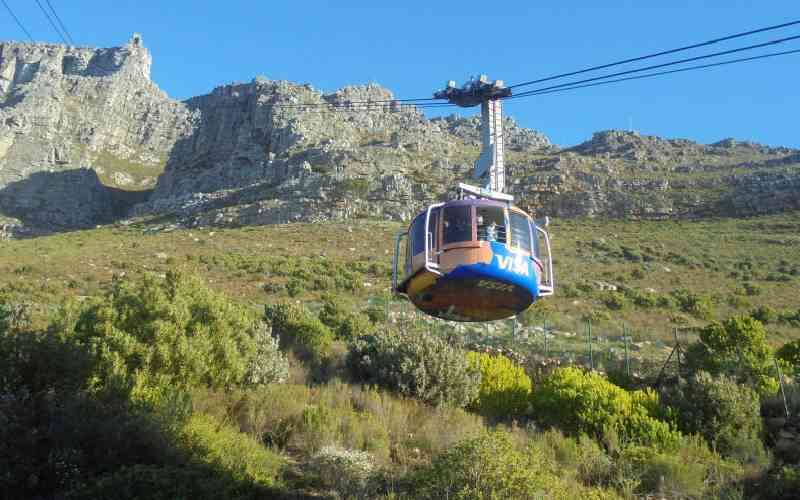
Table Mountain cable car with tourists in South Africa. [Courtesy]
South Africa’s Cape Town plays host to the world-famous Table Mountain, a popular destination attracting more than 1.7 million visitors a year, thanks to its hiking trails and magnificent views of the mother city.
But beyond the stunning views are numbers that we need to ponder as a country. The more than one million visitors who go up Table Mountain each pay Rand 450 (about Sh3,375).
The twin cable cars go up and down with a maximum of 65 tourists per journey, with one trip up earning the South Africans over Sh219, 375 every five minutes and Sh2.6 million every hour.
During peak seasons, as many as 6,000 tourists flock up the mountain a day, with the cable car raking in about $25 million (Sh3.2 billion) each year, for just one four-kilometre stretch of a trip.
In December last year, the Table Mountain Cableway welcomed its 33-millionth visitor. Tourism remains a critical pillar of Cape Town’s economy, supporting thousands of jobs across hospitality, transport and small businesses.
In Kenya, only about 15,000 hikers ascend Mt Kenya, Africa’s second-tallest mountain and a Unesco World Heritage Site, with 60 per cent of them successfully reaching the summit at Point Lenana.
These 15,000 are typically fitness enthusiasts who take up to six days to reach the top. This means everyone else who isn’t as fit or sometimes even young is locked out of this perhaps once-in-a-lifetime experience.
In contrast, the cable car allows everyone, young, old, persons with disabilities and all other considerations, to get to the top quickly and comfortably.
In the 2024-2025 financial year, the Kenya Wildlife Service, with over 23 national parks, reported revenues of Sh7.98 billion. It would only take South Africa’s Cable Car just under three years to make what KWS makes in a year.
It is time to rethink our imagination and interaction with tourist attractions in Kenya, and democratise our offering to bring in more visitors, both local and international.
For instance, building cable car infrastructure on Mt Kenya would dramatically change the fortunes of Kenya’s tourist numbers.
While the capital required is high, it is similarly not an arduous task to break even, recoup it and keep growing.
Several factors, including length, terrain, capacity, technology, environmental regulations and even location-specific challenges. However, there are lessons to draw from similar infrastructure around the world.
For example, the Peak Gondola stretching 4.4 kilometres in Canada cost $52 million (Sh6.76 billion) while Germany’s Eibsee Cable Car at 4.5kms cost around $55 million (Sh7 billion).
In Bolivia, a 10km Cable Car cost $234 million (Sh30.4 billion) while the Metrocable Line in Colombia cost approximately $47 million (Sh9.6 billion).
America’s Wild Blue Gondola, Steamboat Resort cost $200 million (Sh26 billion). Higher budgets are likely caused by modern high-capacity features and integrations with resorts, and not necessarily the initial cost.
Mt Kenya’s vertical height from the base is under five kilometres and would therefore roughly cost in the same range as Canada’s Peak Gondola or Germany’s Eibsee Cable Car.
Kenya would spend approximately Sh7 billion to build one, but with an aggressive marketing push, it would be possible to recover the cost in under a decade, even if it has less operational costs.
Such an investment is not necessarily limited to Mt Kenya, but other strategic locations, including Mt Longonot or even the Ngong Hills, which is actually significantly higher than Table Mountain, could be considered.
In 2024, Kenya recorded 2.4 million tourist arrivals, earning the country Sh452 billion, with a target of over three million visitors in 2025.
Surprisingly, only 1.1 million of these visitors came for leisure and holidays. The rest travelled for religious activities, sports, medical services, conferences, education, or were simply in transit. This points to a major opportunity to grow leisure tourism through iconic and accessible attractions.
The draft Kenya National Tourism Strategy (2025–2030) aims to increase visitor numbers to five million and tourism revenues to Sh1.2 trillion within the next five years. However, it places little emphasis on cable cars.
Instead, it proposes mountain and forest meditation lodges, forest spas and eco-luxury retreats in places such as Mt Kenya, Kakamega Forest, Mt Elgon and Karura Forest.
While these ideas have merit, they lack the mass appeal and instant visibility that signature infrastructure can deliver.
While no one destination can single-handedly overhaul our fortunes, it is these singular strategic initiatives put together that will keep visitors arriving, something the South Africans seem to have mastered.
The country now boasts enviable numbers not even realised pre-Covid, and concerted, creative and visionary efforts will give Kenya a competitive advantage and spur our numbers.
-The writer is the Managing Director of strategic communications firm Calla PR
Follow The Standard
channel
on WhatsApp
Table Mountain cable car with tourists in South Africa.
[Courtesy]
South Africa’s Cape Town plays host to the world-famous Table Mountain, a popular destination attracting more than 1.7 million visitors a year, thanks to its hiking trails and magnificent views of the mother city.
But beyond the stunning views are numbers that we need to ponder as a country. The more than one million visitors who go up Table Mountain each pay Rand 450 (about Sh3,375).
The twin cable cars go up and down with a maximum of 65 tourists per journey, with one trip up earning the South Africans over Sh219, 375 every five minutes and Sh2.6 million every hour.
During peak seasons, as many as 6,000 tourists flock up the mountain a day, with the cable car raking in about $25 million (Sh3.2 billion) each year, for just one four-kilometre stretch of a trip.
In December last year, the Table Mountain Cableway welcomed its 33-millionth visitor. Tourism remains a critical pillar of Cape Town’s economy, supporting thousands of jobs across hospitality, transport and small businesses.
In Kenya, only about 15,000 hikers ascend Mt Kenya, Africa’s second-tallest mountain and a Unesco World Heritage Site, with 60 per cent of them successfully reaching the summit at Point Lenana.
These 15,000 are typically fitness enthusiasts who take up to six days to reach the top. This means everyone else who isn’t as fit or sometimes even young is locked out of this perhaps once-in-a-lifetime experience.
In contrast, the cable car allows everyone, young, old, persons with disabilities and all other considerations, to get to the top quickly and comfortably.
In the 2024-2025 financial year, the Kenya Wildlife Service, with over 23 national parks, reported revenues of Sh7.98 billion. It would only take South Africa’s Cable Car just under three years to make what KWS makes in a year.
It is time to rethink our imagination and interaction with tourist attractions in Kenya, and democratise our offering to bring in more visitors, both local and international.
For instance, building cable car infrastructure on Mt Kenya would dramatically change the fortunes of Kenya’s tourist numbers.
While the capital required is high, it is similarly not an arduous task to break even, recoup it and keep growing.
Several factors, including length, terrain, capacity, technology, environmental regulations and even location-specific challenges. However, there are lessons to draw from similar infrastructure around the world.
For example, the Peak Gondola stretching 4.4 kilometres in Canada cost $52 million (Sh6.76 billion) while Germany’s Eibsee Cable Car at 4.5kms cost around $55 million (Sh7 billion).
Stay informed. Subscribe to our newsletter
In Bolivia, a 10km Cable Car cost $234 million (Sh30.4 billion) while the Metrocable Line in Colombia cost approximately $47 million (Sh9.6 billion).
America’s Wild Blue Gondola, Steamboat Resort cost $200 million (Sh26 billion). Higher budgets are likely caused by modern high-capacity features and integrations with resorts, and not necessarily the initial cost.
Mt Kenya’s vertical height from the base is under five kilometres and would therefore roughly cost in the same range as Canada’s Peak Gondola or Germany’s Eibsee Cable Car.
Kenya would spend approximately Sh7 billion to build one, but with an aggressive marketing push, it would be possible to recover the cost in under a decade, even if it has less operational costs.
Such an investment is not necessarily limited to Mt Kenya, but other strategic locations, including Mt Longonot or even the Ngong Hills, which is actually significantly higher than Table Mountain, could be considered.
In 2024, Kenya recorded 2.4 million tourist arrivals, earning the country Sh452 billion, with a target of over three million visitors in 2025.
Surprisingly, only 1.1 million of these visitors came for leisure and holidays. The rest travelled for religious activities, sports, medical services, conferences, education, or were simply in transit. This points to a major opportunity to grow leisure tourism through iconic and accessible attractions.
The draft Kenya National Tourism Strategy (2025–2030) aims to increase visitor numbers to five million and tourism revenues to Sh1.2 trillion within the next five years. However, it places little emphasis on cable cars.
Instead, it proposes mountain and forest meditation lodges, forest spas and eco-luxury retreats in places such as Mt Kenya, Kakamega Forest, Mt Elgon and Karura Forest.
While these ideas have merit, they lack the mass appeal and instant visibility that signature infrastructure can deliver.
While no one destination can single-handedly overhaul our fortunes, it is these singular strategic initiatives put together that will keep visitors arriving, something the South Africans seem to have mastered.
The country now boasts enviable numbers not even realised pre-Covid, and concerted, creative and visionary efforts will give Kenya a competitive advantage and spur our numbers.
-The writer is the Managing Director of strategic communications firm Calla PR
Follow The Standard
channel
on WhatsApp
By Kevin Otiende