



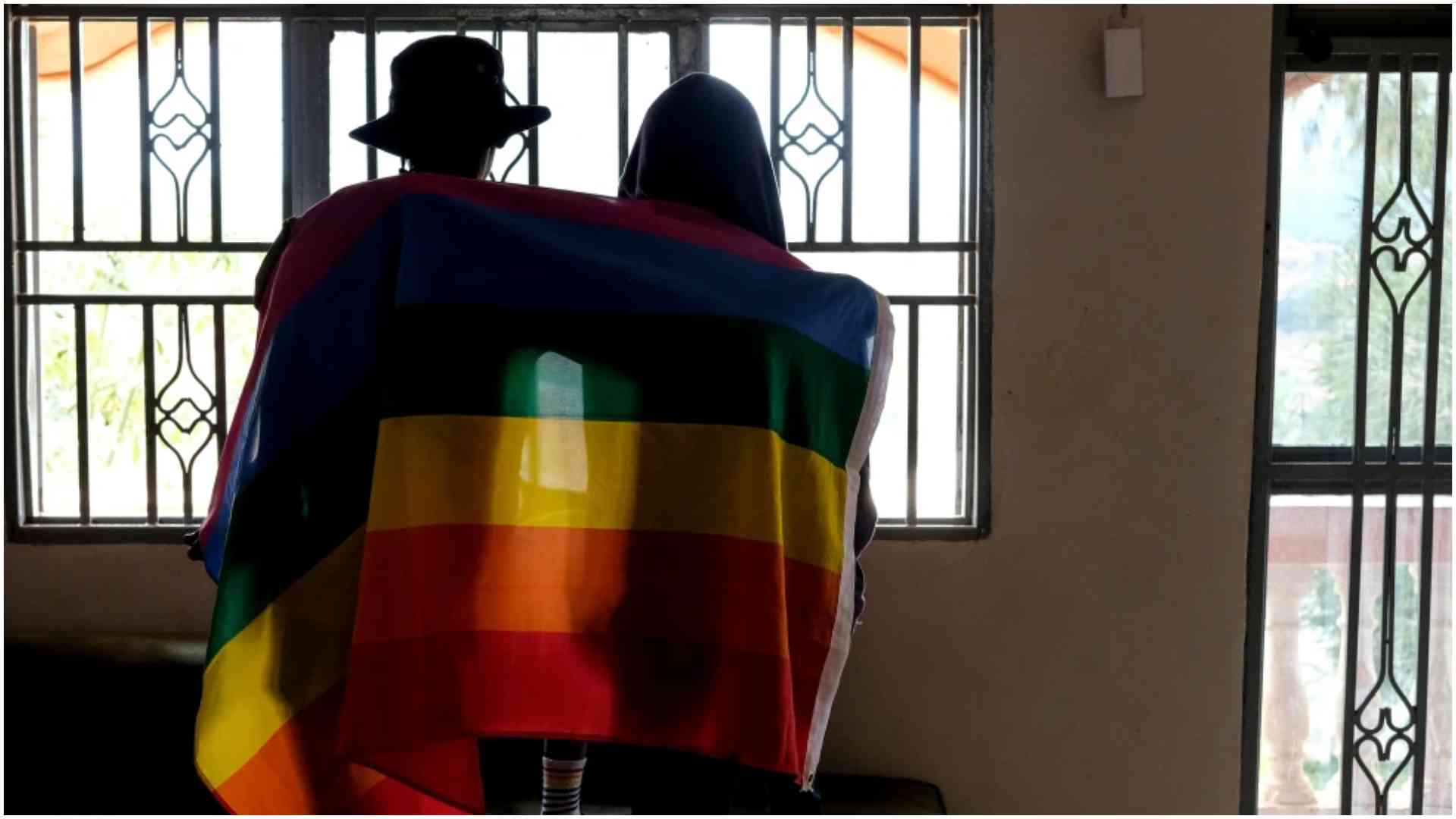
Two women arrested in Arua City in northwestern Uganda for allegedly displaying affection in public have been released on police bond, a development that has reignited concerns among human rights advocates about growing community vigilantism and the enforcement of the country’s controversial anti-LGBTQ laws.
The pair were taken into custody on February 18 after residents in the Ayivu West Division reportedly alerted authorities about what they described as “queer and unusual acts.”
According to police, the complaint prompted officers to raid the women’s home in the area. However, police spokesperson Josephine Angucia later confirmed to the media that investigators did not recover any evidence during the search.
Despite the lack of physical proof, the two women were detained at Ayivu West Division Police Station on suspicion of breaching Section 2(1)(2) of the Anti-Homosexuality Act 2023, legislation that criminalises same-sex relations and carries a possible life sentence.
The arrest has drawn strong reactions from human rights organisations, which say such incidents are increasingly driven by community pressure rather than concrete evidence.
John Grace, coordinator of the Uganda Minority Shelters Consortium, said the women had already been under close scrutiny from members of their community before their arrest.
“In some instances where privacy is overruled, some will go as far as entering people’s bedrooms trying to get those suspected in the act,” Grace said.
“It only just happened that the local newspaper was able to capture this particular story. Otherwise, there are very many unwritten stories like that that normally die away. In some instances, people even actually end up getting killed and we just don’t get notified.”
The situation escalated further after the involvement of Job Richard Matua, the Assistant Resident District Commissioner for Arua.
According to Edward Mwebaza, Executive Director of the Human Rights Awareness and Promotion Forum (HRAPF), Matua publicly supported the arrests following media reports.
He said local leaders were “preparing them for rehabilitation and spiritual intercession as well as courts of law.”
The remarks, which were also shared during an online exchange with a Pentecostal pastor, drew criticism from activists who say they reinforce hostile attitudes toward LGBTQ individuals.
Mwebaza noted that the case reflects a broader trend of harassment and hostility toward people suspected of being LGBTQ in Uganda.
He cited a 2024 incident in which HRAPF paralegals were attacked, forcing the organisation to relocate some of its staff for safety reasons.
Human rights advocates argue that arrests under the law are frequently carried out without sufficient evidence.
“In Uganda, people just charge. As long as they suspect, they charge,” Mwebaza said. “There’s no need for evidence.”
He added that many such cases are eventually dropped due to lack of proof.
“Most of them are dismissed for want of prosecution,” he noted.
Grace also warned that the passage of the 2023 law has emboldened both private citizens and authorities to target suspected LGBTQ individuals.
“The persecution is basically the non-legal, non-state actors taking justice into their hands,” he said.
Although the two women are now free on police bond, advocates say their ordeal may be far from over.
Human rights groups warn that returning to their community could expose them to harassment, rejection by relatives and possible displacement.