

Audio By Vocalize
The resumption of oil exports in South Sudan boosted the performance of Stanbic Holdings’ subsidiary in the country, which reported a profit after tax of Sh233 million in the bank’s newly released 2025 financial results.
While Stanbic Holdings profit after tax remained relatively unchanged at Sh13.7 billion, its South Sudan subsidiary grew by 32 per cent. This is compared to 2024 when the subsidiary recorded a decline of 63 per cent in its profit after tax, settling at Sh176 million.
The bank then explained that the drop was associated with domestic unrest in the country that saw cessation of oil exports with humanitarian organisations scaling down their operations in the country as a result. Inflation in the period went to as high as 99 per cent.
Oil exports is the country major revenue earner.
Despite the flat rate growth in profit after tax, the bank has proposed a dividend of Sh22.35 per share, an increase from Sh20.83 issued in 2024.
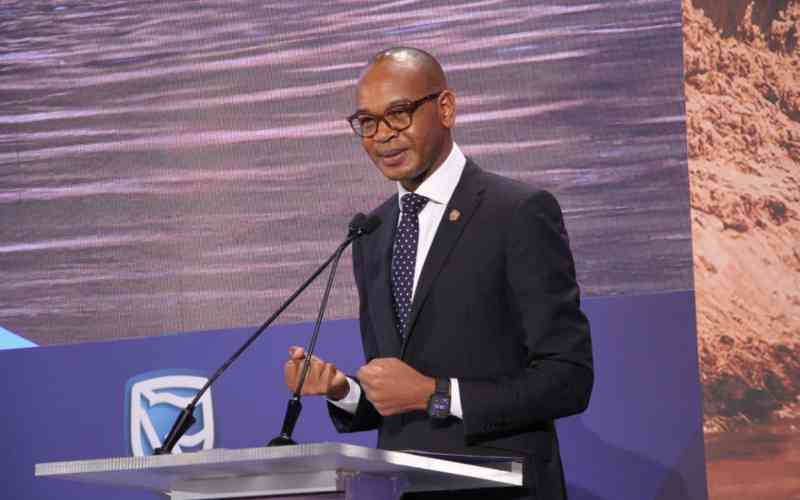
Regional Chief Executive Joshua Oigara explained that profitability is not the only indicator the bank uses to guide their dividend policy. He noted that the bank’s balance sheet shows good capital adequacy ratio.
“It has always been our value to return our earnings to shareholders. The increase of seven per cent year on year just represents the opportunity we see, and we have significant capital to fund our growth,” he said.
Addressing the South Sudan subsidiary, Oigara said the situation in the country has since improved as oil exports resumed in May 2025, and inflation has since eased.
He, however, pointed out how complex the market is with unexpected headwinds.
“It is difficult to say what tomorrow will look like but our risk teams have spent enough time looking at where to manage, at sovereign and operational market level, and what the future looks like. It is a market you run a day at a time,” he said.
While Stanbic Bank (South Sudan) recorded a jump of 32 per cent in profit after tax, other subsidiaries namely SBG Securities Limited recorded over 100 per cent year on year growth posting Sh69 million, Stanbic Bancassurance Intermediary Limited posted Sh188 million (a growth of eight per cent) and Stanbic Bank (Kenya) posted Sh13.3 billion, a growth of one per cent.
From the financials, net interest income also flattened at Sh24 billion, from Sh24.3 billion in 2024 to Sh24.1 billion in 2025.
“In a market where close to 60 per cent of our balance sheet was priced on Treasury Bills, at least before the new risk-based pricing formula came through, with T-Bills having come off 800 basis points. You can see the amount of work that needed to be done to keep the net interest income largely flat,” said Dennis Musau, Chief Finance and Value officer.
The bank’s non-interest revenue stood at Sh14.4 billion in the period compared to Sh15.4 billion in 2024 while its assets grew by 19 per cent to hit Sh541.3 billion, as its loan book also expanded by the same margin to Sh272.9 billion.
Customers’ deposits grew by 17 per cent to Sh373.9 billion.
Support Independent Journalism
Stand With Bold Journalism.
Stand With The Standard.
Continue
→
Pay via
Secure Payment
Kenya’s most trusted newsroom since 1902
Follow The Standard
channel
on WhatsApp
The
resumption of oil exports
in South Sudan boosted the performance of Stanbic Holdings’ subsidiary in the country, which reported a profit after tax of Sh233 million in the bank’s newly released 2025 financial results.
While Stanbic Holdings profit after tax remained relatively unchanged at Sh13.7 billion, its South Sudan subsidiary grew by 32 per cent. This is compared to 2024 when the subsidiary recorded a decline of 63 per cent in its profit after tax, settling at Sh176 million.
The bank then explained that the drop was associated with domestic unrest in the country that saw cessation of oil exports with humanitarian organisations scaling down their operations in the country as a result. Inflation in the period went to as high as 99 per cent.
Oil exports is the country major revenue earner.
Despite the flat rate growth in profit after tax, the bank has proposed a dividend of Sh22.35 per share, an increase from Sh20.83 issued in 2024.
Regional Chief Executive
Joshua Oigara explained
that profitability is not the only indicator the bank uses to guide their dividend policy. He noted that the bank’s balance sheet shows good capital adequacy ratio.
“It has always been our value to return our earnings to shareholders. The increase of seven per cent year on year just represents the opportunity we see, and we have significant capital to fund our growth,” he said.
Addressing the South Sudan subsidiary, Oigara said the situation in the country has since improved as oil exports resumed in May 2025, and inflation has since eased.
He, however, pointed out how complex the market is with unexpected headwinds.
“It is difficult to say what tomorrow will look like but our risk teams have spent enough time looking at where to manage, at sovereign and operational market level, and what the future looks like. It is a market you run a day at a time,” he said.
While Stanbic Bank (South Sudan) recorded a jump of 32 per cent in profit after tax, other subsidiaries namely SBG Securities Limited recorded over 100 per cent year on year growth posting Sh69 million, Stanbic Bancassurance Intermediary Limited posted Sh188 million (a growth of eight per cent) and Stanbic Bank (Kenya) posted Sh13.3 billion, a growth of one per cent.
From the financials, net interest income also flattened at Sh24 billion, from Sh24.3 billion in 2024 to Sh24.1 billion in 2025.
“In a market where close to 60 per cent of our balance sheet was priced on Treasury Bills, at least before the new risk-based pricing formula came through, with T-Bills having come off 800 basis points. You can see the amount of work that needed to be done to keep the net interest income largely flat,” said Dennis Musau, Chief Finance and Value officer.
The bank’s non-interest revenue stood at Sh14.4 billion in the period compared to Sh15.4 billion in 2024 while its assets grew by 19 per cent to hit Sh541.3 billion, as its loan book also expanded by the same margin to Sh272.9 billion.
Stay informed. Subscribe to our newsletter
Customers’ deposits grew by 17 per cent to Sh373.9 billion.
Follow The Standard
channel
on WhatsApp
By Graham Kajilwa