

Audio By Vocalize
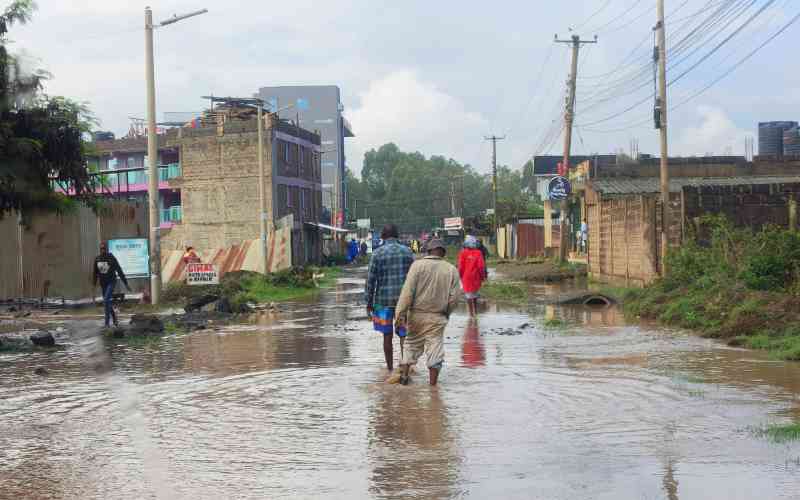
More than 40 people have died from the devastating flash floods that struck Nairobi on Friday night, a heartbreaking tragedy for the city and the country at large. Many families are mourning their loved ones, with reports stating the death toll may be higher.
Many city residents are dealing with the trail destruction left behind by the rains. We all saw vehicles getting swept off the roads by stormwater and buildings getting submerged, while traffic was severely disrupted across major roads.
For a city considered the regional hub for finance, diplomacy, and technology, the recurring flooding problem whenever the rain falls should alarm everyone. Expertise from hydrologists and flood management professionals must be fully tapped to develop technical solutions and practical measures.
From a hydrological perspective, flooding occurs when rainfall intensity exceeds the soil’s infiltration capacity or when storm water drainage systems are unable to convey large volumes of runoff within a short time frame. In highly urbanised catchments such as Nairobi, where impervious surfaces dominate, this imbalance results in rapid surface runoff accumulation and subsequent flooding.
The present flooding events in Nairobi are the result of an interplay between natural climatic drivers and anthropogenic urban development pressures. The county is experiencing both fluvial flooding, which occurs when rivers exceed their capacity and overflow into adjacent floodplains, and pluvial flooding, which arises when rainfall accumulates on impermeable urban surfaces faster than it can be drained or infiltrated.
One of the principal drivers of flooding in Nairobi is the increasing intensity of rainfall associated with climate variability and long-term climate change. Observational evidence across East Africa indicates a rise in extreme rainfall events over recent years. Such high-intensity storms often overwhelm urban drainage networks especially, where the infrastructure is inadequate, poorly maintained, or obstructed.
In Nairobi, the limited capacity and deteriorating condition of the ineffective storm water drainage systems significantly reduce their ability to safely convey storm water during peak rainfall periods. Climate change further compounds this challenge by increasing rainfall variability and the frequency of extreme rainfall events.
Equally important is the role of rapid and largely unplanned urbanisation. Nairobi has experienced substantial population growth and spatial expansion, leading to encroachment of settlements and infrastructure into flood-prone zones, including riparian zones and wetlands. These natural landscapes historically function as hydrological buffers by storing floodwaters and attenuating peak flows. Their degradation or conversion to built environments significantly increases flood risk within the urban catchments.
From a technical standpoint, the discussion must shift towards Flood Risk Management (FRM). FRM is a continuous and systematic process that involves data collection, risk analysis, evaluation, and the implementation of appropriate measures to reduce, redistribute, or adapt to flood risks. Effective FRM begins with Flood Risk Assessments (FRAs) that inform infrastructure design and land-use planning before development occurs, followed by hydrological/hydraulic modelling to simulate both the volumes, intensity, and spatial extent, and testing sustainable solutions to reduce flood risk. Unfortunately, current practice often relies on post-flooding reactive approaches rather than proactive planning and mitigation.
Several major infrastructure developments within Nairobi have been implemented without comprehensive FRAs. A notable example is the Nairobi Expressway, which experienced flooding in 2024. Ideally, such infrastructure should have incorporated an integrated storm water management systems to manage runoff generated from the road surface. Instead, additional drainage pipes were later introduced to collect runoff and discharge it into the existing drainage network along Uhuru Highway/Mombasa, that explains the recent large volumes witnessed around Uhuru/Haile Selassie roundabout. This raises an important hydrological concern: if the additional runoff from such vast infrastructure exceeds the design capacity of the existing drainage system, downstream flooding risks will inevitably increase.
Another challenge is much of Nairobi’s drainage infrastructure was designed decades ago under different climatic conditions and urban development patterns. Many of these systems lack the capacity to accommodate current hydrological realities or future climate projections, rendering them increasingly ineffective during high-intensity rainfall events.
Going forward, FRM must become a mandatory component of all urban infrastructure projects. In parallel, Nairobi should adopt Sustainable Urban Drainage Systems (SUDs) and Nature-based Solutions (NbS) aimed at managing runoff at its source rather than merely conveying it downstream. Such approaches include green infrastructure elements such as tree pits with underground storage tanks, detention ponds, bioswales, infiltration trenches, and strategically located retention basins. For example, tree pits designed with subsurface storage capacities of approximately 1,000 litres could function as micro-stormwater storage systems that collectively reduce runoff volumes in densely paved environments.
-The writer is flood hydrologist
Support Independent Journalism
Stand With Bold Journalism.
Stand With The Standard.
Continue
→
Pay via
Secure Payment
Kenya’s most trusted newsroom since 1902
Follow The Standard
channel
on WhatsApp
More than 40 people have died from the devastating flash floods that struck Nairobi on Friday night, a heartbreaking tragedy for the city and the country at large. Many families are mourning their loved ones, with reports stating the death toll may be higher.
Many city residents are dealing with the trail destruction left behind by the rains. We all saw vehicles getting swept off the roads by stormwater and buildings getting submerged, while traffic was severely disrupted across major roads.
For a city considered the regional hub for finance, diplomacy, and technology, the recurring flooding problem whenever the rain falls should alarm everyone. Expertise from hydrologists and flood management professionals must be fully tapped to develop technical solutions and practical measures.
From a hydrological perspective, flooding occurs when rainfall intensity exceeds the soil’s infiltration capacity or when storm water drainage systems are unable to convey large volumes of runoff within a short time frame. In highly urbanised catchments such as Nairobi, where impervious surfaces dominate, this imbalance results in rapid surface runoff accumulation and subsequent flooding.
The present flooding events in Nairobi are the result of an interplay between natural climatic drivers and anthropogenic urban development pressures. The county is experiencing both fluvial flooding, which occurs when rivers exceed their capacity and overflow into adjacent floodplains, and pluvial flooding, which arises when rainfall accumulates on impermeable urban surfaces faster than it can be drained or infiltrated.
One of the principal drivers of flooding in Nairobi is the increasing intensity of rainfall associated with climate variability and long-term climate change. Observational evidence across East Africa indicates a rise in extreme rainfall events over recent years. Such high-intensity storms often overwhelm urban drainage networks especially, where the infrastructure is inadequate, poorly maintained, or obstructed.
In Nairobi, the limited capacity and deteriorating condition of the ineffective storm water drainage systems significantly reduce their ability to safely convey storm water during peak rainfall periods. Climate change further compounds this challenge by increasing rainfall variability and the frequency of extreme rainfall events.
Equally important is the role of rapid and largely unplanned urbanisation. Nairobi has experienced substantial population growth and spatial expansion, leading to encroachment of settlements and infrastructure into flood-prone zones, including riparian zones and wetlands. These natural landscapes historically function as hydrological buffers by storing floodwaters and attenuating peak flows. Their degradation or conversion to built environments significantly increases flood risk within the urban catchments.
From a technical standpoint, the discussion must shift towards Flood Risk Management (FRM). FRM is a continuous and systematic process that involves data collection, risk analysis, evaluation, and the implementation of appropriate measures to reduce, redistribute, or adapt to flood risks. Effective FRM begins with Flood Risk Assessments (FRAs) that inform infrastructure design and land-use planning before development occurs, followed by hydrological/hydraulic modelling to simulate both the volumes, intensity, and spatial extent, and testing sustainable solutions to reduce flood risk. Unfortunately, current practice often relies on post-flooding reactive approaches rather than proactive planning and mitigation.
Several major infrastructure developments within Nairobi have been implemented without comprehensive FRAs. A notable example is the Nairobi Expressway, which experienced flooding in 2024. Ideally, such infrastructure should have incorporated an integrated storm water management systems to manage runoff generated from the road surface. Instead, additional drainage pipes were later introduced to collect runoff and discharge it into the existing drainage network along Uhuru Highway/Mombasa, that explains the recent large volumes witnessed around Uhuru/Haile Selassie roundabout. This raises an important hydrological concern: if the additional runoff from such vast infrastructure exceeds the design capacity of the existing drainage system, downstream flooding risks will inevitably increase.
Another challenge is much of Nairobi’s drainage infrastructure was designed decades ago under different climatic conditions and urban development patterns. Many of these systems lack the capacity to accommodate current hydrological realities or future climate projections, rendering them increasingly ineffective during high-intensity rainfall events.
Going forward, FRM must become a mandatory component of all urban infrastructure projects. In parallel, Nairobi should adopt Sustainable Urban Drainage Systems (SUDs) and Nature-based Solutions (NbS) aimed at managing runoff at its source rather than merely conveying it downstream. Such approaches include green infrastructure elements such as tree pits with underground storage tanks, detention ponds, bioswales, infiltration trenches, and strategically located retention basins. For example, tree pits designed with subsurface storage capacities of approximately 1,000 litres could function as micro-stormwater storage systems that collectively reduce runoff volumes in densely paved environments.
-The writer is flood hydrologist
Stay informed. Subscribe to our newsletter
Follow The Standard
channel
on WhatsApp
By Dr Pauline Lokidor