



Audio By Vocalize
At this stage in life, I find myself reflecting more intensely on the journey of life and the stories my generation and those who preceded us will leave behind. Age sharpens memory. It forces one to pause, to take stock.
Perhaps it is because I know all too well that the road ahead is now shorter than the journey I have already covered. I have arrived at a point where the past speaks with a clearer voice. My memories are vivid, and the contrast between what was and what is has grown sharper.
Decades ago, William Shakespeare reminded us that life is but a stage, where each of us enters, plays our part, and exits. Those words often haunt me. As we edge towards our exits, we must ask ourselves a difficult question: what stories will remain when we are gone?
My reflections are tinged with quiet sadness. I have come to recognise a subtle but pervasive phenomenon that has embedded itself in our daily lives: we have slowly normalised the abnormal.
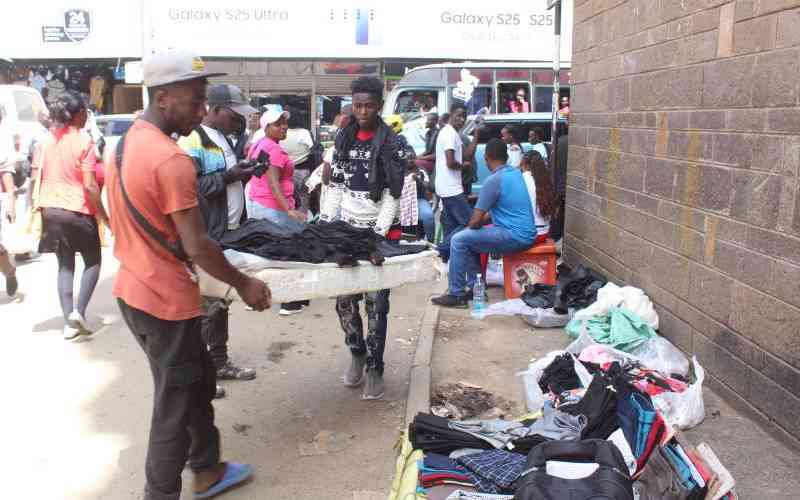
The chaos I witnessed in Nairobi’s central business district last weekend, with boda boda riders everywhere, including on pavements, convinced me that our society has quietly shifted from upholding standards to tolerating disorder and dysfunction. What was once unacceptable has become the new normal.
I will share a few stories from a past that is not far away. These are stories that the younger generation of Kenyans may find difficult to believe. One of those stories concerns something as simple as drinking water. In the 1980s in Nairobi, one could drink water directly from the tap without fear.
The water was treated and safe. It flowed with reassuring reliability in homes, schools, and offices. Water, after all, is the most basic element of life, and any modern society should take pride in ensuring that it is clean and accessible.
Fast forward to today, and the story has changed dramatically. We now live in a society where many people cannot trust the water that flows from their taps. Instead, we purchase bottled water, often at a premium price. This shift is often explained away as a response to water quality and safety concerns. But beneath that explanation lies a deeper truth: a glaring failure of public infrastructure.
Yet, in typical Kenyan fashion, we have adapted. Instead of asking why tap water is unsafe, we have normalised the situation. Middle-class households have installed expensive filtration systems, while those in poorer neighbourhoods are left vulnerable to waterborne diseases. The abnormal has quietly become the normal.
Those below 30 have only known chaos in Nairobi’s public transport sector. There was a time when the city’s public transport system was organised. Buses operated on predictable routes, and commuters could travel with a certain level of dignity. The Kenya Bus Service was a familiar and dependable presence on the roads. The buses followed schedules, observed traffic rules, and maintained a sense of order, just like those in other metropolises in the West.
Today, however, matatu culture has introduced a level of chaos that would once have been unimaginable. Vehicles race for passengers, stop in the middle of busy roads, mount sidewalks, and create scenes that can only be described as urban anarchy. We grumble, shake our heads, and move on with our day.
My own son has told me that he thinks it was wrong to fight for independence. He says we fought for self-governance and not good governance. Results! We destroyed the structures the British left behind. He may not be entirely wrong.
There was a time when waste management in Nairobi operated efficiently. Garbage trucks came regularly, and neighbourhoods remained relatively clean. Today, piles of garbage are a common sight in many parts of the city. Waste accumulates at street corners, creating unsanitary conditions.
Even more troubling is the situation in agriculture. In earlier decades, agricultural extension officers were the unsung heroes of rural Kenya. They travelled from farm to farm, advising farmers on better planting methods, improved seed varieties, pest control, and soil management. Their work was critical in sustaining Kenya’s agricultural productivity and ensuring food security. Today, that system has largely collapsed. The disappearance of extension services has led to misinformation, overreliance on chemical inputs, and the gradual erosion of indigenous farming knowledge that once sustained communities.
The most painful story concerns the civil service. There was a time when merit mattered. A qualified teacher, a competent administrator, or a hardworking graduate could aspire to public service with the confidence that ability and dedication would count. The civil service was largely insulated from raw political interference.
Today, as we saw with Teachers Service Commission letters, politicians dish them out at public rallies and burial ceremonies. Jobs are often distributed based on connections rather than competence.
These stories may sound like nostalgic reflections from an older generation. But they raise an uncomfortable question. We are the generations that destroyed order, introduced chaos, and normalised the abnormal. We have quietly lowered the standards by which we judge our society. So I ask, with some urgency: what stories are we leaving behind for our children?
Support Independent Journalism
Stand With Bold Journalism.
Stand With The Standard.
Continue
→
Pay via
Secure Payment
Kenya’s most trusted newsroom since 1902
Follow The Standard
channel
on WhatsApp
Perhaps it is because I know all too well that the road ahead is now shorter than the journey I have already covered. I have arrived at a point where the past speaks with a clearer voice. My memories are vivid, and the contrast between what was and what is has grown sharper.
Decades ago, William Shakespeare reminded us that life is but a stage, where each of us enters, plays our part, and exits. Those words often haunt me. As we edge towards our exits, we must ask ourselves a difficult question: what stories will remain when we are gone?
My reflections are tinged with quiet sadness. I have come to recognise a subtle but pervasive phenomenon that has embedded itself in our daily lives: we have slowly normalised the abnormal.
The chaos I witnessed in Nairobi’s central business district last weekend, with boda boda riders everywhere, including on pavements, convinced me that our society has quietly shifted from upholding standards to tolerating disorder and dysfunction. What was once unacceptable has become the new normal.
I will share a few stories from a past that is not far away. These are stories that the younger generation of Kenyans may find difficult to believe. One of those stories concerns something as simple as drinking water. In the 1980s in Nairobi, one could drink water directly from the tap without fear.
The water was treated and safe. It flowed with reassuring reliability in homes, schools, and offices. Water, after all, is the most basic element of life, and any modern society should take pride in ensuring that it is clean and accessible.
Fast forward to today, and the story has changed dramatically. We now live in a society where many people cannot trust the water that flows from their taps. Instead, we purchase bottled water, often at a premium price. This shift is often explained away as a response to water quality and safety concerns. But beneath that explanation lies a deeper truth: a glaring failure of public infrastructure.
Yet, in typical Kenyan fashion, we have adapted. Instead of asking why tap water is unsafe, we have normalised the situation. Middle-class households have installed expensive filtration systems, while those in poorer neighbourhoods are left vulnerable to waterborne diseases. The abnormal has quietly become the normal.
Those below 30 have only known chaos in Nairobi’s public transport sector. There was a time when the city’s public transport system was organised. Buses operated on predictable routes, and commuters could travel with a certain level of dignity. The Kenya Bus Service was a familiar and dependable presence on the roads. The buses followed schedules, observed traffic rules, and maintained a sense of order, just like those in other metropolises in the West.
Today, however, matatu culture has introduced a level of chaos that would once have been unimaginable. Vehicles race for passengers, stop in the middle of busy roads, mount sidewalks, and create scenes that can only be described as urban anarchy. We grumble, shake our heads, and move on with our day.
My own son has told me that he thinks it was wrong to fight for independence. He says we fought for self-governance and not good governance. Results! We destroyed the structures the British left behind. He may not be entirely wrong.
There was a time when waste management in Nairobi operated efficiently. Garbage trucks came regularly, and neighbourhoods remained relatively clean. Today, piles of garbage are a common sight in many parts of the city. Waste accumulates at street corners, creating unsanitary conditions.
Stay informed. Subscribe to our newsletter
Even more troubling is the situation in agriculture. In earlier decades, agricultural extension officers were the unsung heroes of rural Kenya. They travelled from farm to farm, advising farmers on better planting methods, improved seed varieties, pest control, and soil management. Their work was critical in sustaining Kenya’s agricultural productivity and ensuring food security. Today, that system has largely collapsed. The disappearance of extension services has led to misinformation, overreliance on chemical inputs, and the gradual erosion of indigenous farming knowledge that once sustained communities.
The most painful story concerns the civil service. There was a time when merit mattered. A qualified teacher, a competent administrator, or a hardworking graduate could aspire to public service with the confidence that ability and dedication would count. The civil service was largely insulated from raw political interference.
Today, as we saw with Teachers Service Commission letters, politicians dish them out at public rallies and burial ceremonies. Jobs are often distributed based on connections rather than competence.
These stories may sound like nostalgic reflections from an older generation. But they raise an uncomfortable question. We are the generations that destroyed order, introduced chaos, and normalised the abnormal. We have quietly lowered the standards by which we judge our society. So I ask, with some urgency: what stories are we leaving behind for our children?
Follow The Standard
channel
on WhatsApp
By Egara Kabaji