



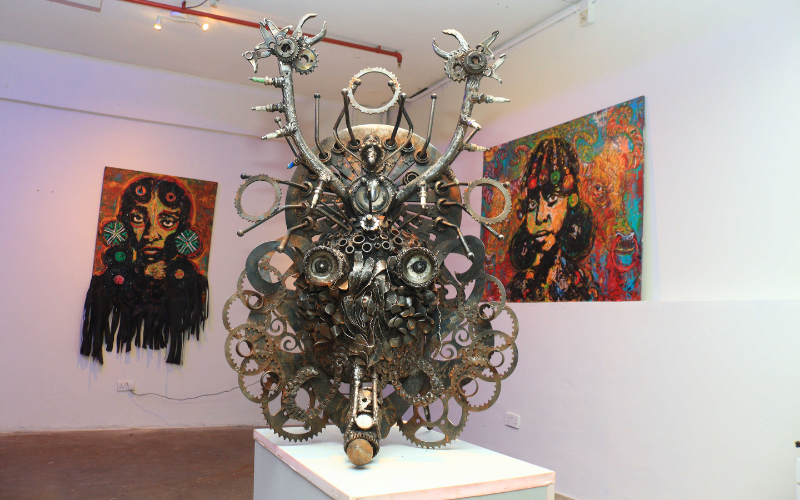
Artist Njogu Kuria’s latest solo exhibition, titled Watchdogs of the Night, opened at the Munyu Space in Westlands on March 7 and runs until the 28th. The show revolves around protective forces as inspired by UB40’s song Watchdogs.
Music has always influenced Kuria’s work since he started creating with vinyl records about 10 years ago. He is guided by the rhythm, the lyrics or a feeling of the song. He recalls planning for the show last year while listening to Watchdogs, and the idea about searching for safety from hungry wolves stayed with him.
In Watchdogs of the Night, wolves can be anything: fear, corruption, societal pressure, or inner struggles. And in the midst of these, he explores how people tend to look for guardians from other people, spirits, ancestors, or forces to watch over them.


“Many of the sculptures feel like sentinels, standing, watching, holding space. The main, monumental piece in this showcase acts like a central protector titled The Avatar: Guardian of the Cycles of Time, while the other works feel like a surrounding network of watchers,” he says.
Kuria wanted the sculptures to feel like they were aware of the environment and of the people entering the space. So instead of just being objects, they have presence in the space they are in.
Kuria’s choice of materials reflects this, as he is drawn to materials that already carry history, such as discarded rubber tyres, scrap metal, and vinyl records. That’s what was once considered waste becomes something protective and symbolic.
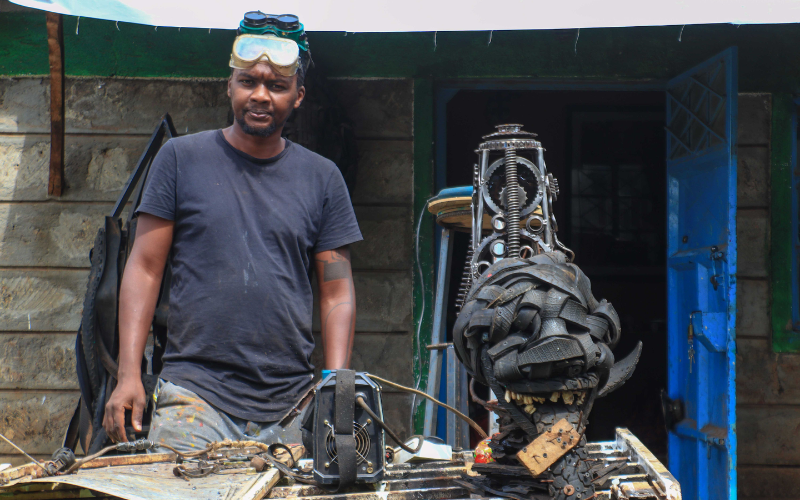
The previous lives of these materials add layers to the story; when they are transformed, it feels like their past experiences contribute to their strength and presence.
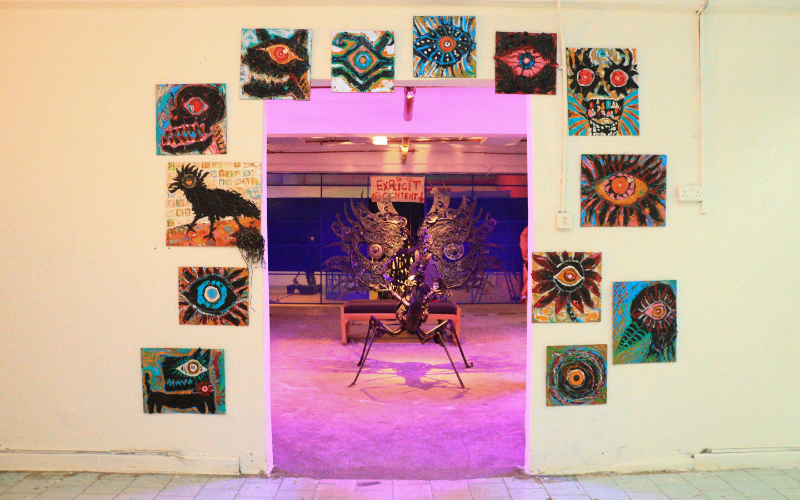
The Munyu Space is a gallery situated in a basement space at The Mall; therefore, it is somewhat dimly lit. Without access to natural sunlight, Kuria had to use light installations. He had already built a series of lamps, so the idea that he could control lighting in the space was a brilliant opportunity for him.
“Light and shadow helped create movement around the sculptures even when they were standing still. When light hits the metal and rubber surfaces, it throws shadows that expand the forms across the walls and floor,” he says.
Those shadows, he adds, almost act like extensions of the guardians themselves by creating the feeling that something is always watching or shifting in the space.
African mythologies and oral traditions inform his work. He is interested in retelling stories of ancestors and traditions through contemporary materials.
By transforming recycled objects into these figures, he creates a modern interpretation of the same protective spirits and watchers that appear in many African traditions, combining tradition and modern tools and technologies.
“This exhibition basically pushed me to think more about installation, atmosphere, and how sculptures interact with a space collectively rather than individually,” he says.
He acknowledges the representatives at Munyu Space who are open to creative freedom and artists expressing what they desire and how they want their works to be experienced.
The three different rooms at Munyu Space influenced the arrangement of sculptures in a way that creates pathways and moments of encounter as people move through the space.
“I hope people reflect on what or who their own watchdogs are; these are the things or forces that protect them, guide them, or keep them grounded. Some viewers might see ancestors, spirits, animals, or even futuristic guardians,” he says.